

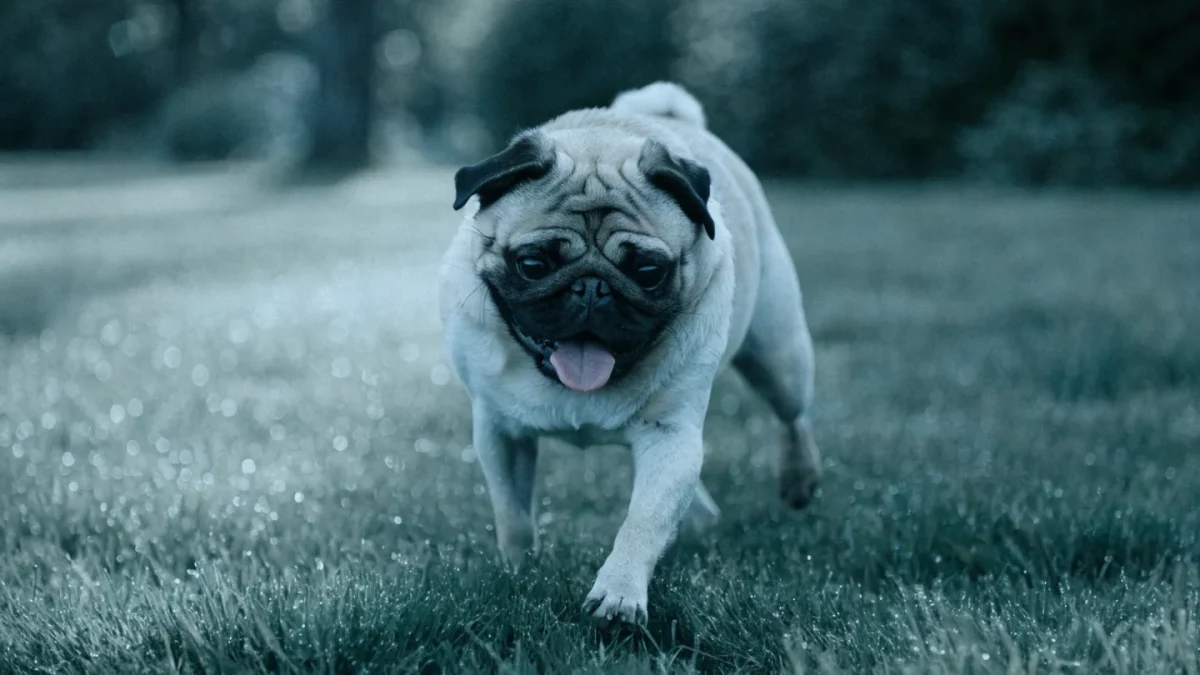
A pug in peak condition can sprint across a room fast enough to startle you. They can play tug with persistence that belies their size. They can hold a pace on a cool-morning walk that feels genuinely energetic. What they cannot do is sustain any of it for long, and the reason is mechanical, not motivational.
Every pug breathes through a compromised system. The brachycephalic airway — shortened nasal passages, elongated soft palate, narrowed trachea — restricts airflow in ways that limit both exercise capacity and thermoregulation. Managing pug exercise needs brachycephalic constraints means working within those limits intelligently rather than pretending they don't exist.
How Much Is Enough
An adult pug in good health and at a proper weight benefits from 20 to 30 minutes of moderate physical activity per day. Moderate means a comfortable walking pace, gentle play, or low-intensity interaction — not jogging, not sustained running, not anything that produces heavy panting within the first few minutes.
Split that time into two sessions. A ten-to-fifteen-minute morning walk and a similar evening session works well for most pugs. This structure prevents the cumulative respiratory stress that builds during longer continuous activity and gives the dog recovery time between sessions.
Puppies under a year need even shorter bursts — five to ten minutes of play with frequent rest breaks — scaled to their development and respiratory capacity. Senior pugs may need less total activity but still benefit from daily gentle movement to maintain muscle tone and joint health.
The Temperature Problem
This is the section that keeps veterinary emergency rooms busy in summer.
Dogs cool themselves primarily through panting, which evaporates moisture from the tongue and respiratory tract. In brachycephalic breeds, this cooling mechanism is severely impaired. The restricted airway can't move enough air volume across the respiratory surfaces to dissipate heat effectively. The result: pugs overheat faster, at lower ambient temperatures, and with less exertion than dogs with normal muzzle length.
The general threshold is roughly 25 degrees Celsius. Above that temperature, outdoor exercise should be minimized or eliminated. On genuinely hot days — 30 degrees and above — even brief outdoor exposure carries risk. Heatstroke in pugs can progress from initial distress to organ failure in minutes, not hours. The pug genetics article explains the underlying anatomy in more detail.
Practical Temperature Management
- Exercise during the coolest parts of the day: early morning or after sunset
- Carry water on every walk, regardless of length or temperature
- Walk on grass or dirt rather than asphalt, which radiates stored heat
- Learn to recognize early distress signals: loud panting that doesn't improve with rest, drooling, bright red tongue, glassy eyes
- Stop immediately if the dog slows down, sits, or lies down during a walk — the pug is telling you it's done
- Never leave a pug in a parked car, even with windows cracked, even for minutes
Indoor Alternatives
When outdoor conditions are unfavorable — which, depending on your climate, may be a significant portion of the year — indoor activity becomes essential.
Puzzle feeders and food toys. These combine mental stimulation with physical engagement and are ideal for a breed that's food-motivated and limited in exercise capacity. Scattering kibble across a snuffle mat or using a food-dispensing ball makes the dog work for every piece of food.
Short indoor play sessions. Tug games, gentle fetch in a hallway, and hide-and-seek with family members provide brief physical exertion without heat exposure. Keep sessions to five or ten minutes with rest between rounds.
Training as exercise. Learning new behaviors requires mental effort that tires pugs effectively. A fifteen-minute training session using small treat rewards engages the brain and body simultaneously. Pugs respond well to variety — rotating through different commands and tricks prevents the boredom that leads to disengagement.
What Happens Without Enough Activity
A sedentary pug gains weight quickly. Excess weight further restricts the already-compromised airway, reduces exercise tolerance even further, and creates a downward spiral: less activity produces more weight, which makes activity harder, which produces more weight. Breaking this cycle once it establishes is significantly harder than preventing it.
Muscle tone matters too. Pugs that don't use their bodies regularly lose the core and leg strength that supports their spine — relevant because the breed is predisposed to spinal issues from hemivertebrae. A certain baseline of physical fitness isn't optional for this breed. It's protective.
The complete pug breed guide covers the broader health picture and why weight management intersects with nearly every health concern in this breed.
The Right Balance
Pug exercise management is a calibration exercise, not a one-size-fits-all prescription. A lean pug with mild BOAS in a temperate climate can handle more activity than an overweight pug with moderate airway compromise in a subtropical environment. Learn your specific dog's tolerance. Watch for the signals that indicate approaching limits. And prioritize consistency — two moderate daily sessions, year-round, beat occasional ambitious outings that push the dog past its respiratory capacity. Owners managing other brachycephalic breeds will recognize this framework; the French Bulldog exercise guide describes the same temperature-first, duration-second approach for a breed with comparable respiratory constraints.
The goal is a pug that maintains healthy weight, adequate muscle tone, and mental engagement without respiratory distress. That balance point exists for every pug. Finding it requires attention, but not heroics.