

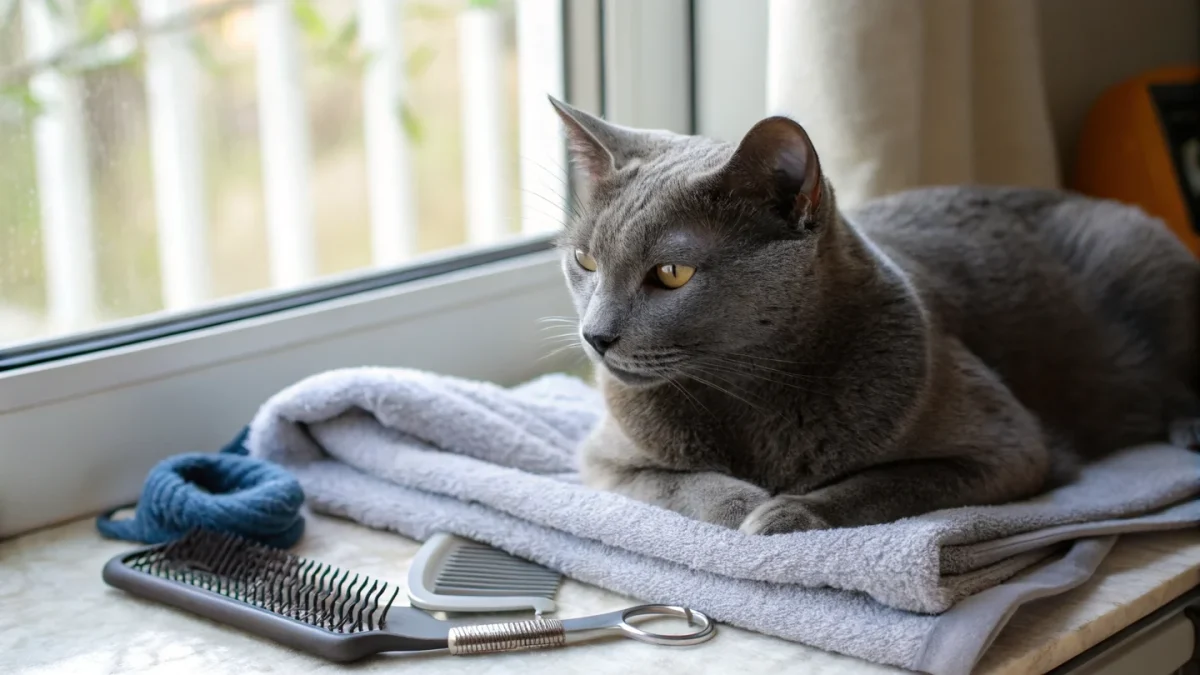
The Russian Blue's coat is one of the breed's most admired features — the dense, plush, silver-tipped double coat that creates that distinctive shimmer in good light. It is also, fortunately, a coat that maintains itself remarkably well compared to its impressive appearance. The Russian Blue does most of the heavy lifting through its own fastidious grooming habits. Your job is supplementary maintenance and seasonal shedding management.
Understanding the Double Coat
The Russian Blue has a dense undercoat (soft, thick, insulating) and a slightly longer guard coat (the outer layer, which carries the silver tipping). This double coat structure is what creates the characteristic plush texture — stroke a Russian Blue against the grain and the coat holds the track rather than immediately falling back into place.
The same structure that creates the plush texture also means the coat sheds in layers. The undercoat tends to release in quantity during seasonal transitions — typically spring and autumn, though the timing and intensity varies by individual and climate. The rest of the year, shedding is moderate and manageable with normal brushing frequency.
Matting is not a significant concern with the Russian Blue's coat structure under normal circumstances. The double coat can develop small tangles in high-friction areas (collar area, armpits) if brushing is neglected for extended periods, but this is much less likely than with longhaired breeds.
Weekly Grooming: The Baseline
During most of the year, a weekly session is sufficient.
Tools that work well:
- Fine-toothed metal comb — effective for removing loose undercoat and checking for any developing tangles
- Soft slicker brush — good for finishing and bringing out the coat's natural sheen
- Chamois cloth — lightly damp chamois wiped along the coat produces a beautiful polish on the silver tipping
Start with the comb, working in the direction of coat growth. Follow with the slicker brush. Finish with a wipe of the chamois if desired. The whole session takes 10 to 15 minutes for most cats.
The Russian Blue's fastidious nature means it often contributes actively to its own grooming session — it will reposition, groom the area you've just brushed, and generally collaborate in a way that makes the process easier than with less engaged breeds.
Seasonal Shedding
Spring and autumn bring a notable increase in coat loss as the undercoat cycles. During these periods, daily brushing for two to four weeks prevents the loose undercoat from building up into tangles or spreading across every horizontal surface in your home.
A shedding comb (sometimes called a de-shedding tool) is particularly effective during heavy shedding periods. Used carefully, it pulls the releasing undercoat out efficiently without stripping the guard hairs.
Do not over-brush outside the shedding season. The Russian Blue's coat is dense enough that aggressive brushing can cause coat damage or skin irritation. Weekly is right for maintenance; daily is for seasonal heavy shedding only.
Bathing
Bathing is not a regular requirement for the Russian Blue. The coat's natural water resistance and the breed's cleanliness habits mean bathing under normal circumstances adds nothing to coat health.
An occasional bath may be appropriate if the cat has gotten into something messy. Russian Blues tend to dislike bathing (the water resistance of the coat means it can be difficult to wet thoroughly, which some cats find genuinely alarming). If bathing becomes necessary, use lukewarm water and a gentle cat-specific shampoo; rinse very thoroughly; and dry completely to prevent chilling.
Ear and Nail Care
The Russian Blue's ears do not require unusually frequent cleaning, but should be checked periodically for wax accumulation and cleaned gently when needed. Normal ear discharge is pale and slight; dark, crumbly, or malodorous discharge warrants a veterinary check.
Nails should be trimmed every two to three weeks. Regular trimming keeps nails at a comfortable length and prevents the discomfort and potential injury that overgrown nails can cause.
Dental Hygiene
Applicable to all cats, worth noting here: periodontal disease is common in domestic cats and largely preventable with regular tooth brushing. A small, cat-appropriate brush and cat-specific toothpaste, introduced gradually as a kitten and maintained as a routine, significantly reduces the risk of dental disease over the cat's lifetime.
The full Russian Blue breed guide covers all aspects of living with this breed. The grooming is genuinely the low-maintenance part of Russian Blue ownership — it's the temperament considerations and the social nuances that require more thoughtful attention. Is a Russian Blue right for you? takes that question seriously, with an honest assessment of who this breed suits.