

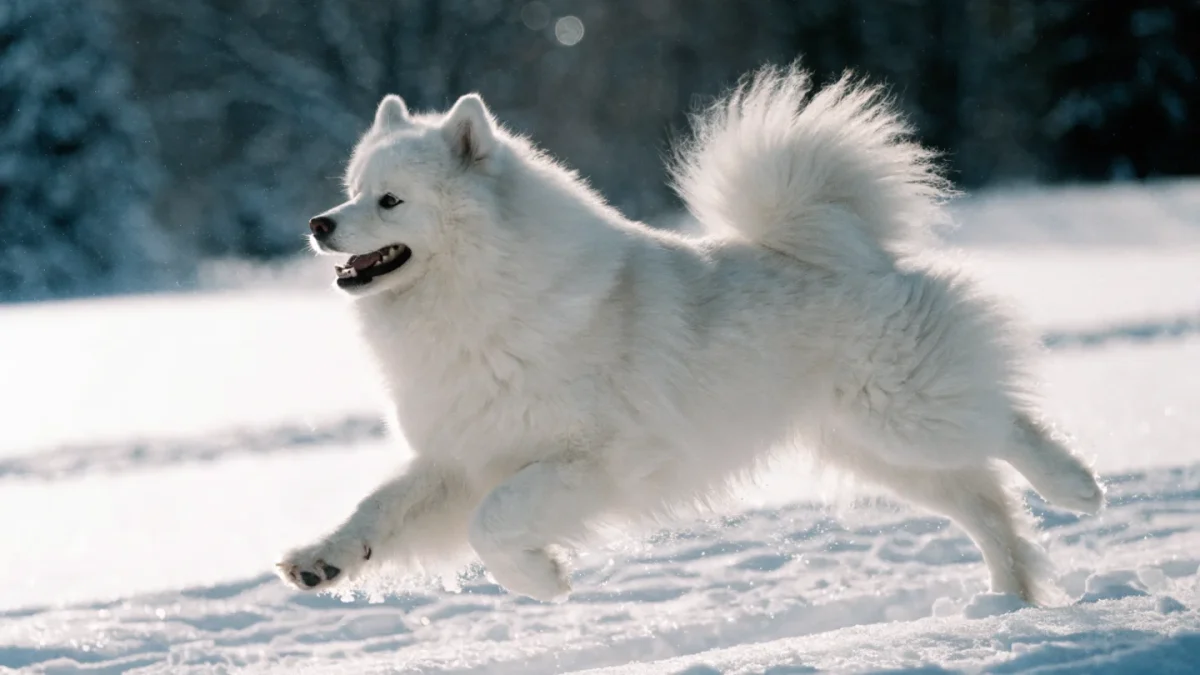
The Samoyed pulled sleds across frozen tundra, herded reindeer over terrain that would defeat most humans on foot, and worked alongside nomadic families through conditions where standing still meant freezing. That functional background produced a dog with serious stamina, a body built for sustained effort, and an energy level that doesn't match the fluffy, photogenic image most people carry in their heads.
Samoyed exercise needs are closer to those of a working sled dog than a companion breed, and underestimating them produces the behavioral problems — barking, digging, destruction — that send more Samoyeds to rescue than any other single factor.
How Much Is Enough
An adult Samoyed in good health needs 60 to 90 minutes of daily exercise. Dogs from working or performance lines may need more. Split across two sessions — a substantial morning outing and an evening session — works for most households.
The breed maintains high energy from adolescence through at least six or seven years. Senior Samoyeds slow down, but most still need 30 to 45 minutes daily well into their later years. The off-switch that some companion breeds develop by age three doesn't arrive on the same schedule with this breed.
Puppies require less structured exercise but more frequent short activity periods. Five minutes per month of age, twice daily, is a reasonable starting guideline. Over-exercising growing puppies — especially with repetitive impact on hard surfaces — risks damage to developing joints. Let puppies set their own pace on soft ground.
What Satisfies the Breed
Hiking and trail work. Samoyeds are outstanding trail companions. Varied terrain provides mental stimulation that flat sidewalks can't match, and the breed has the endurance for moderate-to-long distance hikes. Their double coat handles cold weather better than most breeds, making winter hiking particularly well-suited. In warm conditions, hike early or late and carry water — the dense coat is an overheating risk during summer exertion.
Pulling activities. The breed's sled heritage makes pulling instinctive. Skijoring (pulling a cross-country skier), bikejoring (pulling a cyclist), carting, and sled work all tap into deep-wired working drive. Even casual pulling — a weighted sled in the backyard during winter — provides an outlet that few other activities match. The satisfaction a Samoyed gets from leaning into a harness and moving weight is visible and immediate.
Structured play with a handler. Fetch, chase games, and interactive play sessions work when they involve the owner. Samoyeds are handler-oriented — they want to do things with you, not alone. A game that involves running, returning, and human interaction is more satisfying than a toy in the yard.
Training sessions. The breed's temperament includes an independent streak, which makes training sessions mentally taxing in the best way. Fifteen minutes of focused obedience work, trick training, or agility practice tires the Samoyed brain more effectively than twice that time of mindless exercise.
Playmates. Samoyeds that have compatible dog friends benefit enormously from social play. The breed's generally gregarious nature means most Samoyeds enjoy wrestling, chasing, and roughhousing with other dogs. One-on-one playdates with known, compatible dogs are more productive than unstructured dog park visits.
What Doesn't Work
Yard time alone. A Samoyed left in a fenced yard doesn't self-exercise in a productive way. It barks at everything that moves, digs craters, and paces the fence line. Yards are useful supplements to structured exercise. They're not replacements.
The same walk every day. Route monotony is a real problem for an intelligent breed. The same thirty-minute loop around the block, same direction, same speed, provides almost no mental stimulation after the first few repetitions. Vary routes, vary pace, introduce new locations. Novelty is a form of mental exercise.
Exercise only on weekends. "Weekend warrior" exercise patterns — sedentary weekdays and intense weekend activity — produce a dog that's restless five days a week and at injury risk on the other two. Consistency matters more than peak intensity.
Signs the Exercise Isn't Enough
An under-exercised Samoyed makes itself known:
- Barking that escalates in duration and intensity throughout the day
- Digging — often systematic, determined excavation rather than casual scratching
- Destructive behavior directed at furniture, doors, or household objects
- Restless pacing and inability to settle indoors
- Mouthing, jumping, and physical attention-seeking that intensifies when you're home
These aren't behavioral problems. They're a working dog telling you it doesn't have enough to do. The complete breed guide covers the broader picture, but from an exercise standpoint, the fix is usually straightforward: more activity, more variety, more involvement.
Heat Management
The Samoyed's dense double coat is engineered for Arctic conditions. In warm or hot climates, exercise timing and intensity require careful management. Avoid exertion during midday heat. Provide constant water access. Watch for overheating signs: heavy panting that doesn't resolve with rest, drooling, glazed expression, and reluctance to continue.
Never shave a Samoyed's coat to manage heat. The double coat insulates against heat as well as cold — the undercoat creates an air layer that buffers temperature in both directions. Shaving removes this system and can actually increase overheating risk, in addition to damaging the coat's regrowth texture.
The breed thrives in cold weather. If you live in a climate with real winters, a Samoyed in snow is one of the most visibly happy animals you'll ever see. Winter exercise is where this breed comes alive.