

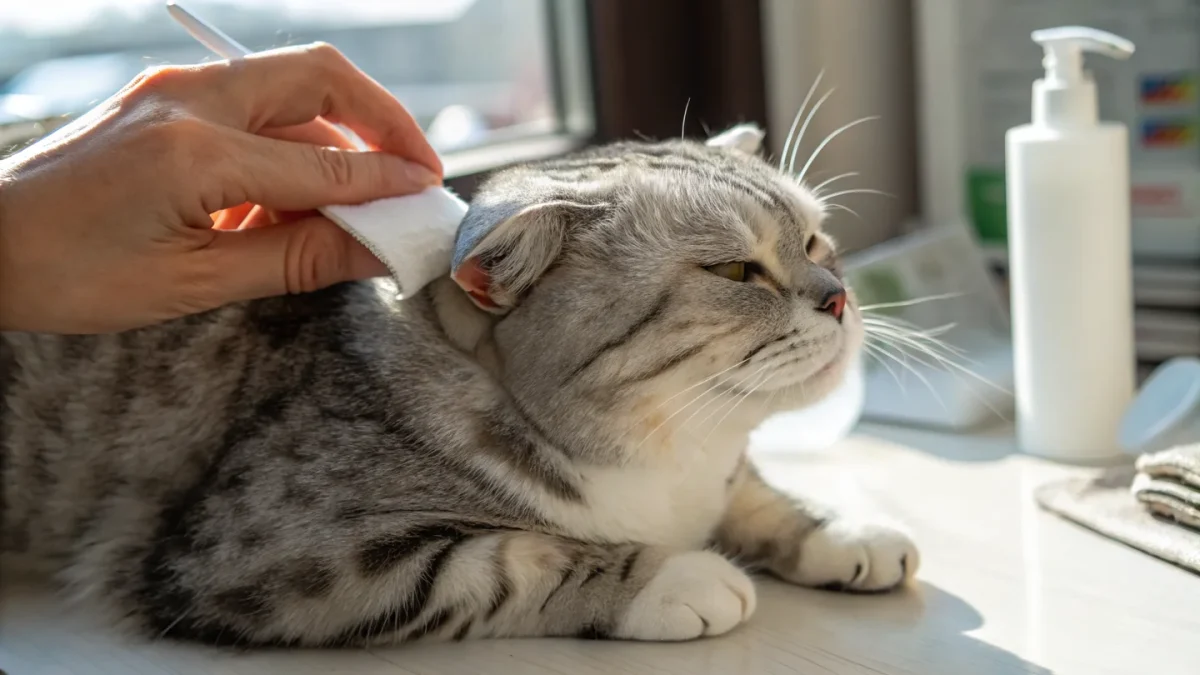
The Scottish Fold's folded ears are the breed's defining feature and also the aspect of its care that requires the most specific attention. The fold creates an ear canal position that is slightly more enclosed than in upright-eared cats — not dramatically, but enough that wax and debris accumulate differently and that regular checking matters more than in a standard-eared cat.
Beyond the ears, grooming requirements depend on whether you have a shorthaired or longhaired (Highland Fold) variety, with the coat length driving the main practical difference in maintenance time.
Ear Care: The Priority
The fold doesn't create a sealed or fully enclosed ear canal — air still circulates, and Folds don't inherently have more ear infections than other cats. What the fold does is position the ear opening slightly differently, which affects how wax migrates out naturally and how visible the inner ear is during casual observation.
Checking frequency: At least weekly. Fold ears benefit from inspection more often than upright-eared cats because any buildup is less visible without deliberately lifting and examining the ear.
What to look for: Pale pink color, minimal wax, no odor, no dark debris. Dark crumbly debris suggests ear mites. Unusual discharge or a persistent odor suggests infection. Either warrants a vet visit rather than home treatment.
Cleaning when needed: Use a cotton pad or soft cloth dampened with appropriate ear cleaning solution for cats — not water, not cotton swabs, and not probing beyond the visible outer portion. Gently wipe the accessible area of the outer ear canal.
For the Scottish Fold and its health considerations, deafness is not related to the fold itself (except in white cats with blue eyes, where the whiteness gene affects pigmentation-related hearing structures — this applies equally to any white cat regardless of ear position).
Frequency of cleaning varies by individual. Some Folds need ear cleaning monthly; others need it weekly. Learn your specific cat's wax production and adjust accordingly.
Shorthaired Scottish Fold Coat
The shorthaired Fold coat is dense and plush — what is sometimes called "double-coated" in the sense of having a noticeable undercoat, though not as pronounced as in some Northern breeds. The coat lies close to the body and has a padded feel.
Brushing: Once weekly with a medium-toothed comb or slicker brush. This removes loose undercoat, distributes skin oils, and reduces the loose hair that otherwise ends up on furniture.
Shedding: The Fold sheds moderately, with seasonal increases (particularly spring). Weekly brushing throughout the year, more frequent sessions during heavy shedding, manages this adequately.
Bathing: Not typically necessary. The coat maintains itself reasonably well with brushing. If bathing is needed, use cat-appropriate shampoo and dry thoroughly in a warm environment.
Longhaired Scottish Fold (Highland Fold) Coat
The Highland Fold has a semi-long coat with a significant ruff, longer britches on the hindquarters, ear furnishings, and a full tail plume. The coat has more texture and volume than the shorthaired variety and requires proportionally more maintenance.
Brushing: 2–3 times per week minimum, with particular attention to the hindquarters and ruff where minor tangles can develop. The coat doesn't mat as severely as fully longhaired breeds, but it requires more active management than weekly.
Comb vs brush: A fine-toothed metal comb works best for detecting tangles before they become mats. Work through the coat section by section, particularly in the areas behind the ears, under the "arms," and around the hindquarters.
Shedding: More noticeable than the shorthaired variety. The longer hair distributes more visibly. Regular brushing keeps this manageable.
Scottish Fold Behavior During Handling
The Fold's calm, adaptable temperament makes grooming easier than with high-reactive breeds. Most Folds accept brushing with minimal protest when acclimatized gradually during kittenhood.
The handling-related caveat for Folds specifically: be aware that OCD can cause sensitivity along the spine, hips, and tail. A cat that resists tail handling specifically, or shows sensitivity when the back is touched, should be evaluated by a vet rather than having the response attributed to grooming preference.
Nail Trimming
Every 2–3 weeks, trim the clear tip of each nail, avoiding the pink quick. The Fold's moderate activity level means nails wear somewhat naturally on scratching posts, but indoor cats still need regular trimming.
Providing scratching surfaces (vertical posts and horizontal boards) keeps nails in better condition between trims and reduces damage to furniture.
Dental Care
Dental hygiene follows the standard approach for cats: brushing with cat-appropriate toothpaste is most effective, supplemented by dental treats or water additives. Annual professional dental checks catch buildup before it requires significant intervention.
Building the Routine
Establish all grooming components — brushing, ear checks, nail handling — in kittenhood. A Fold that learns these as normal weekly routines accepts them easily as an adult. The breed's calm temperament is an asset here: Folds tend to tolerate routine handling with less escalation than more reactive breeds.
Keep sessions brief, calm, and positive. The goal is a cat that allows handling easily for life — this matters practically when health monitoring or veterinary care requires physical examination.