
Of all the commands I teach, come is the one that matters most when something goes wrong.
A dog that blows off recalls is a dog that can't be trusted off-leash. And a dog that can't be trusted off-leash is a dog that lives in a smaller world — fewer adventures, fewer freedoms, more risk if they ever get loose.
I've seen recalls go wrong in exactly one way: the owner calls the dog to them for bad things enough times that "come" stops being a good word. After that, you're fighting against a conditioned avoidance response, which is a much harder problem than teaching recall in the first place.
The Cardinal Rule
Never call your dog to you for something they don't want.
Never. If you need to take them somewhere unpleasant — nail trims, baths, the vet, ending playtime — go get them. Walk over, clip the leash, and take them where you need to go. Save "come" for things that always end well.
Violate this rule enough times and you'll have a dog that hesitates, creeps toward you slowly, or refuses entirely. Once recall is poisoned, rebuilding it takes months.
Building the Foundation
Start indoors with no distractions. Get a few feet away from your dog. Get into a crouch — small, open, inviting. Say their name and "come" in your happiest, most excited voice.
When they reach you, make it worth their while. Big treats, enthusiastic praise, maybe a quick game of tug. You want them to think getting to you is the best possible outcome of their day.
Practice this constantly in the first few weeks. Living room to kitchen. Kitchen to bedroom. Across the yard. Through a doorway. Make it a game. Call them from different spots, from different rooms, as you're going about your day.
Building Distraction
Once recall is solid indoors, it's time to introduce distraction — gradually.
Move to the backyard. If your recall breaks down immediately outside, start over from scratch in that environment — it's essentially a new classroom. Distance is different outside, smells are more interesting, the environment is unfamiliar. Reduce your expectations, build back up.
Then: the front yard. A quiet park. Near other dogs. At a busy park.
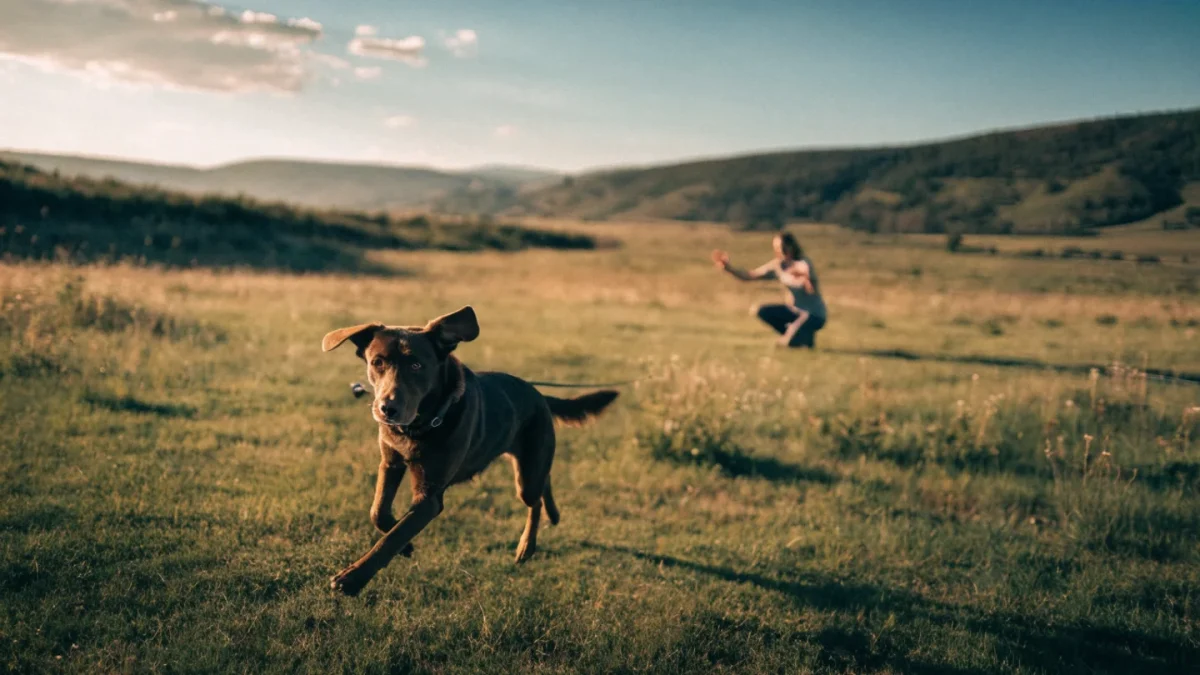
The long line is your best tool here. A 20-30 foot leash (not a retractable leash — a flat line) gives your dog the illusion of freedom while keeping you in control. Let them range out on the long line, call them, and reward generously. This is how you practice off-leash-style recall without the risk.
Don't go genuinely off-leash in an unfenced area until your recall is bombproof on a long line in multiple environments.
Recall Games to Build Speed and Drive
The puppy call: Get another person in the house involved. Stand 10-15 feet apart and take turns calling the dog back and forth. Reward each arrival enthusiastically. This builds speed and excitement around the recall cue.
Hide and seek: Go hide somewhere in the house or yard, then call your dog. When they find you, go big with the reward. This makes finding you the goal — great for dogs that are a little distracted outdoors.
The chase game: Run away from your dog as you call them. Most dogs' instinct is to chase movement. Turn the recall into a chase game (where you're the thing being chased) and watch the speed improve dramatically.
What to Do When Your Dog Ignores a Recall
First: don't repeat the cue. If "come" didn't work the first time, saying it again just makes it background noise.
Second: make yourself more interesting. Move. Crouch. Make a strange sound. Run in the opposite direction. You're competing for attention with whatever caught their interest — sometimes you have to out-interesting the environment.
Third: go get them calmly. Don't chase them (chasing is a game). Walk toward them steadily and attach the leash without any drama or scolding.
Fourth: evaluate. If your recall is regularly failing in a particular environment, you've pushed too far too fast. Go back to a lower distraction setting and rebuild.
When Your Dog Comes Slowly
A slow recall is better than no recall — but it's also feedback. Your dog coming to you with a slumped head or low tail is telling you something about how they feel about what might happen when they get there.
Always greet an arriving dog warmly, even if they took forever. Scolding a slow recall teaches them to come slower or not at all. They came. That's the behavior you wanted. Reward it.
The Poisoned Recall Fix
If your dog's recall is already damaged — they hesitate, circle you, or won't come at all — you need to start fresh. (See also: reliable dog recall.)
Pick a completely new cue word that has no history. Different word, different tone if you want. Build that new cue from scratch following the steps above, and retire the old cue. Never use it again. Over weeks, the new cue will build the associations you need.
Call your dog to you right now from wherever you're sitting. If they come fast and happy — good. If they hesitate or ignore you — that's your starting point. Tomorrow, ten recalls in the house, all of them rewarded generously. Start there.