
Sit is the command people underestimate most. "My dog already knows sit" is something I hear constantly — and then I ask the dog to sit in the parking lot next to another dog, and nothing happens.
Knowing a command in the kitchen with a treat bag on the counter is not the same as knowing a command. But sit is also genuinely the most useful behavior you'll teach, so it's worth teaching properly.
Here's how to do it from scratch, whether your dog is eight weeks or eight years old.
The Lure Method
The lure method is the fastest way to get a sit with most dogs. Here's the sequence:
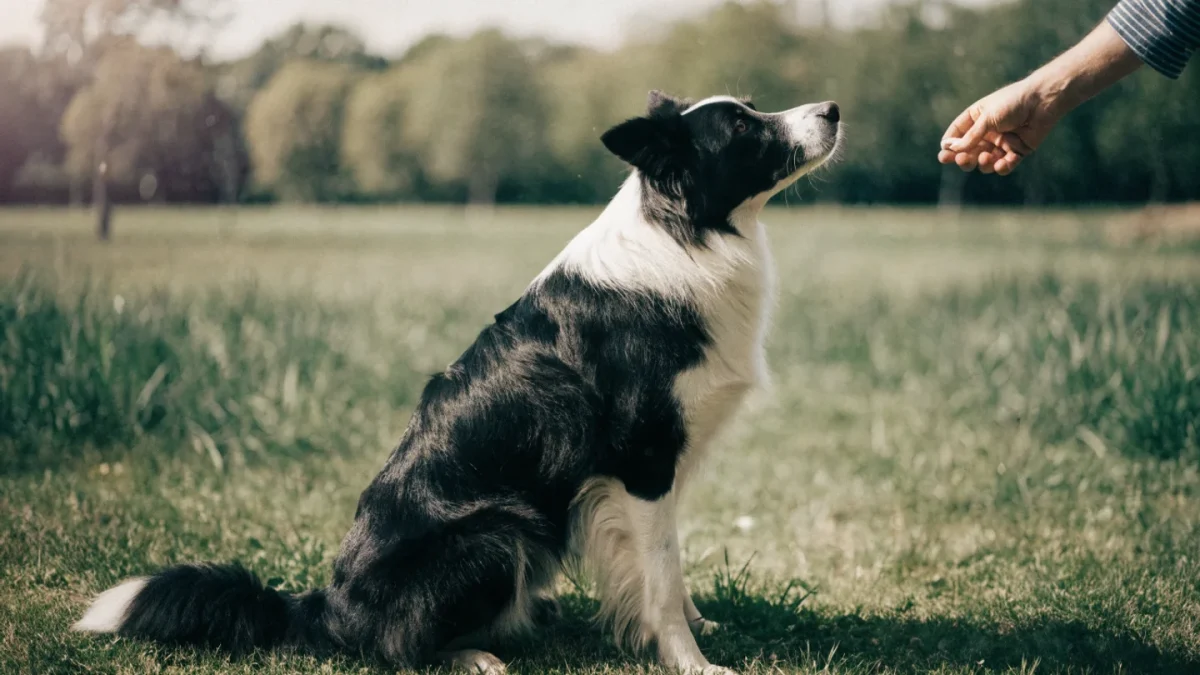
- Hold a treat between your thumb and forefinger, right at your dog's nose. Let them sniff it.
- Slowly move the treat backward over their head — not up, backward. Imagine drawing a slow arc from their nose to just behind their ears.
- Their nose follows the treat upward. Their rear drops to compensate.
- The instant their butt touches the floor — mark it. Say "yes" clearly, or click a clicker.
- Deliver the treat immediately.
That's it. Most dogs get this in five repetitions or fewer.
If your dog jumps for the treat instead of sitting: You're holding the treat too high. Keep it close to the nose and move it more slowly.
If your dog backs up instead of sitting: You're moving the treat too far back. The arc should be short — from the nose, barely over the ears.
When to Add the Verbal Cue
Here's where most people get it wrong: they say "sit" from the first repetition.
Don't. The word "sit" means nothing to your dog until it's been paired with the behavior enough times. If you say it before the behavior exists, you're just saying a random word.
Wait until your dog is sitting reliably on the lure — five or six clean repetitions in a row. Then, start saying "sit" the moment you begin the lure motion. Not before, not after. The word should land right as the behavior starts.
After another five or six repetitions with the word, try saying "sit" without any lure motion. If they sit, jackpot — big reward. If they don't, go back to the lure for a few more reps.
Fading the Lure
The lure is a teaching tool, not a permanent fixture. Once your dog is sitting reliably on the verbal cue, start fading the food from your hand.
Give the verbal cue with an empty hand. If they sit, reach into your treat pouch and reward. Gradually, the hand gesture fades too — or turns into a deliberate hand signal, which is useful in its own right.
A dog that only sits when they see food in your hand hasn't learned to sit. They've learned to follow food. The goal is a verbal cue that works regardless of what's in your hands.
Proofing the Sit
Teaching sit in your kitchen is just the beginning. A sit your dog will do anywhere requires deliberate practice in progressively challenging environments.
Work through this list over several weeks:
- Different rooms in the house
- The backyard
- The front yard
- A quiet street
- A park with moderate activity
- Near other dogs
- In a parking lot
- With visitors in the home
Each new environment is essentially a new lesson. Bring better treats to harder environments. Be patient with slowdowns — they're normal.
The Most Common Mistakes
Repeating the cue multiple times. Say "sit" once. If nothing happens, help them with a lure or reset and try again. Repeating the word teaches your dog that the first repetition is optional.
Rewarding a slow sit. Mark the moment the sit happens, not ten seconds later when you've found the treat bag. Timing matters.
Only practicing in one place. The kitchen sit is great. Now prove it everywhere else.
Pushing on the dog's rear. You might get a sit this way, but your dog hasn't learned anything except that pressure on their back means their rear goes down. Use the lure instead. (See also: teaching come.)
Using Sit in Real Life
Once your dog can sit on cue in multiple environments, put it to work:
- Ask for a sit before putting down the food bowl
- Sit before going through doors
- Sit when greeting visitors (instead of jumping)
- Sit at curbs before crossing streets
- Sit to say hello to strangers on walks
Sit becomes most useful when it becomes automatic — the thing your dog offers when they're not sure what else to do. That happens when you reinforce it in enough real-world situations that it just becomes their default.
Practice sit in two new rooms this week. No lure — just the verbal cue and your expectation that your dog performs. If they struggle, help them once with a lure, then try the cue again. Three sessions of five minutes each. By the end of the week, you'll know exactly how solid your dog's sit really is.