

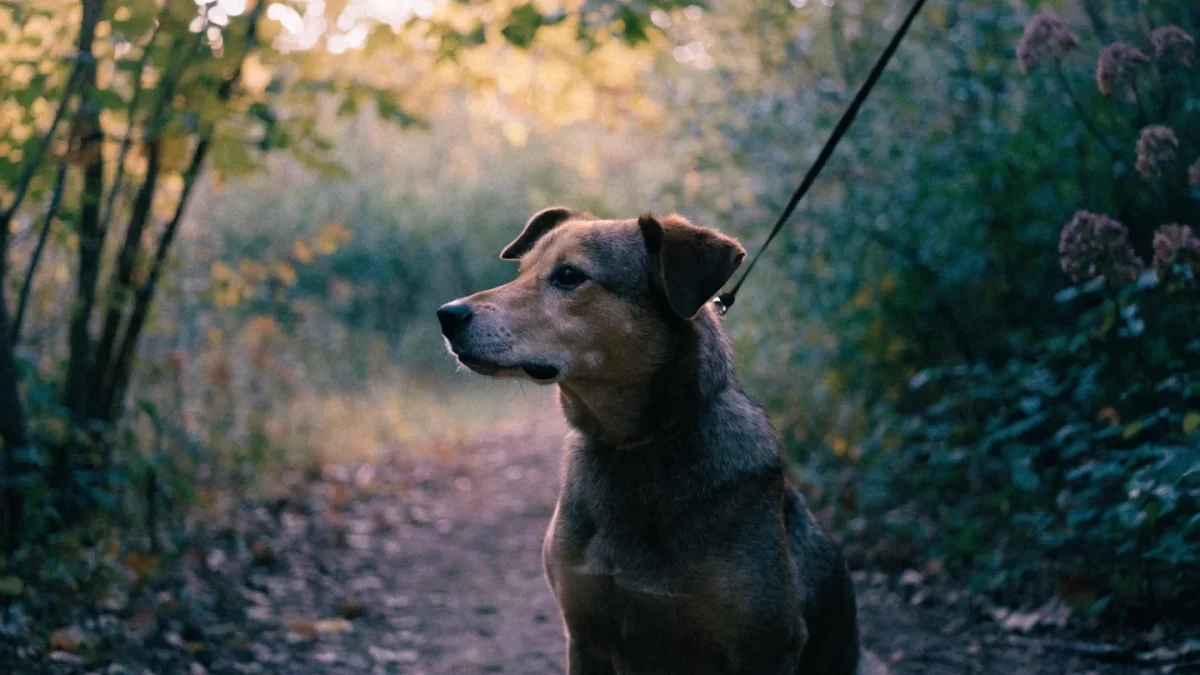
A wildlife encounter sounds exciting until it's happening to your dog at 6 a.m. while you're in your bathrobe at the end of the leash.
I've talked to clients after coyote attacks, after their dog cornered a raccoon in the yard, after a confrontation with a black bear on a trail. The common thread is almost always the same: the wildlife was attracted to something (food, a small dog as prey, a feeling of being cornered), the human wasn't prepared, and the response was to panic.
Panic is rarely the right answer. Preparation is.
Understanding the Wildlife Threat
Not all wildlife encounters are equal. The risks differ by your geography, the time of day, your dog's size, and whether you're in a yard or on a trail.
The Highest-Risk Animals in North America
Coyotes are the most widespread threat across the entire continent. They're established in every major North American city now. Small dogs and cats are legitimate prey items for coyotes; medium dogs are at risk during unusual circumstances like mated-pair territorial defense in pup-rearing season (April–July). Attacks on large dogs are rare but occur.
Raccoons aren't typically aggressive toward dogs unprovoked, but a cornered raccoon will defend itself, and they're vectors for rabies, leptospirosis, and raccoon roundworm. A dog who regularly chases or engages with raccoons is at disease risk beyond physical injury.
Porcupines injure dogs constantly in forested areas where they're present. They don't throw quills — the dog has to actually contact them. But since no dog seems to learn this lesson until it's happened repeatedly, the encounters are annoyingly common.
Skunks rarely injure dogs but the spray causes its own set of issues. Skunk spray contains thiol compounds that cause intense irritation; getting sprayed in or near the eyes causes significant pain and temporary visual disturbance.
Bears in residential and backcountry areas. Black bears typically flee dogs. Grizzly/brown bears are different — a dog charging a grizzly can redirect the bear's aggression toward the owner. There's genuine debate in the wildlife biology community about whether dogs help or complicate bear encounters.
Alligators in specific regions (Southeast US, Gulf Coast) are an ambush predator. Unlike most wildlife that can be deterred, alligators near water require strict avoidance.
The Secondary Risk: Disease
Beyond physical injury, wildlife carries several pathogens relevant to dogs:
- Rabies: raccoons, bats, skunks, foxes, coyotes all in the primary reservoir list
- Leptospirosis: spread through wildlife urine in water and soil
- Giardia and Cryptosporidium: ingestion from contaminated water sources wildlife use
- Raccoon roundworm (Baylisascaris procyonis): from raccoon feces — rarely causes disease in dogs but serious in humans
Current vaccination and parasite prevention status isn't optional for dogs with regular outdoor access — it's the disease management layer that supports all the physical avoidance strategies.
Prevention: The Practical Framework
In Your Yard
The first thing that attracts wildlife to your yard isn't your dog. It's food. Unsecured garbage bins, bird feeders, fallen fruit, compost bins, pet food left outdoors — these are what bring coyotes, raccoons, and bears into suburban yards. Remove the attractants first.
Then: supervision, especially at dawn and dusk. These are the primary activity times for coyotes, raccoons, foxes, and other nocturnal or crepuscular species. A small dog left alone in a yard at 5:30 a.m. is at measurably higher risk than the same dog supervised at the same time.
For small dogs and cats in high-coyote areas: outdoor access should be supervised or fenced with a coyote-proof fence (minimum 6 feet high, overhanging outward, no footholds). Standard 4-foot fences don't deter coyotes.
On Trails and In Natural Areas
Leash use. An off-leash dog is harder to control if wildlife appears. A dog who bolts toward a bear, runs off the trail toward a rattlesnake den, or chases a coyote — and coyotes will sometimes deliberately lead a dog toward a waiting group — is a dog you can't intervene for. Keep them on leash in any area with known wildlife activity.
Make noise. Most wildlife encounters happen because the animal is surprised. Talking, using a bear bell on the leash, or making periodic noise while hiking substantially reduces surprise encounters with bears and mountain lions.
Dog body language tells you something. A dog suddenly at rigid attention, hackles raised, oriented toward the brush, whining low — take that seriously. Dogs smell and hear wildlife long before we do. Stop, look, and be prepared to redirect.
If an Encounter Does Happen
Coyote approaching: Make yourself appear large and loud — shout, wave arms, throw rocks or sticks near the animal, use an air horn if you have one. Don't run. This is called hazing, and it works to maintain coyote wariness of humans. Pick up small dogs immediately — a dog in your arms is much harder to take.
Bear on trail: Stop, don't run, speak calmly. For black bears, look large and loud and back away. For grizzly/brown bears, the advice diverges — in most encounters, standing ground and talking calmly is preferred over aggressive behavior. Keep your dog close and behind you if possible. A dog barking and charging a bear creates a dangerous escalation.
Mountain lion: Don't run. Maintain eye contact. Look large. Back away slowly. If it attacks, fight back — unlike bears, mountain lions respond to prey behavior (running) and submission.
Raccoon cornered or acting strangely: Back the dog away. A raccoon that approaches without provocation, is active in daylight, or is acting disoriented may be rabid — significant emergency risk.
After any contact with wildlife: Check your dog carefully for wounds (which can be hidden in fur, especially on the face and neck). Any bite wound from wild mammals warrants veterinary evaluation, rabies discussion, and wound care. Any contact with a bat specifically requires an immediate call to your vet and potentially public health.
For coyote-specific risks and prevention in your area, there's more detailed guidance. And snakebite first aid covers that specific wildlife encounter in depth.
FAQ
Can a coyote attack a large dog?
It's uncommon, but it happens. Coyote attacks on large dogs are most likely during pup-rearing season (spring/early summer) when pairs are very territorial, or when a dog has approached a coyote that feels cornered. A pack of coyotes will occasionally mob a larger dog that enters their territory. The risk is much lower than for small dogs, but it's not zero.
My dog killed a rabbit in the yard. Is there any disease risk?
Possibly. Tularemia (rabbit fever) can be transmitted to dogs through contact with infected rabbits. Symptoms include fever, lethargy, and swollen lymph nodes. It's not common in dogs but it's worth monitoring, and if your dog shows signs within a few weeks, mention the rabbit contact to your vet.
We have a bear problem in our neighborhood. Is bear spray safe to use if a bear is approaching my dog?
Bear spray is effective at deterring bears and relatively safe for humans and dogs if not discharged directly at close range. The main concerns are: it's a last resort for close encounters (under 30 feet), it requires you to hold your ground, and it's not always practical when you're also managing a leash and a scared dog. A properly stored, easily accessible bear spray is reasonable for regular backcountry use in bear country.
My dog chased a raccoon. Should I be worried about rabies?
If there was no contact — no bite, no scratch — the risk is essentially zero. Rabies is transmitted through saliva, typically via bite. If your dog is current on rabies vaccination, even with a potential exposure, the risk is very low. If your dog is not current on rabies vaccination and made physical contact with the raccoon, call your vet and possibly your local animal control for guidance.
Do wildlife encounters vary significantly by season?
Yes. Late spring through summer is peak risk for many encounters: coyotes and foxes are raising pups and more territorial, bees and wasps are at maximum activity, bears are active after emerging from winter dormancy. Winter creates different risks — animals that are food-stressed (like coyotes in areas with limited prey) may be more bold near residential areas.