

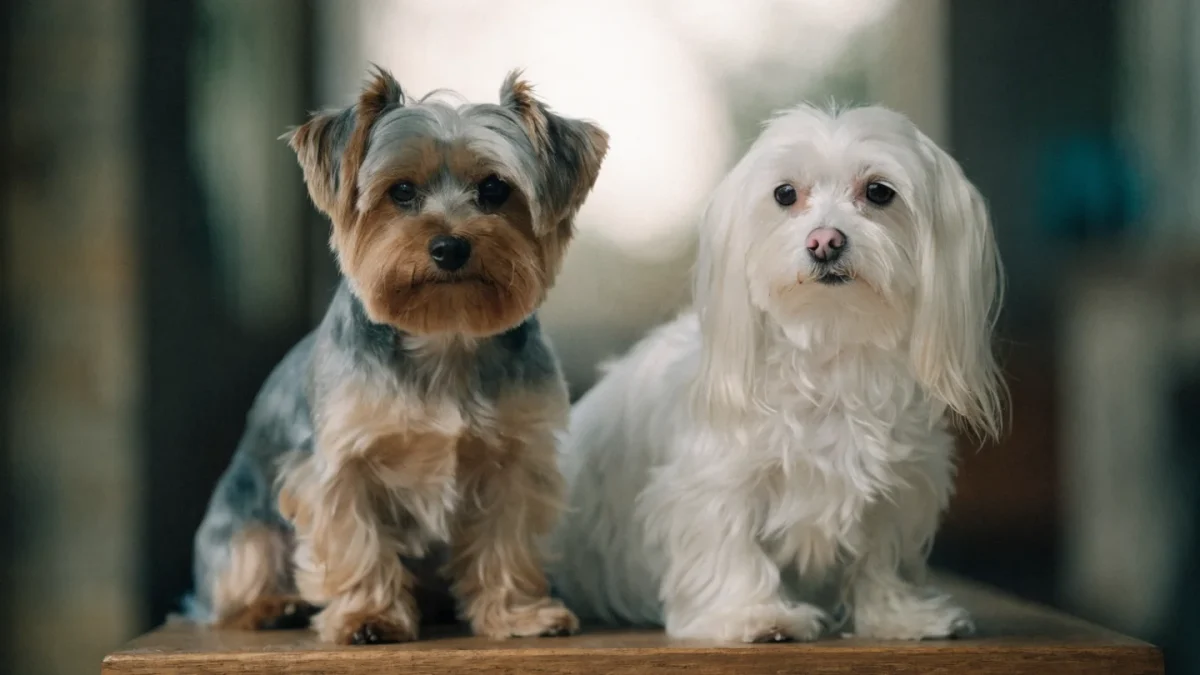
The Yorkshire Terrier started as a ratter in the textile mills of northern England during the 1860s. Workers needed a small dog that could chase vermin through tight spaces in the factories. The Maltese has been a lap dog for at least 2,000 years. That difference in origin — working terrier versus aristocratic companion — explains almost every behavioral difference between these breeds today.
Both are tiny, both have long silky coats, and both are wildly popular. But they're fundamentally different dogs wearing similar packaging. For the full comparison approach, see the breed comparisons guide.
Size and Build
| Trait | Yorkshire Terrier | Maltese |
|---|---|---|
| Height | 18–23 cm | 20–25 cm |
| Weight | 2–3.2 kg | 1.8–3.2 kg |
| Build | Compact, well-proportioned | Fine-boned, delicate |
| Coat color | Steel blue and tan | Pure white |
Remarkably similar in size, though the Yorkie tends to carry itself more compactly while the Maltese has a finer bone structure. Yorkies are born black and gradually develop their characteristic steel-blue and tan coloring — the coat color change can take two to three years to complete.
Temperament
This is where the breeds part ways decisively.
The Yorkshire Terrier is a terrier. That word matters. Yorkies are bold, alert, territorial, and have a prey drive that surprises people who see only the tiny body and the hair bow. They'll chase small animals, bark at perceived threats with startling intensity, and hold their ground against dogs many times their size. Yorkies are confident to the point of recklessness and require firm, consistent boundaries to prevent small-dog syndrome from taking root.
The Maltese is a companion. Bred for closeness, affection, and human partnership. Maltese are gentler, more sensitive, and more emotionally dependent on their owners. They bond deeply — sometimes too deeply, becoming anxious when separated. They can be spirited and playful, but their default mode is companionship, not confrontation.
In a multi-dog household, the Yorkie is more likely to assert dominance and create friction. The Maltese is more likely to defer or avoid conflict.
Grooming
Both breeds have continuously growing coats that don't shed in the traditional sense. Both require daily brushing when kept in a long coat, or regular professional grooming (every 4 to 6 weeks) in a shorter clip.
The Yorkie coat is single-layered, silky, and fine — similar to human hair in texture. It parts naturally down the spine. The Maltese coat is also single-layered and silky but tends to be softer and more prone to tangling, especially around the ears, armpits, and legs.
Both breeds are marketed as "hypoallergenic" due to minimal shedding. As with all breeds carrying that label, it's an overstatement — no dog is allergen-free, though both produce less airborne dander than double-coated breeds.
Tear staining is common in both breeds, particularly the Maltese, where the white coat makes staining more visible. Daily eye area cleaning helps manage but rarely eliminates staining entirely.
Health
| Health Factor | Yorkshire Terrier | Maltese |
|---|---|---|
| Top concern | Collapsed trachea, liver shunt | Collapsed trachea, dental disease |
| Lifespan | 11–15 years | 12–15 years |
| Joint issues | Luxating patella | Luxating patella |
| Dental | Crowded, early loss | Severely crowded, very early loss |
| Liver | Portosystemic shunt (congenital) | Less common |
Both breeds share several health concerns common to toy breeds: luxating patella, collapsed trachea, dental disease, and hypoglycemia (particularly in puppies and very small individuals). The Yorkie has a notable breed predisposition to portosystemic liver shunt — a congenital condition where blood bypasses the liver. This is testable and treatable but serious.
The Maltese faces more severe dental challenges due to its tiny jaw and extreme tooth crowding. Routine dental care starting early is not optional for either breed.
Exercise
Yorkies need 30 to 45 minutes of daily activity and are surprisingly energetic for their size. They enjoy walks, interactive play, and games that engage their terrier instincts — puzzle toys, hide-and-seek, short chase games.
Maltese need 20 to 30 minutes. They're less physically driven and more content with gentle play and short walks. Indoor activity often satisfies them, making the Maltese slightly more suited to less active owners or smaller living spaces.
Which Fits Your Life?
Choose the Yorkshire Terrier if you want a small dog with big terrier energy, don't mind the alertness barking, and enjoy a more independent-spirited companion. Yorkies are well-suited to people who want a toy breed that acts nothing like a toy.
Choose the Maltese if you want a calmer, more devoted companion, prefer a dog that's content being near you rather than patrolling the perimeter, and can manage the separation anxiety that comes with the breed's intense bonding.
For the Maltese compared against another white companion breed, see the Maltese vs Bichon Frise comparison. For a complete history and breed profile of the Yorkshire Terrier — from 1860s mill ratter to modern companion — the Yorkshire Terrier complete breed guide covers the breed in full. For an in-depth look at the Maltese's ancient Mediterranean origins, intense bonding tendencies, and dental health requirements, the Maltese complete breed guide provides the full profile.