

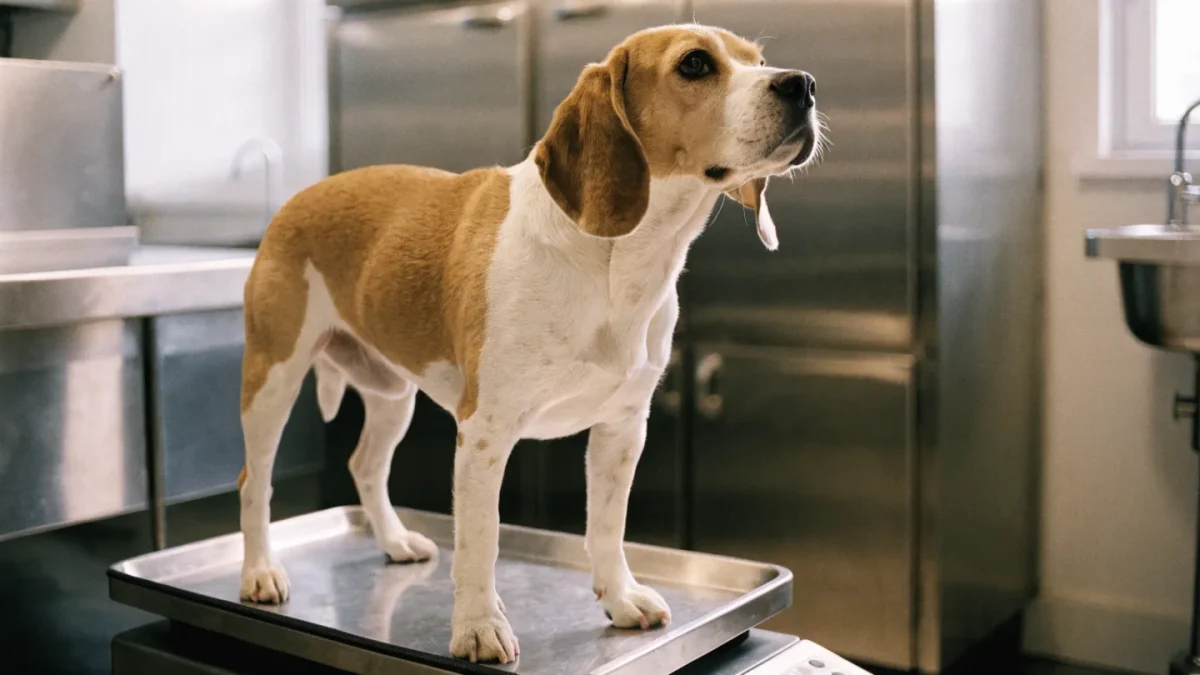
A nine-year-old beagle named Gus came in for his annual checkup last fall. His owner said he was fine — eating great, happy, no concerns. But Gus had lost two and a half pounds since the previous year. On a 28-pound dog, that's almost nine percent of his body weight. Bloodwork showed early kidney disease. His owner had no idea anything was wrong. The number on the scale was the only clue.
Appetite and weight changes in pets are among the earliest, most reliable indicators that something is happening inside the body. The tricky part is that these changes often develop gradually, making them invisible to the person who sees the pet every single day.
When Appetite Drops
A dog skipping a single meal doesn't necessarily mean anything. Dogs are intermittent eaters by nature — some skip meals when it's hot, when their routine changes, or when they just aren't hungry. Cats are different.
A cat who doesn't eat for 24 hours is already in concerning territory. After 48-72 hours without food intake, cats begin mobilizing fat reserves to the liver faster than the liver can process them. This causes hepatic lipidosis — fatty liver disease — which can be fatal even after the original problem is resolved. I treated a Persian last year whose owner thought the cat was being picky after a food change. By the time they came in three days later, the liver values were alarming. The cat recovered, but it took two weeks of force-feeding through a tube.
Medical causes of decreased appetite include:
Dental disease — this is the single most under-recognized cause of appetite loss I see. A dog or cat with a fractured tooth, a root abscess, or severe gingivitis won't always stop eating entirely. Instead, they eat slowly, drop food, chew on one side, or prefer soft food over crunchy kibble. The pain isn't dramatic enough to cause a complete refusal, which is why owners miss it.
Kidney disease, particularly in cats, causes nausea through uremic toxin buildup. The pet feels queasy. They may approach the bowl, sniff, and walk away. Or eat a few bites and stop.
Pain from any source — arthritis, a sore back, a GI issue — can suppress appetite. Animals in pain don't always vocalize. They just eat less.
Nausea from medications, infections, or liver dysfunction. If your pet recently started a new medication and their appetite dropped, mention it to your vet. Some medications are notorious appetite suppressors.
When Appetite Increases
This one surprises people. An increase in appetite — especially a dramatic, sudden increase — can signal disease just as clearly as a decrease.
Diabetes mellitus causes cells to starve for glucose despite high blood sugar levels. The body responds by ramping up hunger signals. A diabetic dog may eat ravenously and still lose weight, because the glucose isn't getting into the cells where it's needed. I've had dogs come in who'd doubled their food intake over a month and were thinner than before.
Hyperthyroidism in cats is the classic increased-appetite-with-weight-loss condition. An overactive thyroid gland cranks up the metabolic rate. The cat eats like they're training for a marathon and still drops weight steadily. It's extremely common in cats over ten — I screen for it at every senior wellness exam.
Cushing's disease (hyperadrenocorticism) in dogs causes increased appetite, increased thirst, a pot-bellied appearance, and eventually muscle wasting. The excess cortisol drives hunger relentlessly.
Exocrine pancreatic insufficiency — where the pancreas doesn't produce enough digestive enzymes — causes ravenous appetite alongside large volumes of pale, greasy, foul-smelling stool. The pet is eating plenty but absorbing almost nothing.
Weight Loss Without Appetite Changes
This is the pattern that worries me most, honestly. A pet who's eating normally but losing weight has something stealing those calories.
Cancer is one possibility. Many tumors increase metabolic demands. Internal tumors — splenic masses, liver tumors, intestinal lymphoma — can consume calories without producing obvious respiratory and circulatory symptoms until the disease is advanced.
Intestinal parasites, especially in younger animals, can cause weight loss despite adequate food intake. A fecal test catches most of them.
Chronic inflammatory conditions — inflammatory bowel disease, chronic pancreatitis — can impair nutrient absorption enough to cause gradual weight loss even with normal eating.
Weight Gain That Isn't Just Overfeeding
Not all weight gain is from too many treats. Hypothyroidism in dogs slows metabolism, causing weight gain even on the same diet the dog has always eaten. Fluid retention from heart disease or liver failure can add pounds quickly — but it's fluid, not fat, and it tends to accumulate in the abdomen (ascites) or the limbs.
Cushing's disease redistributes body fat to the trunk, giving dogs a pot-bellied appearance even as their legs lose muscle mass. The weight gain pattern is distinctive if you know what you're looking at.
What to Track at Home
Get a baseline weight and check it monthly. For small pets, a kitchen scale works — weigh yourself holding the pet, then weigh yourself alone, subtract. For larger dogs, many vet clinics have walk-on scales in the lobby you can use anytime during business hours.
Track food intake. How much goes in the bowl and how much is left. Note changes in speed of eating — a pet who used to inhale food and now picks at it may be dealing with mouth pain or nausea.
Watch water intake. Increased drinking (polydipsia) paired with weight changes is a diagnostic combination that points directly at a short list of conditions: diabetes, kidney disease, Cushing's, hyperthyroidism. If you're filling the water bowl significantly more often, tell your vet.
Record the patterns. "She's been eating about half her normal food for the past week" gives me infinitely more useful information than "she's not eating well." Specifics help — which meals, how much left, any vomiting, when it started.
When to Make the Appointment
For dogs: a complete appetite refusal lasting more than 48 hours, or any weight loss exceeding 10% of body weight over a month, warrants a visit. Sooner if combined with vomiting, diarrhea, lethargy, or other broader pet health warning signs.
For cats: appetite refusal beyond 24 hours is my threshold. Cats don't have the metabolic buffer dogs do. And any weight loss in a cat — even a pound in a ten-pound cat — is significant. That's ten percent.
Blood work, urinalysis, and sometimes imaging will usually identify the cause. Most of the conditions that cause appetite and weight changes are treatable if caught before they become advanced. Gus the beagle is doing well on a kidney-supportive diet and medication — because a number on a scale caught what his owner couldn't see.
Frequently Asked Questions
Is it normal for pets to eat less in summer?
Dogs often eat slightly less in hot weather — decreased activity and heat both reduce caloric demand. A reduction of 10-15% in intake during peak summer that bounces back in cooler months is usually normal. Cats are less affected by seasonal appetite swings. If the decrease is sudden, dramatic, or persists beyond a few days regardless of temperature, it's worth investigating.
My cat eats fine but feels bonier — should I worry?
Yes. Muscle wasting in cats (particularly along the spine and over the hips) with maintained appetite is a hallmark pattern for hyperthyroidism, chronic kidney disease, and several cancers. A senior blood panel will screen for the most likely culprits. I'd schedule that visit soon rather than waiting for the next annual exam.
Can stress cause weight loss in pets?
Absolutely. A new baby, a new pet, a move, construction noise, a change in the household routine — all of these can suppress appetite enough to cause measurable weight loss, especially in cats. The difference is that stress-related appetite loss usually has an identifiable trigger and resolves when the stressor stabilizes. If you can't identify a stressor, or if the loss continues after the stressor resolves, look deeper.
How much weight fluctuation is normal day to day?
Small daily fluctuations of 1-2% are normal and relate to hydration, meal timing, and bladder/bowel fullness. In a 50-pound dog, that's about half a pound either way. What matters is the trend over weeks. A consistent downward trend — even a small one — over four to six weeks is worth a conversation with your vet.