

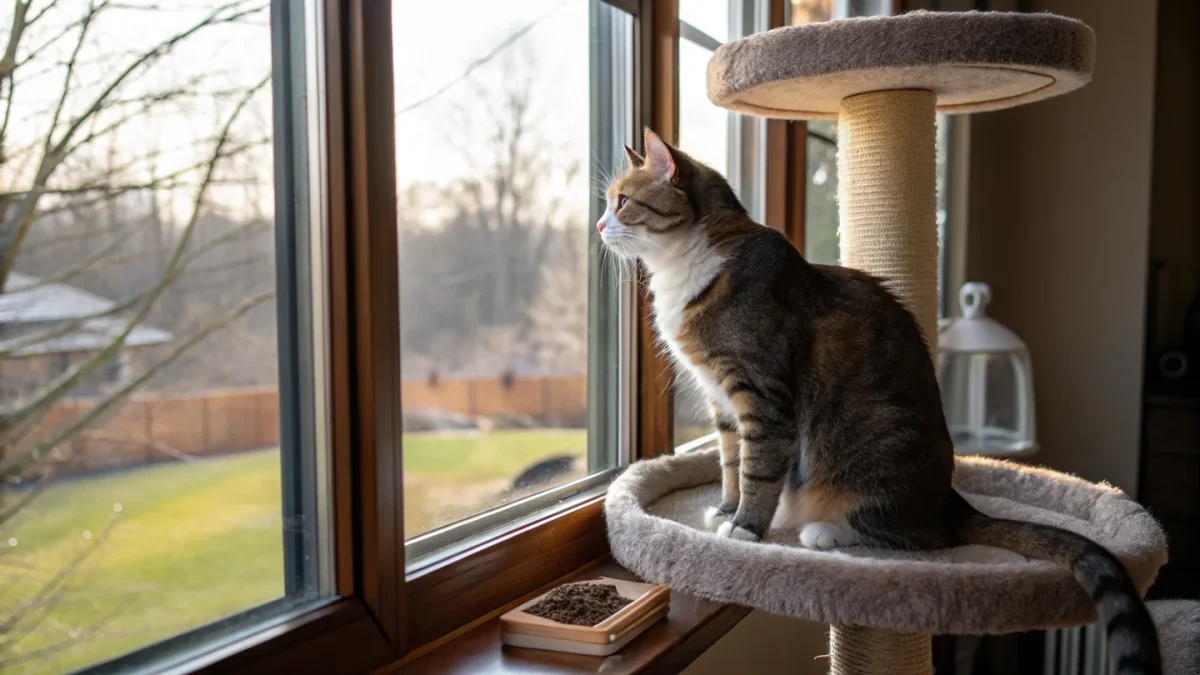
Whether to keep a cat indoors only is a question with real welfare considerations on both sides. Outdoor cats face predation, vehicle strikes, disease, and territorial conflict. Indoor cats face boredom, obesity from reduced activity, and the stress that comes from insufficient enrichment. Neither "indoor only" nor "outdoor access" is automatically better — the outcome depends on the breed, the environment, and how well the owner meets the cat's needs.
For breeds that adapt to indoor-only life well, the shared characteristic is lower frustration with limited territory. They're not actively seeking something beyond the home. The indoor environment is sufficient if enriched.
For the full breed selection framework, the cat breed selection guide covers all variables. If apartment-specific concerns apply, best cat breeds for apartments is also relevant.
Breeds That Thrive Indoors
British Shorthair
The gold standard for indoor-only life. Calm, adaptable, and genuinely content in a well-maintained indoor environment. They don't pace the perimeter seeking exits. They settle, they observe, they use their indoor territory fully. Weekly enrichment rotation (new toys, window access, cat tree) keeps them mentally engaged.
Ragdoll
Ragdolls are often described as having a low hunting drive compared to many breeds, which makes indoor-only life less frustrating for them. They're content with human company and indoor enrichment. They don't exhibit the escape-seeking behavior that high-prey-drive breeds often show.
Persian
Low energy, low territory requirement, and low outdoor aspiration. Persians are quintessential indoor cats — they prefer settled, comfortable environments. The significant caveat is the daily grooming requirement. The Persian breed profile covers the flat-face health considerations and what the grooming routine actually involves.
Exotic Shorthair
Same temperament as Persian; lower grooming demand. Excellent indoor cat.
Russian Blue
Once settled in their home environment, Russian Blues are deeply attached to their territory in the positive sense — they're content there. They're not escape artists. The shyness with strangers extends to preferring known, settled environments.
Ragamuffin
Calm, gentle, and fully content indoors. The Ragamuffin lacks the strong territorial or hunting drive that makes some breeds restless inside.
Making Indoor Life Work
The difference between a content indoor cat and a bored, frustrated indoor cat is the environment.
Vertical space matters: Cat trees, shelves, and elevated resting spots allow cats to survey their territory from height — an instinctive need that compensates for limited floor area.
Window access with visual stimulation: A window perch with bird feeder outside it provides hours of low-effort enrichment. This is one of the highest-value, lowest-cost improvements for indoor cats.
Toy rotation: New toys or returning retired toys monthly maintains novelty.
Interactive play: At least one daily session with a wand toy or similar keeps motor skills and engagement active.
Multiple resting areas: Cats spend significant time sleeping — varied, comfortable resting options in different areas of the home are genuinely beneficial.
None of this is excessive. It's the baseline that turns "imprisoned cat" into "contented indoor cat."