

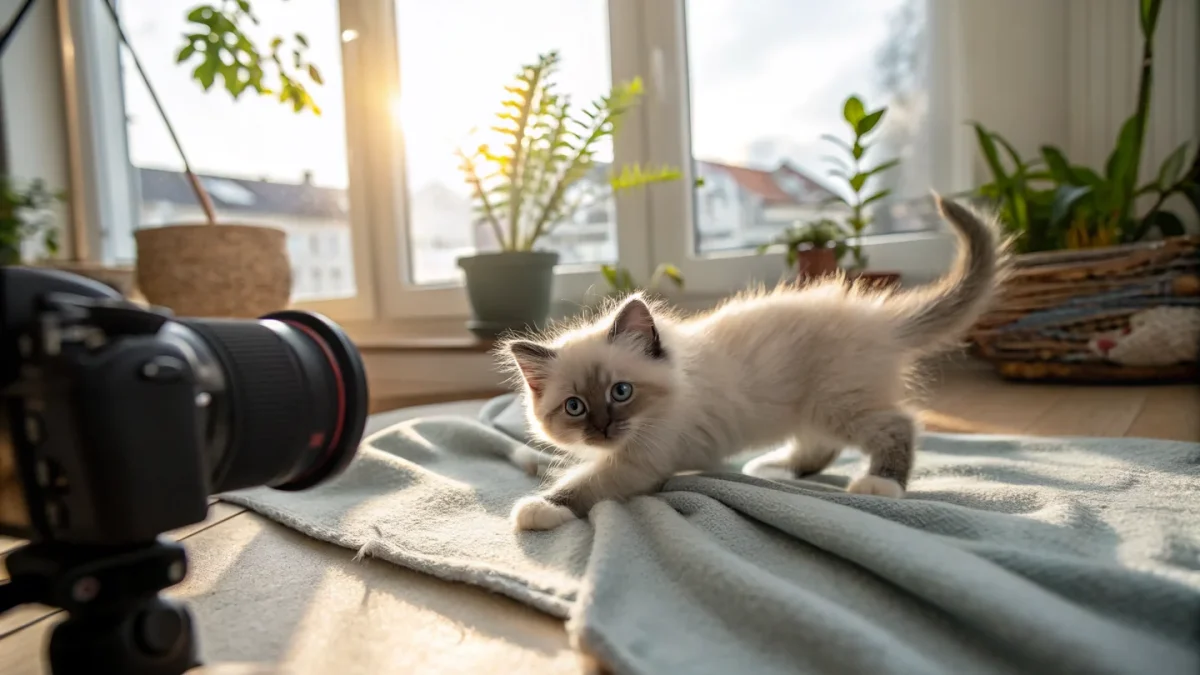
Birman kittens surprise people who come in expecting the adult breed's calm, settled dignity. The kitten is considerably more chaotic than the adult. The first year with a Birman kitten is the year of high energy, coat development, and gradual emergence of the personality that will characterize the adult.
The Early Weeks: Settling In
A Birman kitten coming home at 12 to 14 weeks has already been socialized by its breeder through the sensitive period for kitten development. What it now needs is continued positive exposure and the establishment of its new household's routines.
Birmans are not typically the deeply reserved kittens that a Russian Blue might be. The breed's sociable nature shows early — most Birman kittens are curious, not fearful, and will investigate their new environment with interest rather than hiding for days. That said, some individuals are shyer than others, and any kitten benefits from a calm, low-pressure introduction period.
A designated settling-in room for the first few days — with litter box, food, water, and comfortable bedding — gives the kitten a manageable initial territory to explore before expanding to the full house.
The Coat in the First Year
The Birman kitten is born very light, almost white, with the point pattern barely suggested at birth. The full point color — the seal, blue, chocolate, lilac, or other pattern — develops over the first weeks and months. By 8 to 12 weeks, the point color is clearly visible; full adult color depth continues developing for the first one to two years.
The white gloves are present at birth. Their exact extent and symmetry becomes more apparent as the kitten grows. Show-quality Birman gloves — perfectly symmetrical, ending at the correct point — are determined by genetics and visible by a few months of age.
The semi-long adult coat takes time to develop. Young Birman kittens have a shorter, fluffier coat that gradually lengthens and settles into the silky adult texture over the first year. The chest ruff and tail plume become more dramatic as the cat matures.
Begin gentle combing sessions from the first weeks home, even when the kitten's coat is short. The Birman coat care routine will be needed for the cat's entire life; a kitten that learns combing is a normal, comfortable part of handling will accept it readily as an adult. A kitten that never experiences it until the adult coat arrives has a harder adjustment.
Development Stages Through the Year
3–6 months: The kitten phase in full. High energy, impulsive play, enthusiastic investigation of everything. Birmans at this age play with the abandon of any kitten — jumping, chasing, batting at every moving thing. The adult calm is not yet in evidence.
6–9 months: The transition. Play intensity begins to moderate. The personality becomes more readable — the characteristic Birman sociability, the gentle approach to interaction, the preference for being in occupied rooms — starts to stabilize.
9–12 months: The adult personality is largely established. The kitten's frantic energy has been replaced by the more measured, confident engagement of the adult Birman. The cat has learned its household's routines and its own position within them.
Full physical and behavioral maturity continues through the second year; Birmans typically reach their complete adult coat and body weight by 18 to 24 months.
Socialization in the Kitten Year
The Birman kitten's socialization period — most sensitive at 2 to 7 weeks, with important influence through 3 to 4 months — ideally begins with the breeder. Your role from 12 weeks onward is to continue exposing the kitten to the full range of people, sounds, and experiences it will encounter throughout its life.
Gentle handling by different people. Exposure to household sounds (cooking, music, conversation). Visits from calm visitors who interact respectfully. Veterinary examinations that are handled with gentle confidence rather than restraint. All of these during the kitten year shape the adult cat's relationship with the world.
The complete Birman breed guide covers the adult personality and what the breed is like over a full lifetime. The first year is the foundation — the investment in handling, routine, and positive exposure repays itself in the calm, sociable adult that emerges.