
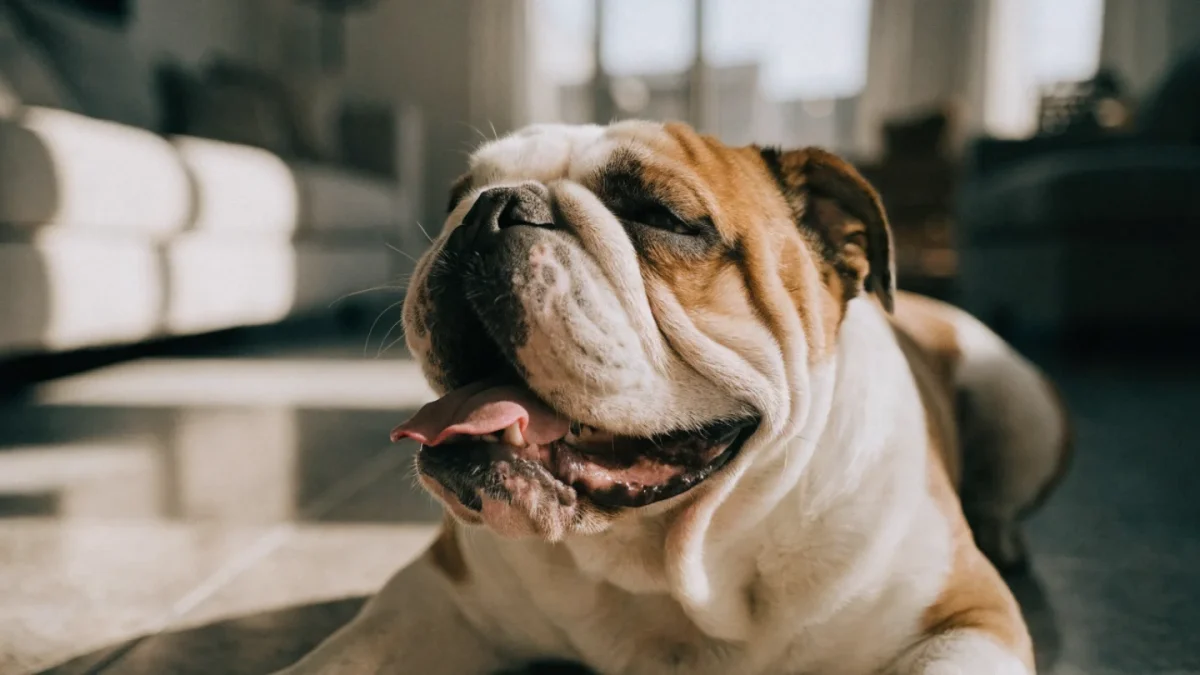
Mochi was a two-year-old English Bulldog whose owner brought him in for a routine checkup and pulled out her phone to show me videos of him sleeping. She thought the sounds were cute — these rattling, gurgling snores she and her partner had been recording for months. She wasn't alarmed. To me, those sounds told a different story. What she was hearing was a dog whose airway was partially obstructed even at rest, working harder than he should just to breathe through the night. I asked her to sit down so we could talk about what that actually meant for Mochi's long-term health. You could see on her face the moment adorable became something else. That's a hard conversation to have, and it's one I have regularly with owners of flat-faced breeds.
Brachycephalic dogs — the flat-faced breeds like Bulldogs, Pugs, French Bulldogs, Boston Terriers, Shih Tzus, and Pekingese — face a collection of health problems rooted in how their skulls were shaped through generations of selective breeding. Brachycephalic obstructive airway syndrome (BOAS) causes chronic breathing difficulty, and these breeds also struggle with overheating, skin fold infections, eye injuries, dental crowding, and spinal abnormalities.
This isn't about vilifying these breeds. I've treated hundreds of them, and their personalities are magnetic. But loving a brachycephalic dog means understanding what their anatomy costs them.
The Airway Problem: BOAS Explained
BOAS isn't one thing — it's a cluster of anatomical abnormalities that stack on top of each other. The skull has been shortened, but the soft tissue inside hasn't shrunk to match. So you get:
Stenotic nares — nostrils so narrow the dog is essentially breathing through a pinhole. Hold your nose almost shut and try to breathe. That's the daily experience for many of these dogs.
Elongated soft palate — the tissue at the back of the throat extends too far and partially blocks the airway. This is what creates that signature snoring, snorting, and reverse sneezing.
Hypoplastic trachea — a windpipe that's narrower than it should be for the dog's body size. English Bulldogs have some of the most dramatically undersized tracheas I've measured.
Everted laryngeal saccules — small pouches of tissue near the voice box that get sucked into the airway during the extra effort of breathing through restricted passages.
Each of these alone is manageable. Combined, they create a dog that works two to three times harder than a normal-snouted dog just to move air. And the harder they work to breathe, the more the soft tissues swell, which makes breathing even harder. It's a feedback loop.
A colleague once described it to an owner this way: imagine running a marathon while breathing through a coffee stirrer. That's not far off for the most severely affected dogs.
Heat Is the Biggest Danger
Dogs cool themselves primarily through panting — moving air rapidly across moist membranes in the mouth and throat. Brachycephalic dogs can't pant efficiently because their airways are compromised. This means they overheat faster and recover from heat exposure slower than other breeds.
I've treated brachycephalic breed health problems emergencies where dogs collapsed after 15 minutes outside on a warm day — not even a hot day, just warm. Heatstroke in a Bulldog can go from "seems a little tired" to critical in under 30 minutes.
If you own one of these breeds, you need to be almost obsessive about temperature management. Air conditioning isn't a luxury, it's medical equipment. Exercise happens in the cool hours. Car rides happen with the AC running before the dog gets in. And if your dog starts breathing with visible effort, wide-open mouth, and becomes unresponsive to you — that's an emergency, not a "let's wait and see."
Beyond Breathing: The Other Health Burdens
Skin Fold Infections
Those wrinkles that make Bulldogs and Pugs look so expressive? Each fold traps moisture, warmth, and bacteria. Facial folds, tail folds (especially the corkscrew tails of English Bulldogs), and body folds in overweight dogs can develop pyoderma — a bacterial skin infection that becomes chronic without consistent cleaning.
I have Bulldog owners who wipe their dog's face folds daily. That's the commitment. Skip a few days in humid weather and you'll find red, raw, smelly skin underneath.
Eye Problems
Shallow eye sockets mean the eyes protrude more than in other breeds. This makes brachycephalic dogs vulnerable to corneal ulcers from minor trauma — a branch on a walk, rough play, even rubbing their face on carpet. I've seen corneal ulcers in Pugs from sleeping face-down against a pillow.
Entropion (eyelids rolling inward) and cherry eye (prolapse of the third eyelid gland) are also overrepresented in these breeds.
Dental Disease
When you compress a skull but don't reduce the number of teeth, those teeth crowd together. Food and bacteria get trapped in spaces that can't be cleaned — even with brushing. Brachycephalic breeds tend to need dental cleanings earlier and more frequently than other dogs. Tooth extractions are common by middle age.
A five-year-old Pug I treated last year needed 11 teeth extracted. She'd never shown obvious pain — she was still eating — but the infection under those crowded teeth was extensive.
Spinal Issues
English Bulldogs and French Bulldogs frequently have hemivertebrae — malformed vertebrae shaped like wedges instead of blocks. Many dogs live with these asymptomatically. But in some, the malformation compresses the spinal cord, causing pain, weakness in the hind legs, or incontinence. French Bulldog health problems often include this among their most serious concerns.
Boston Terriers and Pugs can also develop hemivertebrae, though less frequently than Bulldogs.
Surgery and the Question of "Fixing" BOAS
Surgical correction for BOAS exists and can dramatically improve quality of life. The most common procedures widen the nostrils (rhinoplasty) and shorten the elongated soft palate (staphylectomy). In younger dogs — ideally under two years — the success rates are good. The airway remodeling that comes from years of struggling hasn't set in yet.
But surgery doesn't make these dogs normal. It makes them better. A Bulldog with corrective surgery still has a shorter airway than a Labrador. They're still at higher risk of overheating. The goal is functional improvement, not a cure.
I recommend BOAS evaluation for every brachycephalic puppy I see at their first comprehensive exam. The ones with severe stenotic nares — you can see it just by looking — benefit from early intervention.
Living Well With a Brachycephalic Breed
I don't believe in telling people they shouldn't own these breeds. But I do believe in informed ownership.
Keep them lean. Extra weight on a brachycephalic dog is extra tissue compressing an already narrow airway. I've seen Bulldogs whose breathing improved by 40-50% just from losing three pounds.
Use a harness, never a collar. Pressure on the throat worsens airway problems.
Monitor them during exercise — short, low-intensity sessions with plenty of rest. Swimming is a terrible idea for most Bulldogs (their body shape makes them poor swimmers and many have drowned), though some Pugs and Bostons can manage shallow water with a life vest.
And find a vet comfortable with brachycephalic anesthesia. These dogs have higher anesthetic risk because of their airway anatomy. It's manageable with proper protocols, but it requires experience.
Frequently Asked Questions
Is snoring normal in brachycephalic breeds?
Snoring is common, but "common" and "normal" aren't the same thing. Mild snoring during deep sleep may be the baseline for your dog. But loud snoring at rest, snoring that wakes the dog up, or snoring accompanied by gasping is a sign of significant airway obstruction that should be evaluated.
Can BOAS be cured?
No — BOAS is a structural condition. Surgery can improve airflow significantly, sometimes dramatically, but it doesn't create a normal-length airway. Think of it as turning down the difficulty level, not removing the obstacle entirely. Most dogs that undergo corrective surgery are noticeably more comfortable, more active, and less at risk of respiratory crises.
At what age should I have my brachycephalic dog evaluated for airway problems?
I like to do an initial assessment at the first puppy visit and then a more thorough evaluation around 6-12 months. If your dog is consistently noisy breathing, exercise-intolerant, or gags while eating, don't wait — get them seen regardless of age.
Are some brachycephalic breeds healthier than others?
There's a spectrum. Boston Terriers and Shih Tzus tend to have less severely compressed airways than English Bulldogs or Pugs, though individual variation is huge. Within any breed, dogs from breeders who select for more moderate skull shapes and open nostrils will be healthier than dogs from lines prioritizing the most extreme flat-faced look. The trend toward "retro Pugs" with slightly longer muzzles is a step in the right direction, though it's still a niche movement.