

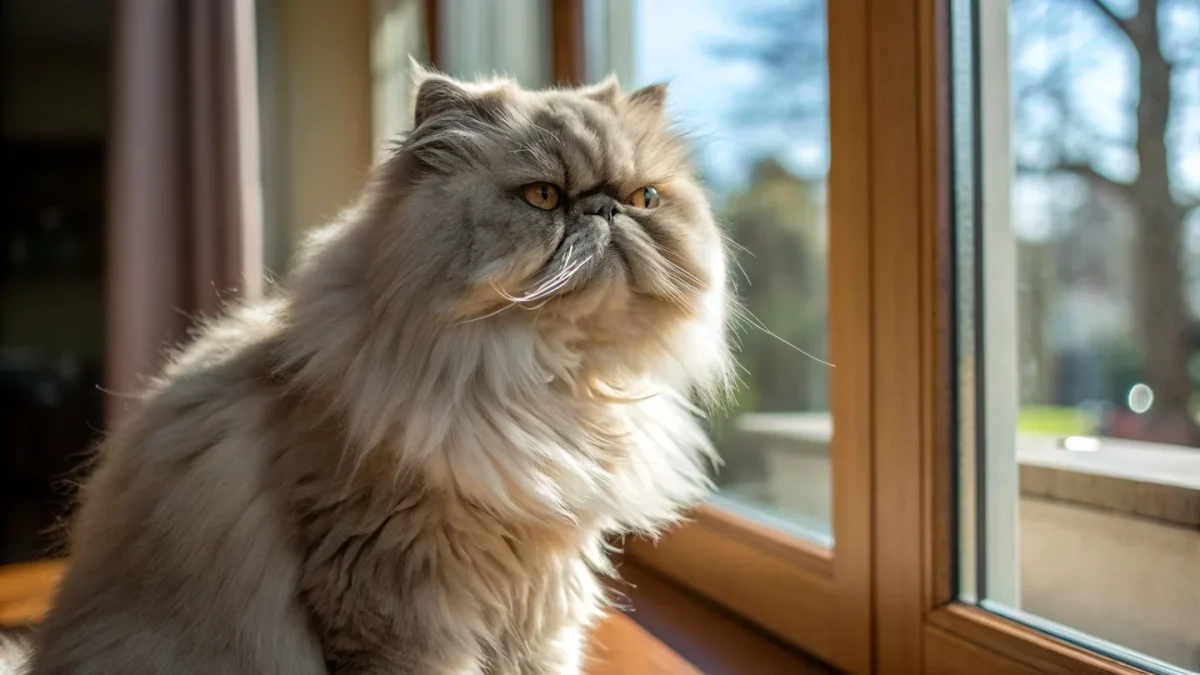
We took a healthy animal and bred the face off it. That's not a polemic — it's a description of what the records show. A century ago, Persians had functional muzzles. Cats that breathed normally, had teeth that fit their mouths, and eyes their eyelids could cover. Then breeders kept selecting for flatter and flatter, rounder and rounder, because that's what the show ring rewarded, and now we have cats that snore at rest and need daily eye wiping as a baseline condition of existence.
The breeds involved — Persian, Himalayan, Exotic Shorthair, and a few others — are genuinely appealing animals. I understand the appeal. A well-socialized Exotic Shorthair has a personality that'll outlast most first impressions. But the flat face isn't incidental to those cats; it's the product of deliberate selection decisions with real health consequences, and anyone considering one of these breeds owes it to themselves — and to the cat — to understand what those consequences actually are.
For context in the broader breed landscape, the cat breed categories guide covers how these breeds fit the full picture.
Which Cat Breeds Are Brachycephalic?
Persian: The most common and extensively bred brachycephalic cat. Modern show Persians have extremely compressed facial structures. Pet-type ("doll-faced") Persians have less extreme compression and generally better health profiles.
Himalayan: Colorpointed Persian — same body type and the same facial compression, same health implications.
Exotic Shorthair: Persian conformation with a short coat. All the same structural considerations. The Exotic Shorthair breed profile covers how breeders select for moderated conformation and what the health monitoring looks like in practice.
Scottish Fold: Brachycephalic in some lines but this is not the defining feature of the breed — the Scottish Fold's primary health issue (osteochondrodysplasia) comes from the ear-fold gene, not facial compression.
British Shorthair and Burmese: These breeds have rounder faces than foreign-type cats but are not typically classified as clinically brachycephalic — the compression is much milder.
What BOAS Is
BOAS — Brachycephalic Obstructive Airway Syndrome — is a collective term for airway abnormalities associated with brachycephalic conformation. In cats, it may include:
- Stenotic nares: Narrowed nostrils that restrict airflow
- Elongated soft palate: Soft tissue at the back of the mouth that extends further than normal, partially obstructing the airway
- Narrowed trachea: Reduced tracheal diameter
Affected cats may show: noisy breathing, open-mouth breathing after minimal exertion, snoring, exercise intolerance, and in severe cases, respiratory distress. Many brachycephalic cats live with subclinical (not obviously apparent) airway compromise — breathing is harder than it should be without reaching crisis level.
Dental and Eye Issues
Dental crowding: The compressed skull affects the jaw shape, creating crowded teeth that don't align normally. Dental disease rates are higher in brachycephalic cats, and professional dental cleaning is often needed more frequently than in non-brachycephalic breeds.
Eye issues: The eye sockets in brachycephalic cats are shallow relative to the eye size. The eyes protrude, reducing the eyelid coverage that protects them. Corneal ulcers and chronic eye discharge requiring daily cleaning are common. Severe proptosis (eye popping out of socket) can occur with minimal trauma in extreme cases.
Nasal folds: Skin folds around the nose on some extreme individuals can trap moisture and debris, causing skin fold dermatitis.
Welfare Perspective
Brachycephaly in cats (and dogs) is an active welfare topic in veterinary medicine and among regulatory bodies. The concern is straightforward: some level of anatomical compromise is inherent to the physical standard that defines these breeds, meaning the welfare implications are built in.
This doesn't mean all brachycephalic cats suffer or that responsible ownership of these breeds is wrong. It means:
- Understanding what you're managing before adopting is ethical preparation
- Choosing less extreme facial conformations ("doll-faced" Persians, Exotic Shorthairs from lines selected for function over extreme flatness) reduces the health burden
- Veterinary monitoring of airway function, eye health, and dental status is important
The practical and visual differences between show-type and traditional Persian conformation are documented in flat-faced vs traditional Persian conformation — a useful reference for anyone evaluating individual cats or breeders against this spectrum.
FAQ
Are doll-faced Persians healthier than show Persians?
Generally yes. "Doll-faced" Persians have a more moderate facial profile with a longer muzzle than show-type Persians. This means less severe airway compression, better eye coverage, and reduced dental crowding. If you want a Persian, asking specifically about facial moderation in the line is a sensible question.
Have any countries banned flat-faced cat breeding?