
Most people brush their long-coated dog wrong. Not through negligence — they're trying, they're doing it regularly, and the coat looks fine from the outside. But what looks smooth on the surface often conceals a dense mat two inches down, right against the skin, that won't become visible until it's already causing the dog discomfort.
The fix isn't brushing harder or longer. It's brushing smarter — specifically, using line brushing technique rather than surface brushing.
Why Surface Brushing Fails
Surface brushing — running a brush over the top of the coat — straightens and smooths the outer layer of hair. It looks like it's working. The coat lies flat, the brush collects loose hair, the dog looks tidy.
But silky coats tangle closest to the skin, not at the surface. The problem zone is the 1–2 inches of coat immediately above the skin, where compression and friction create the conditions for tangling. Surface brushing doesn't reach there. The underlying mat starts and grows undetected until it either becomes visible when the dog moves, or until a groomer discovers it at bath time.
A dog that gets brushed thoroughly on the surface every day can still develop mat-to-skin in three weeks.
Line Brushing: The Only Method That Works
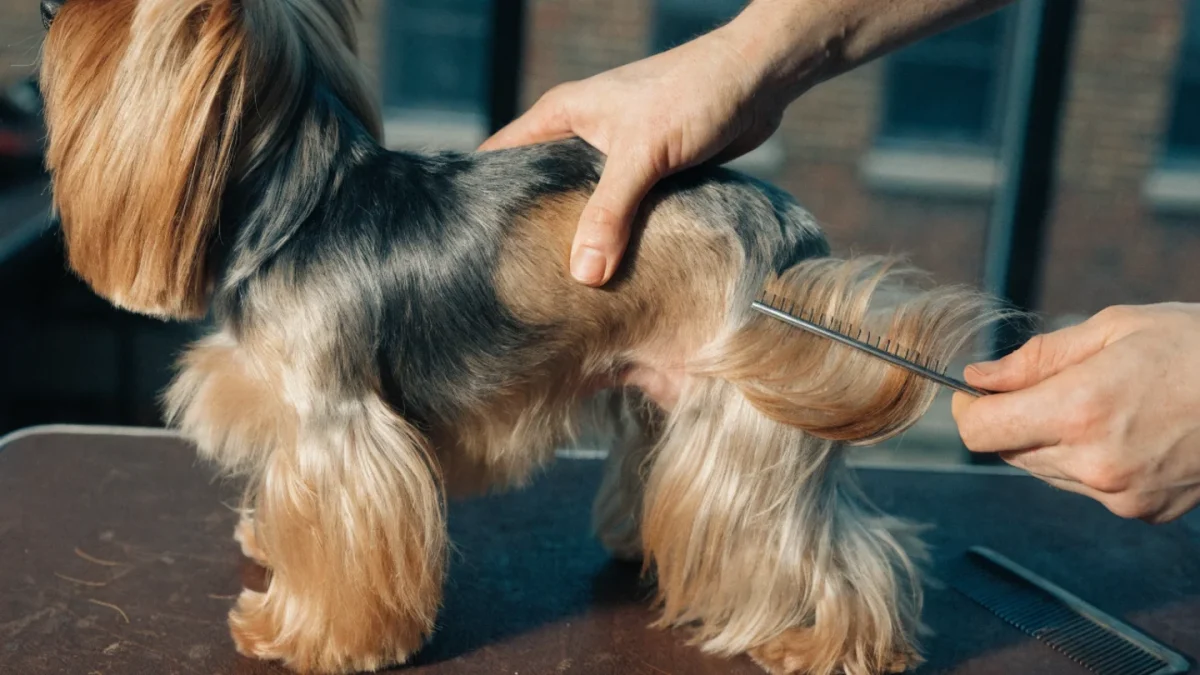
Line brushing means working the coat in horizontal sections, from the skin outward, exposing and brushing each layer individually.
Setup: The dog should be standing on a table or held still (for smaller breeds). A pin brush, a greyhound comb, and a light misting of leave-in conditioner spray are your tools.
The process:
1. Choose a section. Pick an area — one flank, for example. Working on the right side, start at the rear and work forward.
2. Lift the overlying coat. Use your non-brushing hand to hold back the upper coat layers, revealing the skin and the lowest layer of coat immediately above it.
3. Brush the bottom layer. Short, firm strokes with the pin brush from the skin outward. The pin brush's flexible cushion allows it to move through the fine silky hair without ripping.
4. Verify with the comb. After brushing a 3–4 inch section, run the fine end of your greyhound comb through it from skin to tip. Smooth pass: that layer is clear. Snag: there's a tangle or mat at that point that needs attention before you proceed.
5. Release and add the next layer. Let down a small amount of the held-back upper coat and brush that layer. Verify. Continue until all layers of that section are clear.
6. Move forward. Continue working forward in sections across the whole dog.
It's slower than surface brushing. A thorough session on a Maltese in full coat might take 30–45 minutes. On a Yorkshire Terrier in pet clip, 15–20 minutes. This is the trade-off for actually preventing mats rather than just appearing to.
Problem Zones: Extra Attention Required
Behind the ears: The most common mat location on virtually every long-coated breed. The ear leather moves constantly; the surrounding coat folds into the back of the ear flap and twists. Check behind both ears first at every session, before you do anything else. This isn't being paranoid — it's just where the mats are.
Armpits: Constant friction from the front leg movement. Slightly tricky to brush because the dog needs to stand with the leg extended to access the full armpit area. Work carefully — armpits are sensitive and a mat here causes real discomfort with every step.
Collar area: The collar rubs the neck coat continuously. Either remove the collar for brushing (ideal) or check under and around it specifically in each session.
Groin and inner rear legs: Easy to miss, prone to tangles, and uncomfortable for the dog to have matted. Work the inner rear leg with the leg extended back (most dogs accept this if handled calmly).
Between the toes: On breeds with profuse foot feathering (Cocker Spaniels, Afghan Hounds), the coat between the toes tangles easily and collects debris.
Leave-In Conditioner: Practical Value
Dry silky coat tangles faster and breaks more easily than properly moisturized coat. A light misting of leave-in conditioner or detangling spray before each brushing session reduces static (a significant contributor to tangling), makes the pin brush move more smoothly, and reduces hair breakage from the brushing process itself.
Don't saturate the coat — a light mist is sufficient. Heavy application leaves the coat looking oily and can attract dust.
The Comb Check: Non-Negotiable
Every session should end with a comb pass through the entire coat, not just the suspicious areas. Fine end first, working section by section from skin to tip. The comb tells the truth about the coat in a way the brush doesn't.
If the comb passes through cleanly — no snags, no resistance — the coat is genuinely mat-free. If it catches anywhere, you have more work to do before you declare the session complete.
FAQ
How long should a line brushing session take?
Depends on the breed and coat length. Yorkshire Terrier in pet clip: 15–20 minutes. Maltese or Shih Tzu in shorter trim: 20–30 minutes. Afghan Hound or dog in full floor-length coat: 30–60 minutes. If you're rushing to finish in 5 minutes, you're surface brushing.
My dog won't hold still for line brushing. How do I manage this?
For table-trained dogs, a grooming loop (a loop of soft material attached to the table arm) helps maintain position without causing stress. For dogs brushed on the floor or sofa, working in one section at a time while the dog is relaxed (drowsing, not alert and active) is more effective than trying to hold them in one position. Short sessions that end positively build tolerance over time.
Can I use a slicker brush instead of a pin brush on long coats?
A slicker with very soft, flexible pins (low-profile) can work for surface finishing on some long coats. Hard-pin slickers damage silky coat — they break individual hairs and over time create a dull, frizzy texture. Stick to cushioned-pin brushes for primary brushing work.
What if I find a mat during line brushing?
Stop brushing and assess the mat's size and density. Small, loose tangles: apply detangling spray, work through with fingers first (separating hair), then the fine comb. Medium mats: dematting comb working from the outside tip inward. Large, tight mats close to the skin: don't force them — a professional groomer or veterinarian if the mat is causing irritation. Forcing dense mats can tear skin.