

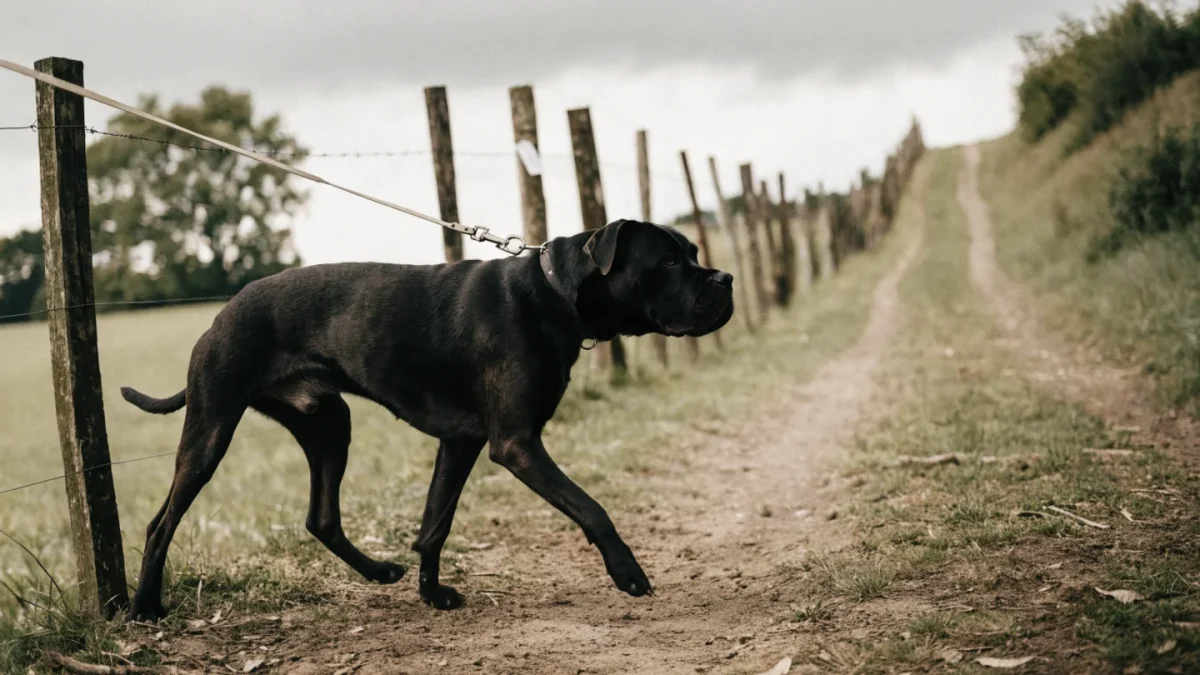
The Cane Corso was built to work a full day on a southern Italian farmstead — patrolling property lines at dawn, driving cattle over uneven terrain through midday, standing guard through the night. The history of working across Italian farmsteads explains how two thousand years of that functional selection shaped the breed's physical and behavioral baseline. No pet owner needs to replicate that schedule. But understanding the physical baseline this breed was designed for explains why a twenty-minute neighborhood walk doesn't come close to meeting cane corso exercise needs.
The Corso is not hyperactive. It doesn't bounce off walls like a young Border Collie. What it does is deteriorate — behaviorally and physically — when under-exercised. An idle Corso is a 45 kg dog with working instincts and nothing to apply them to. It will find outlets you won't enjoy.
How Much Is Enough
Plan for 60 to 90 minutes of structured exercise daily for a healthy adult. "Structured" matters more than the number. Yard access alone doesn't count — a Corso with a large backyard and no purposeful activity will pace the fence line, bark at passing dogs, and dig. That's not exercise. That's a bored guardian breed inventing its own job.
Split the time across the day: two walks of 30 to 40 minutes each, plus 15 to 20 minutes of focused play or mental work. Younger adults between 18 months and 4 years often need more. Dogs over 7 or 8 may need less volume but still benefit from daily movement for joint mobility and muscle tone.
What Works
The Corso's exercise profile is closer to a long-haul athlete than a sprinter — endurance over rough terrain, not retrieval bursts.
Sustained leash walks and jogs. The Corso's ground-covering gait is built for distance at moderate pace. Leash manners are non-negotiable — a pulling Corso is genuinely dangerous to handle.
Property patrol. Corsos engage meaningfully when given territory to investigate. A securely fenced area where the dog moves freely and checks perimeter points mirrors the breed's historical function.
Scent work. Hiding treats or objects, scatter feeding on grass, or informal scent trails taps centuries of hunting heritage. Particularly valuable because it exhausts the dog mentally without high physical impact.
Swimming. Excellent low-impact exercise for a heavy breed predisposed to joint issues. Not all individuals take to water — introduce gradually.
Tug and flirt pole work. Short, high-intensity sessions of 10 to 15 minutes engage prey drive and build core strength. Incorporate impulse control — the dog releases on cue and waits for restart.
What Doesn't Work
Dog parks. Most Corsos are poor candidates for off-leash interaction with unfamiliar dogs. The breed's territorial nature creates liability in uncontrolled environments.
Repetitive high-impact exercise. Extended pavement jogging, forced stair climbing, and heavy jumping stress joints already predisposed to hip dysplasia and cruciate tears.
More exercise as a blanket behavior fix. If destructive behavior stems from separation anxiety or inadequate socialization, additional physical exercise alone won't solve it. The Cane Corso temperament profile covers the behavioral patterns driving these issues.
Puppies and Adolescents
Growth plates in the Cane Corso typically close between 14 and 18 months. Until then, avoid forced repetitive exercise — sustained jogging, jumping from heights, extended stair use, and running on hard surfaces.
A guideline of five minutes of structured exercise per month of age, twice daily, provides a reasonable framework. A four-month-old gets two 20-minute sessions. By eight months, two 40-minute sessions. Let the puppy dictate when it stops.
The Mental Component
Physical exercise alone doesn't satisfy this breed. A Corso that gets a 90-minute walk but no mental challenge is physically tired and still restless — and restless is where the destructive behavior comes from.
Puzzle feeders, novel walking routes, short obedience sessions (10 to 15 minutes), and environmental enrichment all prevent the monotony guardian breeds find intolerable. The ideal program combines physical activity with mental work in roughly a 60/40 ratio. The full ownership picture is covered in the complete breed guide.