

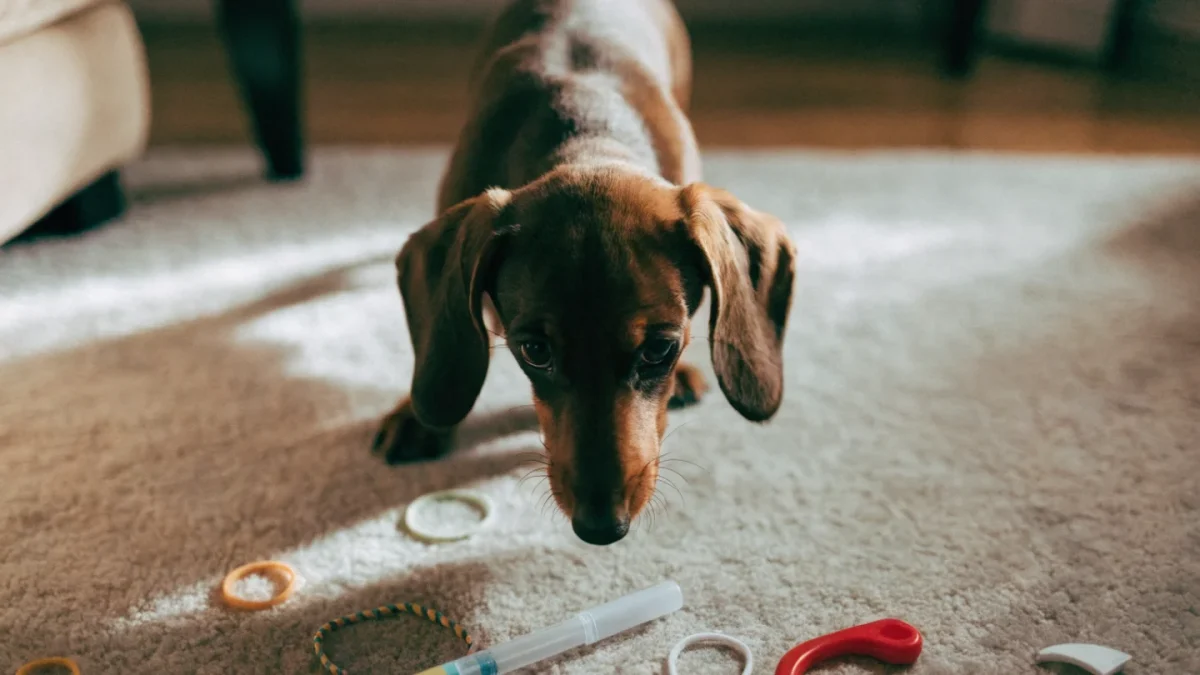
Foreign body surgery is one of those procedures I've done more times than I can count. And the conversation afterward — "How did this happen?" — is almost always the same. The owner is somewhere between baffled and mortified. The sock, the corn cob, the hair tie, the sewing needle — it was just there, they didn't think anything of it. The dog found it before they did.
Pets don't evaluate objects the way we do. A rubber band is interesting. A hair tie smells like the person they love. A corn cob is a leftover from dinner. Everything is worth investigating, and investigation for many animals involves the mouth.
Objects That Cause Choking
True choking — airway obstruction — is less common than GI foreign bodies but is a genuine emergency when it occurs. It's more common with round, firm objects that can lodge in the throat: balls, chunks of rawhide, large food pieces. Dogs playing fetch with balls that are too small for their mouth size are at particular risk.
Signs of active choking: pawing desperately at the face, extreme distress, gagging, blue-tinged gums (cyanosis), unable to make a sound or making unusual sounds. This is one of the few situations where a first-responder maneuver at home may be necessary before you can get to a vet — the Heimlich for dogs involves firm abdominal thrusts, and knowing this technique in advance could save a life.
But for this article, I want to focus on the objects that cause GI obstruction — the swallowed items that don't choke acutely but get stuck somewhere along the digestive tract.
The Most Common Swallowed Objects (By Species)
Dogs tend to be indiscriminate — socks, underwear, bones, corn cobs, fruit pits, toy pieces, rocks, coins, buttons. Big dogs swallow bigger things. Small dogs can get into trouble with items you'd never imagine they could fit in their mouth.
Cats tend toward string, ribbon, thread, yarn, and tinsel. The linear foreign body problem in cats is specific enough to deserve special discussion (see more on why string and ribbon are especially dangerous). Cats also swallow hair ties, rubber bands, small soft toys, and occasionally plant material.
Why Obstructions Are Serious
A foreign object lodged in the esophagus is painful and can cause esophageal damage — but the real danger is when something gets stuck in the stomach or intestines.
Gastric obstruction (something stuck in the stomach) prevents normal digestion. The dog will vomit, often persistently. Dehydration and electrolyte imbalances develop. If the object has sharp edges, there's risk of perforation.
Intestinal obstruction is worse. The object blocks the movement of gut contents. Pressure builds upstream. The intestinal wall becomes compromised from poor blood flow. Without surgical intervention, intestinal perforation, peritonitis (infection of the abdominal cavity), and death follow. This progression can happen within days.
Linear foreign bodies in cats (string, ribbon, thread) can cause a distinctive bunching or "plication" of the intestines — the gut folds up on itself around the fixed string — which is surgical emergency.
Objects I Worry Most About
Bones — particularly cooked bones, which splinter. Raw bones can obstruct too, but the splintering risk from cooked chicken, pork, or beef bones makes them especially hazardous. Bone shard perforations are genuinely horrible. I tell my clients: no cooked bones, ever.
String, ribbon, yarn, fishing line, dental floss, thread — the linear foreign body category. Leave this in a sewing kit or drawer, not on the floor.
Corn cobs — I cannot emphasize this enough. Corn cobs are a perfect cylinder just large enough to block the intestine in most dogs and don't digest or compress. Dogs love them. And extraction is always surgical.
Fruit pits — cherry, peach, plum, apricot. Multiple hazards: the pits themselves are obstruction risks, and they also contain small amounts of cyanogenic compounds.
Hair ties and rubber bands — a favorite of cats and small dogs. Soft enough to swallow, accumulate in the stomach, and can cause obstruction when several accumulate.
Button batteries — not just a swallowing/obstruction risk but a chemical burn risk. The electrical current generated by the battery in moist tissue causes rapid, severe tissue necrosis. This is a true emergency even if the battery passes through — the burn can perforate the esophagus within hours.
Toys sized for the wrong animal — cat toys for dogs, puppy toys for adult dogs, squeaker pieces from partially destroyed toys.
Preventing Swallowing Incidents
- Keep laundry picked up — socks and underwear are among the most commonly retrieved foreign bodies from dog surgeries
2, including cleaning products. Store sewing supplies in sealed boxes, not accessible baskets - Check children's toys for small detachable pieces and keep them in pet-free areas
- After cooking or barbecuing, immediately dispose of bones in a secured trash can
- Use toys appropriately sized for your pet and inspect them regularly for damage
- Pick up hair ties and rubber bands — they don't belong on the floor
The full guide to household hazards for pets covers the broader context of all the things that can harm pets at home.
Frequently Asked Questions
My dog swallowed a small piece of a toy. Do I need to go to the vet?
It depends on the object's size, material, and your dog's size. A small soft rubber piece swallowed by a large dog may pass uneventfully. A hard, angular piece in a small dog is a greater concern. Call your vet, describe the object and your dog's size, and follow their guidance. They may recommend monitoring, an x-ray, or having the dog seen immediately.
What are the signs that something is stuck in my pet's stomach or intestines?
Repeated vomiting (especially if non-productive — retching without bringing anything up), loss of appetite, lethargy, abdominal pain (hunching, reluctance to be touched on the belly), constipation, or no bowel movements. These signs after a known or suspected swallowing incident warrant prompt veterinary evaluation.
Can a dog pass a corn cob naturally?
Rarely. Corn cobs are among the worst offenders for GI obstruction precisely because they don't soften or compress in the GI tract and their size fits the intestinal diameter poorly. If you know or suspect your dog ate a corn cob, don't wait for symptoms — call your vet. The earlier this is identified, the more options there are for management.
Should I try to induce vomiting if my dog just swallowed something?
Not without veterinary guidance. For some objects, inducing vomiting is the right first step. For others — sharp objects especially — it can cause more harm. Button batteries should not be vomited, as they can cause esophageal burns coming back up. Call your vet or animal poison control and describe exactly what was swallowed before attempting any intervention at home.