

I got a message through an online bird forum last year from someone whose cockatiel had been on an all-seed diet for nine years. The bird had just been diagnosed with fatty liver disease, and the owner was devastated — they genuinely didn't know seeds were a problem. The pet store had sold them a bag of "complete cockatiel food" that was nothing but sunflower seeds, millet, and some dried corn. Nine years.
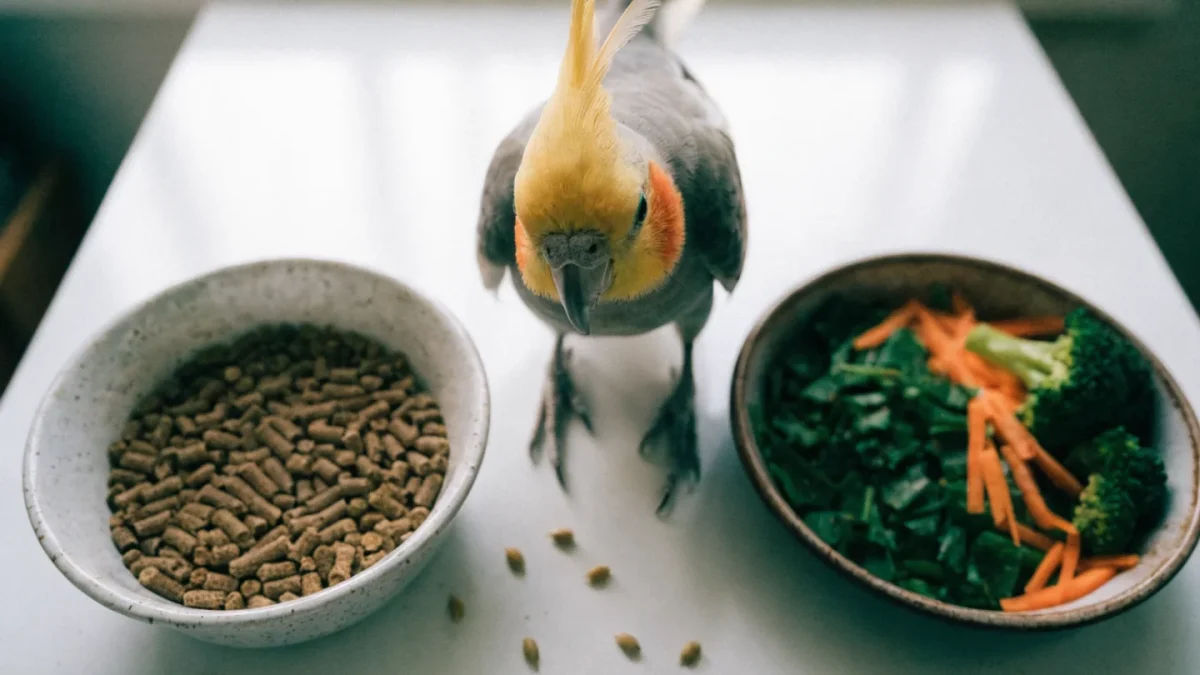
A healthy cockatiel diet food plan centers on formulated pellets (60-70% of daily intake), supplemented with fresh vegetables and leafy greens (20-30%), with seeds reserved as treats making up no more than 10%. All-seed diets cause fatty liver disease, vitamin A deficiency, and calcium depletion — the three nutrition-related problems avian vets see most in cockatiels.
If you've already read the cockatiel care guide, you know diet connects to everything: energy, feather quality, immune function, even behavior. This guide goes deeper into what to feed, what to avoid, and how to handle a bird that refuses to touch anything that isn't a sunflower seed.
Why Seeds Alone Fail
Seeds aren't poison. Wild cockatiels eat seeds — they're ground-foraging birds across arid and semi-arid Australia. But wild cockatiels fly kilometers daily, eat a diverse range of native grass seeds and vegetation, and deal with seasonal scarcity that prevents overconsumption of any single food type.
Pet cockatiels sit in a cage and get unlimited access to the highest-fat seeds their owner can buy. It's a completely different metabolic situation.
Sunflower seeds — the ones every cockatiel loves most — are roughly 50% fat. A cockatiel eating primarily sunflower seeds is getting more fat than it can metabolize, and the excess deposits in the liver. Over months and years, the liver tissue is replaced with fat. By the time symptoms show up (lethargy, overgrown beak, difficulty breathing), the damage is advanced.
The other problem: seed-based diets are almost completely devoid of vitamin A and calcium. Vitamin A deficiency leads to changes in the mucous membranes of the respiratory and digestive tracts, making the bird more vulnerable to infections. Calcium deficiency causes soft bones, egg-binding in females, and seizures.
Pellets: The Foundation
Pellets are formulated to deliver balanced nutrition in every bite. That last part matters because cockatiels are notorious food-sorters — they'll crack open the seeds they like and ignore everything else. A seed mix labeled "fortified" is useless if the bird eats around the fortified pieces.
Look for pellets sized appropriately for cockatiels (small, around 2-3mm). Avoid pellets with artificial colors — the dyes don't benefit the bird and some keepers report behavioral changes with brightly colored pellets, though the evidence there is mostly anecdotal.
The transition from seeds to pellets is where most owners struggle. A cockatiel that's eaten seeds its entire life doesn't recognize pellets as food. You can't just swap the bowl overnight — the bird may starve itself rather than eat an unfamiliar food. Here's the approach that works:
- Mix pellets into the current seed mix at roughly a 25/75 ratio (pellets to seeds).
- Over 2-4 weeks, gradually increase the pellet proportion. Watch the bird's weight daily with a gram scale. Any drop beyond 10% means you're moving too fast.
- Some birds respond well to seeing pellets moistened slightly — the texture change triggers curiosity. Others prefer pellets crushed into smaller pieces initially.
- Eating pellets in front of the bird helps. They're flock feeders. If you pretend to eat from the pellet bowl (yes, really), some cockatiels will investigate out of pure social interest.
I've had transitions take anywhere from one week to three months. A ten-year-old bird on a lifetime seed diet will be the hardest to convert. Patience is not optional here.
Fresh Foods That Work
Dark leafy greens are the cornerstone. Kale, Swiss chard, dandelion greens, romaine (not iceberg — it's mostly water with minimal nutrition), mustard greens, and bok choy. Rotate them. Variety is important both nutritionally and because cockatiels get bored with the same green every day, just like you would.
Other vegetables: shredded carrot, small pieces of broccoli, cooked sweet potato (cooled to room temperature), sugar snap peas, bell pepper strips. Some cockatiels enjoy corn on the cob — it's higher in sugar than leafy greens, so treat it as an occasional offering rather than daily.
Fruits in small amounts: blueberries, apple slices (remove seeds — apple seeds contain amygdalin), banana, mango, papaya. Fruit is dessert, not dinner. Two or three times a week, a small piece.
Avoid: avocado (toxic), chocolate (toxic), onion and garlic (toxic), raw beans, high-salt foods, caffeine, alcohol. Anything cooked with nonstick cookware fumes is deadly. If you're not sure about a specific food, don't offer it until you've verified it's safe.
Clip leafy greens to the side of the cage with a stainless steel clip. Cockatiels are more likely to interact with food they can shred and play with than food sitting passively in a bowl. Make vegetables interesting, and the bird will eventually eat them.
Supplements and Extras
If your bird is eating a pellet-based diet with daily fresh vegetables, additional vitamin supplements are rarely necessary and can actually cause problems — vitamin D and calcium oversupplementation is a real concern. But there are exceptions.
Cuttlebone or a mineral block should always be available in the cage. It's a calcium and mineral source the bird can access on its own terms. Some birds gnaw on it regularly; others barely touch it. Leave it in regardless.
For birds still transitioning off seeds or on a mixed diet, a liquid avian vitamin supplement in the water can help bridge gaps. Change the water daily — vitamins in water promote bacterial growth.
Sprouted seeds are an excellent middle ground between seeds and vegetables. Soak seeds for 8-12 hours, rinse thoroughly, and offer the sprouts within a day. The sprouting process dramatically reduces fat content while increasing available vitamins. I've found this is the single best way to get a seed-addicted bird interested in something that isn't a dry seed — it's familiar enough in shape and texture that the bird will try it.
For a broader look at how diet principles work across different exotic species, the guide on species-specific nutrition covers the reasoning behind these ratios.
How Much to Feed
An adult cockatiel eats roughly 1.5-2 tablespoons of pellets per day. Offer fresh vegetables in a separate dish, refreshed morning and evening. Remove uneaten fresh foods after a few hours to prevent spoilage — especially in warm rooms.
Monitor weight, not volume consumed. A healthy adult cockatiel weighs between 80 and 120 grams. Weekly weigh-ins on a gram-accurate kitchen scale will catch weight trends before they become visible under the feathers.
Overweight cockatiels: reduce seed treats to near zero and ensure the bird is getting out-of-cage exercise time. Underweight: if the bird is eating well but losing weight, see an avian vet — weight loss despite good appetite can signal digestive problems, parasites, or organ disease.
FAQ
My cockatiel only eats seeds and refuses everything else. What do I do?
This is the single most common feeding problem I hear about. Don't panic, and don't force it. Start the gradual transition described above and expect it to take weeks. Some birds respond to "birdie bread" — a baked mixture of pellets, egg, and finely chopped vegetables that combines familiar textures with new nutrition. Offer new foods first thing in the morning when the bird is hungriest.
Are colored pellets bad for cockatiels?
There's no strong evidence that FD&C dyes used in bird pellets cause direct harm, but they serve zero nutritional purpose. I prefer natural-colored pellets because the bird's droppings remain a reliable health indicator — dyed droppings from red or green pellets can mask color changes you'd want to notice.
Can cockatiels eat human breakfast cereal?
Small amounts of plain, unsweetened whole-grain cereal won't hurt them. But it's not particularly nutritious for a bird, and the risk of offering something with added sugar or salt is high. Stick to foods that actually benefit them.
How do I know if my cockatiel is getting enough calcium?
Signs of calcium deficiency include soft or thin-shelled eggs (in females), seizures, weakness, and an overgrown or flaky beak. If the bird is eating pellets and has access to cuttlebone, calcium deficiency is unlikely. Seed-only birds are the ones at risk. A blood panel from an avian vet can confirm calcium levels if you're concerned.