

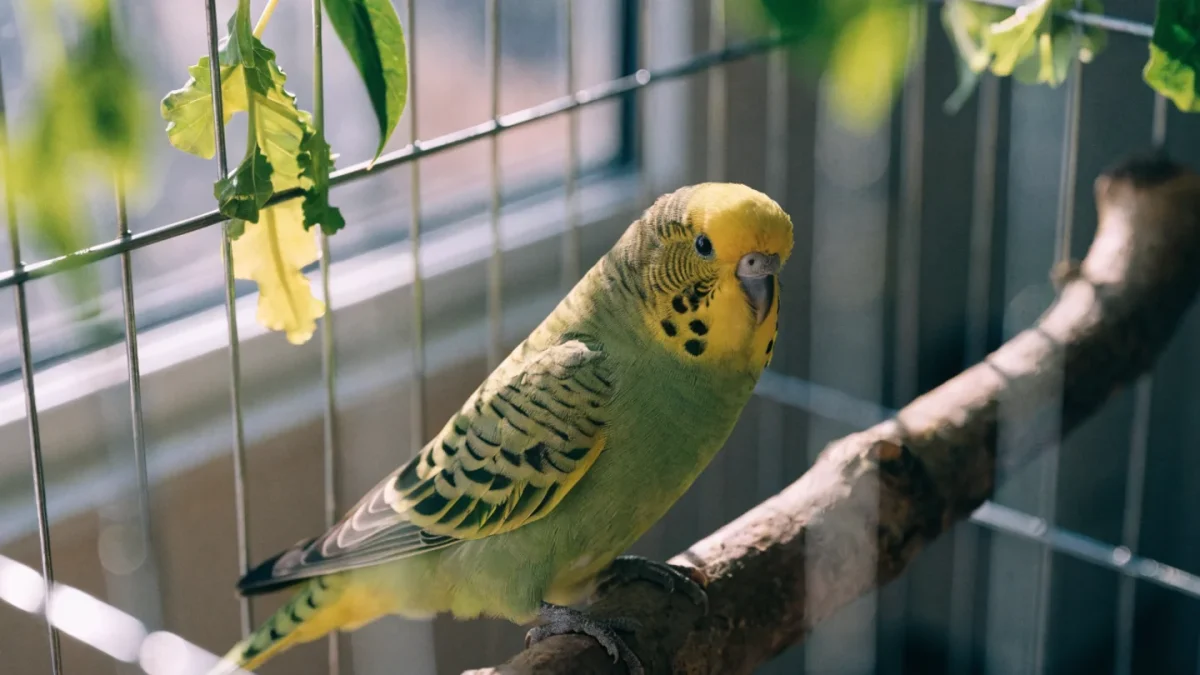
The first budgie I ever kept died within three months. I was fourteen, had read one care sheet online, and thought a small round cage and a bag of seed mix was all it took. That bird — a sky-blue male I'd named Pixel — never had a chance, and I didn't know enough to see the signs until it was too late.
Budgie care starts with understanding that these small parrots — budgerigars, Melopsittacus undulatus — are not the disposable starter pets that pet stores sometimes imply. A well-kept budgie can live eight to fifteen years, is capable of learning dozens of words, and has social and environmental needs that rival birds three times its size. Getting the basics right from day one determines whether you'll have a feather-plucking, seed-addicted bird sitting silently in a corner, or a chatty, confident companion who flies to your shoulder when you walk into the room.
I've kept budgies on and off for over a decade since Pixel, and I've helped hundreds of new keepers through that overwhelming first month. What follows is everything I wish someone had told fourteen-year-old me.
The Right Cage Makes Everything Easier
Forget the round cages. Forget anything marketed as a "starter" or "travel" cage. Budgies fly horizontally, not vertically, so what they need is width. The minimum for a single budgie is 76 cm long by 46 cm deep by 46 cm tall (roughly 30 x 18 x 18 inches), and honestly, bigger is better. A pair needs at least double the floor space.
Bar spacing matters more than most people realize — anything wider than 1.3 cm (half an inch) and a budgie can wedge its head through and injure itself. I've seen this happen at a rescue intake. The bird survived, but it was a completely preventable situation.
Place the cage against a wall in a room where the family spends time. Budgies are flock animals and isolation stresses them. But keep them away from kitchens — fumes from overheated cookware, specifically polytetrafluoroethylene-coated pans, can kill a budgie in minutes. Their respiratory systems are that fragile.
Perches: Ditch the smooth dowel rods that come with most cages. Replace them with natural wood branches of varying diameters — this exercises their feet and prevents pressure sores. Rope perches work too, but check them weekly for fraying threads that can trap toes.
Placement height: Position the cage so the highest perch sits at or slightly above your eye level. A cage on the floor or at knee height makes a budgie feel like prey.
Diet: The Seed Trap and How to Avoid It
This is where most budgie owners go wrong, and I include my younger self in that group.
An all-seed diet is to a budgie what an all-pizza diet is to a human. Seeds are high in fat and low in vitamins A and D, calcium, and amino acids that budgies need. A seed-only budgie will look fine for a year or two, then start showing signs of fatty liver disease, poor feather quality, and weakened immunity. By then, the damage is hard to reverse.
The base of a good budgie diet should be a high-quality pelleted food, making up roughly 60-70% of daily intake. Getting a seed-addicted budgie to switch to pellets is one of the most frustrating experiences in bird keeping — it can take weeks of persistence and creative mixing. But it's worth it.
The remaining 30-40% should be fresh vegetables and leafy greens. Broccoli, kale, carrot tops, spinach in moderation, snap peas, bell pepper — most budgies will eventually accept these if you offer them consistently. Fruits are fine as occasional treats, but they're high in sugar. Seeds become treats, not the main course.
A cuttlebone or mineral block should always be available for calcium.
One thing I've changed my mind about over the years: I used to think grit was unnecessary for budgies since they hull their seeds. Most avian vets now agree — budgies hull their seeds before swallowing, so they don't need insoluble grit the way pigeons and doves do. VCA Animal Hospitals and multiple avian veterinary sources note that grit ingestion in hookbills like budgies can cause crop impaction, which is often fatal without aggressive treatment.
Taming and Socialization
Budgies are prey animals. Everything about their body screams "the world is trying to eat me." Your job during taming is to prove that you, specifically, are not a predator.
The process is simple but demands patience:
Week one: Just exist near the cage. Talk softly, read aloud, do your homework or work nearby. Don't reach into the cage. Don't stare directly at them — in bird language, a fixed stare is a threat.
Week two: Start placing your hand inside the cage without moving toward the bird. Rest it on the cage floor or near a perch. Do this for five to ten minutes at a time, several times a day. Some budgies will investigate your hand within days. Others take weeks.
Week three and beyond: Offer millet spray from your hand. Once the bird eats comfortably while touching your hand, you can gently encourage step-ups by pressing your finger lightly against the lower chest.
I tamed a rescue budgie last year who'd been grabbed roughly by a previous owner and wanted nothing to do with hands. It took six weeks before she'd step up voluntarily. Now she rides around on my shoulder and preens my eyebrows. Patience isn't just a virtue in budgie taming — it's the only method that works.
Out-of-cage time is non-negotiable once your budgie is tame. At least an hour daily of supervised flight in a bird-safe room. Close windows, cover mirrors (they'll fly into them), remove ceiling fans from the equation, and block access to other pets.
Temperature, Light, and Air Quality
Budgies are native to the Australian interior, where temperatures swing wildly, but your home should stay between 18-26 C (65-80 F). They can handle brief drops below that but prolonged cold combined with drafts is dangerous.
They need 10-12 hours of uninterrupted darkness for sleep. Cover the cage or move it to a quiet room at night. A budgie that doesn't get enough sleep will become irritable, more prone to illness, and may develop stress behaviors like feather plucking.
Air quality deserves its own paragraph because it kills more pet birds than most owners realize. Avoid scented candles, air fresheners, incense, aerosol sprays, and tobacco smoke anywhere near your budgie. Their air sac respiratory system is incredibly efficient at gas exchange — which means toxins hit them harder and faster than they'd affect a mammal of the same size. If you've seen references to canaries in coal mines, the principle is identical.
Health: What to Watch For
A healthy budgie is active, vocal, eats regularly, and has smooth plumage with clean vent feathers. Sick budgies hide illness until they can't anymore — a survival instinct that makes early detection tricky.
Warning signs that demand an immediate avian vet visit: sitting fluffed on the cage floor, tail bobbing with each breath, discharge from the nostrils or eyes, crusty or discolored cere, sudden weight loss (you can check by gently feeling the keel bone — if it protrudes sharply, the bird has lost significant body mass), and any change in droppings that lasts more than a day.
Budgies are prone to a few specific issues: scaly face mites (Knemidokoptes, which causes a crusty buildup on the cere and beak), megabacteria (avian gastric yeast, technically Macrorhabdus ornithomegabacterius), psittacosis, tumors — especially in older birds — and fatty liver disease linked to poor diet.
Find an avian vet before you need one. Not all veterinarians are comfortable treating birds, and a regular small-animal clinic may not have the right diagnostic tools. Annual checkups are a good baseline.
Noise, Mess, and the Realities Nobody Mentions
Budgies are not quiet. A happy budgie chatters, chirps, and sings throughout the day. A single male may learn words and repeat them endlessly at 6 AM. If you need silence to work from home, this is worth considering before you commit.
They are also spectacularly messy. Seed hulls, feather dust, flung vegetable bits — a cage skirt helps but won't solve everything. You'll vacuum more. That's just the deal.
And they are fragile in ways that aren't obvious. A ceiling fan, an open toilet, a pot of boiling water, a curious cat — all lethal. Bird-proofing is an ongoing effort, not a one-time setup.
But here's what you get in return: a tiny, brilliant animal that recognizes your voice, learns your routines, develops genuine preferences and quirks, and can be a companion for over a decade. I've had budgies that would only eat their vegetables if I ate mine at the same time. One that would fly to the bathroom door every morning and whistle until I opened it. They're small birds with enormous personalities, and if you give them what they need, they'll give you more than you expected.
If you're weighing budgies against other small parrots, the comparison with cockatiel care is worth reading — they're the two most popular companion birds for good reason, but the keeping experience is quite different.
FAQ
How often should I clean my budgie's cage?
Spot-clean the bottom daily — droppings, discarded food, wet paper. A full cage scrub with bird-safe disinfectant should happen weekly. Perches and toys get wiped down during the weekly clean. I'll admit I sometimes let it stretch to ten days if the cage still looks decent, but the droppings start to produce ammonia fumes faster than you'd think.
Can I keep a budgie in my bedroom?
You can, but you'll need to match your sleep schedule to theirs or cover the cage thoroughly. Budgies wake up with the light and start vocalizing. If you're a light sleeper, this will become a problem fast.
Do budgies need a companion?
A single budgie can thrive if you provide several hours of daily interaction. But if you're gone eight-plus hours a day for work, a second budgie isn't optional — it's an ethical necessity. They're flock birds, and prolonged isolation causes real psychological distress.
Is it normal for my budgie to sit on one foot?
Yes. Budgies tuck one foot into their belly feathers when relaxed and warm. It's the bird equivalent of curling up on the couch. If they're sitting on one foot and fluffed up with eyes half-closed during active hours, though, that's a different picture — could indicate illness.
How do I know if my budgie is male or female?
Check the cere — the fleshy area above the beak. In mature budgies (over 6-8 months), males have a blue or deep purple cere. Females have a brown, tan, or pale blue cere that becomes crusty during breeding condition. Juveniles of both sexes have pinkish or light purple ceres, which makes sexing young birds unreliable without a DNA test.