

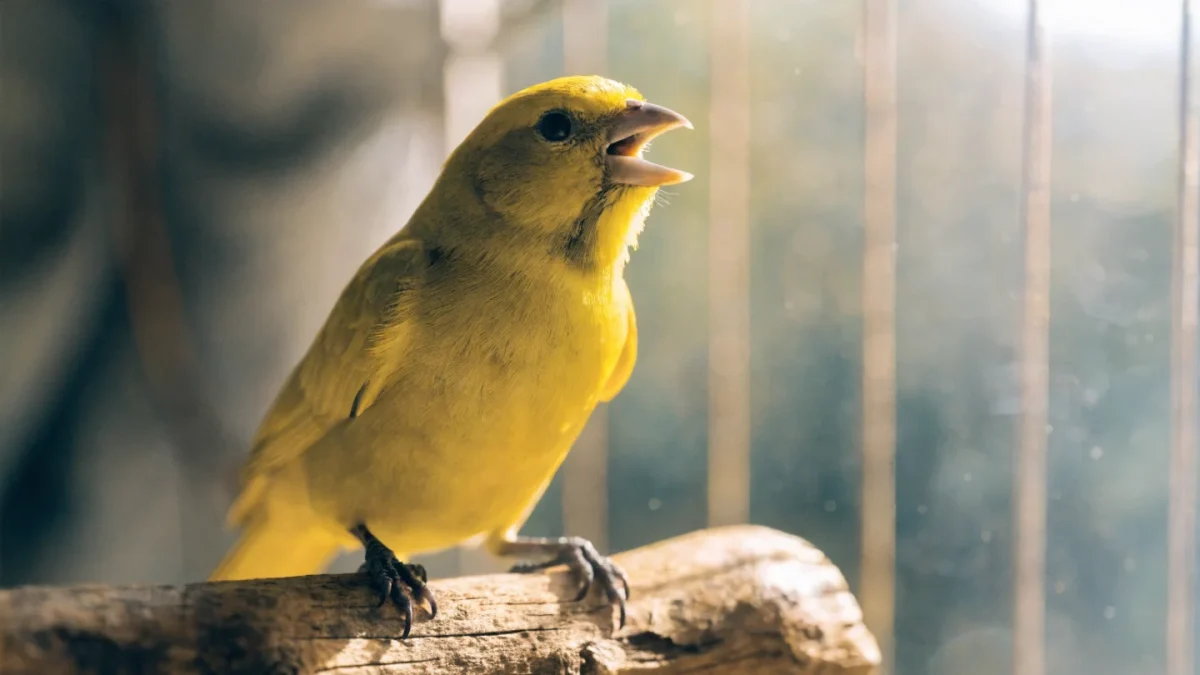
Thirty dollars for the bird. Two hundred and fifty for the cage and setup. Zero dollars to listen to a canary sing a phrase he's been refining for six months straight — and honestly, that math never stops feeling like a steal.
A canary (Serinus canaria domesticus) kept well will fill your home with continuous song during daylight hours, require less daily hands-on attention than almost any other pet bird, and live ten to fifteen years. They're not demanding in the way parrots are. But "low-maintenance" is relative, and I've watched too many canaries decline slowly because their keepers mistook simplicity for negligibility. A canary care routine is genuinely simple. Skipping it is what causes problems.
Picking a Canary
If you want song — and most people do — you need a male. Hens chirp and call but don't produce the sustained, rolling song that makes canaries famous. The catch: sexing a young canary outside of breeding season is difficult. Breeders who sell singing males have waited for the birds to come into song before selling them, which is why a song-tested male costs more than an unsexed juvenile. The premium is worth it if song matters to you.
Song breeds produce the most complex vocalizations. Roller canaries sing with their beaks nearly closed, producing low, rolling passages. I keep two rollers in my collection and the depth of their song is something you feel as much as hear — a soft rumble that travels through the room differently than a sharp chirp. Other canaries — color-bred varieties, for instance — still sing, but the song may be shorter, simpler, and less refined.
Color varieties are extensive. Red-factor canaries, white canaries, mosaics, frill canaries with curly feathers. Color doesn't affect care requirements at all, though red-factor birds need carotenoid-rich foods (carrots, red peppers, specialized color food) during molt to maintain their pigmentation. Without the dietary pigment, they molt out to a washed-out orange.
Housing
Length over height. A canary flies horizontally and needs room to move back and forth between perches. Minimum cage length for one canary: 75 cm (30 inches). Wider cages that allow some lateral flying are even better. I covered cage sizing in detail in the canary and finch care overview, but the key principle is the same — these birds need to fly, not climb.
Place perches at opposite ends of the cage, at slightly different heights. Natural wood branches with varying diameters protect the feet far better than uniform dowels. Avoid sandpaper perch covers — they abrade the skin on the feet and create sores.
Location matters. A room where the family spends time gives the bird social stimulation without direct handling. Kitchens are off-limits due to cooking fumes, non-stick fume risk, and temperature swings. Avoid direct sunlight hitting the cage for extended periods — canaries overheat faster than you'd expect.
Diet Beyond the Seed Dish
Seeds are the foundation but not the whole house. A quality canary seed mix — predominantly canary grass seed and rapeseed — should be available at all times. But blow the husks off the top of the dish daily. I cannot count the number of times a keeper has told me their bird stopped eating, and when I asked them to check the dish, it was full of empty husks with no actual seed underneath.
Egg food provides the protein that seeds lack. During molt and breeding season, I offer egg food daily. During quieter periods, two to three times a week is sufficient. You can make your own — hard-boiled egg mashed fine with breadcrumbs — or use a commercial mix.
Fresh greens every day: dandelion leaves, romaine, chicory, broccoli florets. Rotate what you offer. My canaries have definite preferences, and those preferences vary between individual birds, which never stops being slightly amusing for an animal with a brain the size of a pea.
Cuttlebone stays in the cage permanently for calcium. Fresh water — daily, non-negotiable.
The Song Cycle
Canary song isn't constant year-round, and understanding the natural cycle saves a lot of unnecessary worry.
Breeding season (roughly late winter through spring): song peaks. Males sing loudly and frequently, sometimes starting before dawn. This is when the singing is at its most complex and persistent. Enjoy it.
Summer: song remains strong but may begin tapering as daylight hours peak and the body starts preparing for molt.
Molt (usually late summer through early fall): singing stops or drops to occasional quiet phrases. The bird looks rough — patchy feathers, pin feathers erupting, maybe slightly irritable. This is normal. Molt is energetically expensive, and the same hormones that drive singing are suppressed during feather replacement.
Post-molt recovery (fall into winter): song gradually returns as new feathers come in and hormone levels shift again.
A canary that stops singing during molt is doing exactly what he should. A canary that stops singing outside of molt — during peak season, for instance — is telling you something. Illness, stress, cage placement changes, or a disrupted light cycle are the usual culprits.
Molt Support
Molt is the one period where care needs genuinely increase. The bird is growing an entirely new set of feathers, and that process demands protein, calories, and calm.
Increase egg food to daily during molt. Some keepers add a small amount of crushed hemp seed or conditioning seed to the mix for extra fat content. I do this and I've noticed smoother, faster molts in birds that get the supplement versus those that don't — though I'll admit my sample size is my own collection, not a controlled study.
Minimize changes during molt. Don't rearrange the cage, introduce new birds nearby, or move the cage to a different room. Stress during molt can cause stress bars — visible lines across new feathers that indicate nutritional or environmental disruption during feather growth. One year I moved a bird's cage to a different wall during his molt because I was rearranging furniture, and every flight feather came in with a visible fault bar. Small changes, big consequences.
Bathing support matters too. Offer the bath dish more frequently — daily if the bird will use it. The moisture helps soften feather sheaths and makes the process more comfortable.
Handling and Interaction
Canaries aren't handling birds. Picking up a canary stresses it, and taming a canary to perch on your finger is possible but slow and often not worth the stress to the bird. Interaction with canaries is observational and auditory — you watch them, listen to them, and they learn to recognize you.
That said, a canary that's kept in a room where people spend time will become remarkably responsive. My oldest male flies to the front of the cage when I enter the room. He starts singing louder when I talk. He eats greens from a clip while I'm standing right there. None of that required formal taming. It just required consistent, non-threatening presence over months.
If you do want to finger-train a canary, the process involves patience measured in weeks, not days. Sit quietly near the cage daily. After a week, rest your hand inside the cage near the food dish. Eventually offer a treat (a piece of apple or a millet spray) from your fingers. Some birds will step onto a finger for food. Many won't. Respect the bird's limits.
Frequently Asked Questions
How long do canaries live?
With good care, ten to fifteen years. I've had canaries that reached thirteen, though eight to ten is more typical in my experience. Diet quality and environmental stability are the two biggest factors. Birds in drafty locations, on seed-only diets, or kept in cages too small to fly in consistently live shorter lives.
Should I cover the cage at night?
Yes — or move it to a dark room. Canaries need uninterrupted darkness for sleep, and ambient light from screens, streetlights, or lamps disrupts their rest cycle and can interfere with hormonal regulation. A breathable cage cover works. I use a dark cotton sheet.
Why is my canary fluffed up and sitting on the bottom of the cage?
This is a sick bird. Fluffing conserves heat, and a canary on the cage floor has given up trying to maintain its perch position. Get to an avian vet today, not tomorrow. Small birds go downhill fast — the speed at which a finch or canary can crash is genuinely alarming compared to larger species. While arranging the vet visit, move the bird to a warm, quiet space (a hospital cage near a gentle heat source at around 29-30°C / 85°F).
Do canaries need toys like parrots do?
Not really. Canaries aren't destructive chewers and they don't manipulate objects the way parrots do. A swing is usually appreciated. A small mirror can stimulate singing in a lone male, though some birds become obsessed with their reflection. Simple enrichment — a fresh leafy green hung from the cage top, a bathing dish, rearranging perches occasionally — is more appropriate than parrot-style toys. The song itself seems to be the bird's primary form of mental engagement.
I still think canaries are underrated as pets. They're eclipsed by parrots in the popular imagination, but a canary doesn't scream, doesn't bite, doesn't need hours of socialization, and produces one of the most beautiful sounds in the animal kingdom from a cage that fits on a dresser. Not a bad deal.