

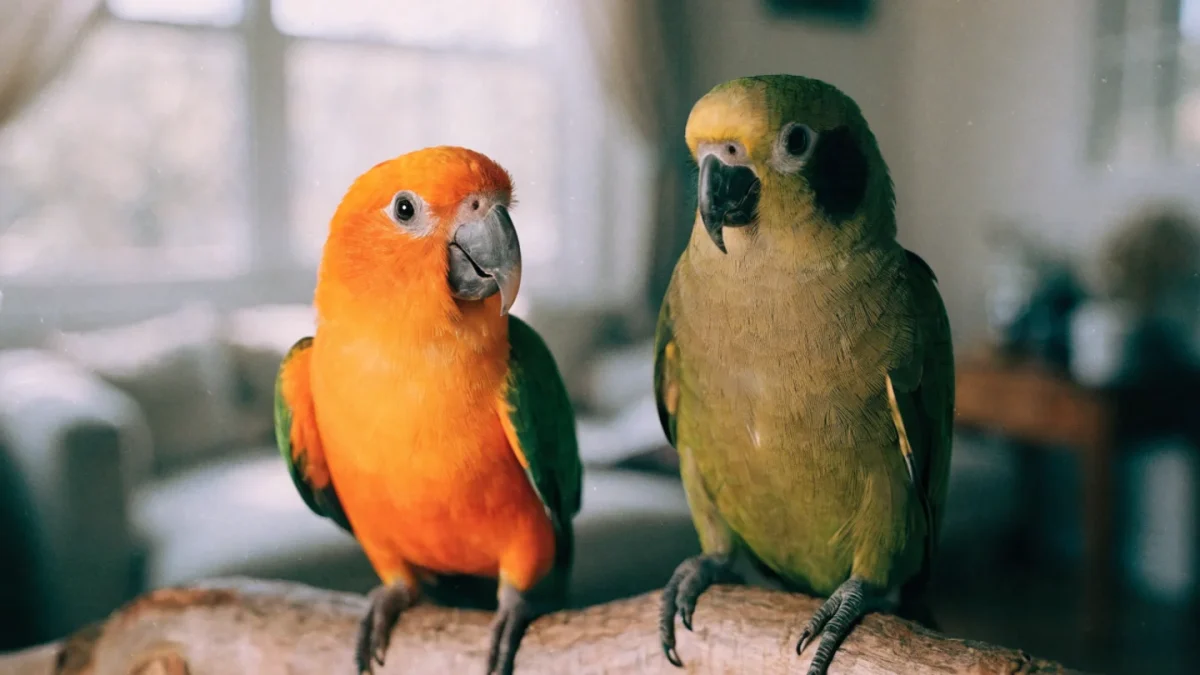
The first conure I ever kept was a maroon-bellied Pyrrhura I picked up at a bird fair when I was nineteen. I'd done zero research beyond "small, colorful, seems friendly." She turned out to be one of the best birds I've ever owned — and that was pure luck, not good planning. Had I grabbed the jenday conure in the next booth, my college roommate would have murdered me within the week.
Conures thrive on a pellet-based diet (about 60-70% of daily intake) rounded out with fresh vegetables, some fruit, and the occasional seed or nut as a reward. They need a cage no smaller than 24x24x30 inches, daily out-of-cage time measured in hours rather than minutes, and a household that can handle some noise. How much noise depends entirely on which conure you bring home.
The Two Groups You Need to Know
Conure taxonomy gets complicated fast, but for practical keeping purposes, two groups cover most pet species: Pyrrhura and Aratinga (including the recently split Eupsittula and Psittacara).
Pyrrhura conures — green cheek, crimson-bellied, maroon-bellied, black-capped — run smaller, quieter, and tend toward a calmer temperament. Their calls are raspy and lower-pitched. Most people can tolerate the volume even in apartments. They weigh roughly 60-90 grams depending on species.
Aratinga-type conures — sun, jenday, nanday, mitred — are louder, bolder, and more visually dramatic. They're also the ones responsible for conures' reputation as screamers. A sun conure in full morning contact call mode registers around 120 decibels. For reference, that's a rock concert.
The personality differences between these groups are as dramatic as the noise gap. Pyrrhura species tend to be cuddly, slightly reserved with strangers, and content to hang out on your shoulder during quiet activities. Aratinga species want to be the center of attention, demand interaction aggressively, and will let you — and everyone within earshot — know when they feel ignored.
Feeding a Conure Right
I covered the medium parrot care fundamentals in the pillar guide, but conures have a few diet quirks worth emphasizing.
They're prone to becoming seed junkies. A conure raised on seeds will often refuse pellets outright, and the conversion process can take weeks of patient work. If you're adopting a seed-addicted bird, mix pellets into the seed gradually — increase the pellet ratio by about 10% each week, and expect protests.
Fresh food rotation keeps conures interested. Mine get chopped vegetables in the morning (pepper, broccoli, snap peas, shredded carrot) and a small piece of fruit in the afternoon. I rotate the mix every few days. A conure that eats the same chop every day for months will eventually start picking through it for favorites and leaving the rest.
Calcium matters more than most keepers realize. Females especially — even without a mate, some conures lay eggs, and chronic egg-laying without adequate calcium leads to egg binding, which is a veterinary emergency. A cuttlebone in the cage and calcium-rich greens in the diet help, but birds showing repeated egg-laying behavior need an avian vet's input.
Avocado, chocolate, caffeine, alcohol, onion, and garlic are all toxic. Seems obvious, but I've fielded at least a dozen calls over the years from people who let their conure nibble guacamole at a party.
Housing Details
Bar spacing of 5/8 inch works for most conures. Smaller Pyrrhura species could squeeze through 3/4-inch bars — I've seen it happen once with a juvenile green cheek, and it was terrifying.
The cage should be wider than it is tall. Conures fly horizontally, not vertically, and a tall narrow cage doesn't give them useful space. Flight cages — those long, rectangular models — are ideal if you have the room.
Perch placement matters. I set up three to four perches at different heights and angles, using natural branches of varying diameters. At least one perch should be positioned high in the cage as a sleeping spot. Most conures prefer to sleep on the highest available perch, and if the only high perch is a flimsy swing, they'll use it and sleep poorly.
A sleep tent or happy hut is controversial. Some conures love them and sleep contentedly. Others develop hormonal nesting behavior around them, leading to aggression and chronic egg-laying. I stopped offering them after a green cheek hen I was keeping became aggressively territorial about hers to the point of drawing blood.
Handling and Bonding
Conures are contact birds. They want to be on you. This is charming until it becomes possessive.
Single-person bonding is common across all conure species — the bird picks a favorite human and treats everyone else as an intruder. You can mitigate this by having multiple family members handle the bird daily from a young age, but some conures will still develop a clear preference.
Step-up training should start the first day. Use a calm, consistent voice and a flat hand or forearm. Avoid chasing the bird around the cage to grab it — this destroys trust in a single interaction and can take months to repair. If the bird won't step up willingly, work on target training first (touching a chopstick or small stick for a reward) and build from there.
Bite pressure in conures varies dramatically. A green cheek bite stings but rarely breaks skin. A nanday or mitred conure can remove a chunk of flesh. This size difference matters when you're choosing a species for a household with children.
Common Health Concerns
Proventricular dilatation disease (PDD), caused by avian bornavirus (ABV), hits conures hard. A 2010 study published in Emerging Infectious Diseases experimentally induced PDD in Patagonian conures using ABV isolates, confirming the causal link. Symptoms include weight loss, undigested food in droppings, and regurgitation. It's a slow, devastating disease with no cure, though anti-inflammatory treatment and supportive care can extend quality of life — and many ABV-positive birds never develop clinical disease, which makes the whole thing maddeningly unpredictable.
Psittacine beak and feather disease (PBFD) affects conures, particularly young birds. Feather abnormalities, beak lesions, and immune suppression are the hallmarks. Testing new birds before introducing them to an existing flock is critical.
Conures are also prone to conure bleeding syndrome — an issue related to calcium and vitamin K deficiency that causes unexplained bleeding. This one is preventable with proper diet but fatal if ignored.
Annual checkups with an avian vet catch most problems early. Blood panels, crop swabs, and physical exams should be standard. A vet who only works with dogs and cats is not sufficient — avian medicine is specialized, and the difference in diagnostic skill is enormous.
FAQ
How long do conures live?
Most species live 20-30 years with proper care. Sun conures and green cheeks routinely hit 25+. I've personally known a green cheek that reached 33. That's a long commitment, and the bird's needs don't decrease with age — older conures often become more demanding of attention, not less.
Can conures be left alone during the workday?
Yes, as long as you provide enrichment and compensate with quality interaction before and after. Foraging toys, shredding materials, a radio or TV for background noise, and a window view help. But a bird that's caged alone for ten hours and then ignored in the evening will develop problems. Two to three hours of focused interaction outside the cage isn't optional — it's the minimum.
Do conures get along with other birds?
It depends on the individual. Same-species pairs raised together often do well. Mixing Pyrrhura species can work if introduced carefully. Mixing Pyrrhura with Aratinga species is riskier because the size and temperament gap can lead to bullying. I never house conures with other parrot genera without very careful, supervised introductions over weeks. And some birds are simply not compatible — recognizing that saves both birds a lot of stress.