

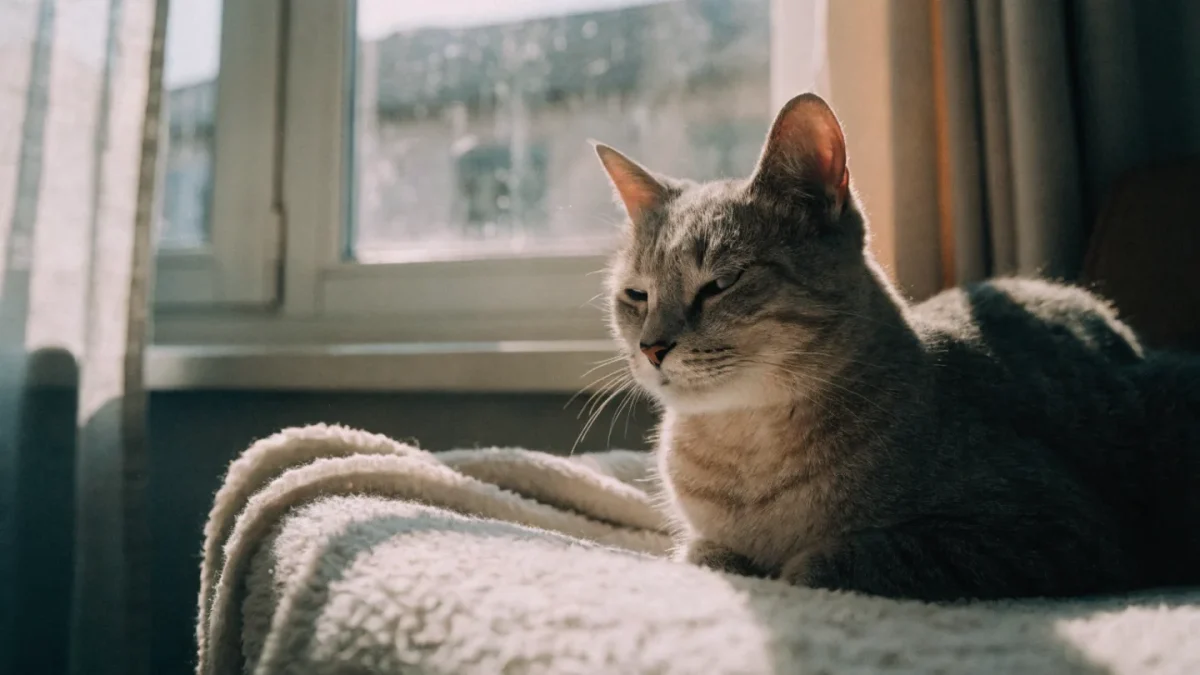
Here's what's actually going on when your 15-year-old cat starts yowling at 2am, staring at the wall for ten minutes straight, or suddenly acting like she's never seen her litter box before: it might not just be "getting old." Feline cognitive decline is real, it's more common than most people realize, and once you know what to look for, so much strange behavior starts making sense. For the broader view, senior cat behavior changes is where everything comes together.
Feline cognitive decline — officially called feline cognitive dysfunction syndrome, or CDS — affects how the aging brain processes information. Research published in the Journal of Feline Medicine and Surgery found that around 50% of cats over 15 show signs of CDS (Landsberg et al., 2010), though signs can appear earlier. If your cat's personality or habits have shifted in ways that feel off rather than just slow, it's worth paying attention.
What Feline Cognitive Decline Actually Looks Like
The tricky thing about cognitive dysfunction is that it doesn't look dramatic at first. It creeps in. The signs are easy to dismiss as normal aging, personality quirks, or just "she's old now." But there are patterns.
Disorientation and confusion. Your cat walks into a room and freezes, looking genuinely lost. She might stand in front of her water bowl for thirty seconds before drinking, or sit in the middle of the hallway staring at nothing. My cat Miso started doing this at 14 — just stopping mid-walk and looking around like she'd forgotten where she was going. It happened maybe once a week at first, then more often.
Nighttime vocalization. This is probably the most reported sign. Older cats with cognitive decline often yowl, wail, or cry loudly at night — sometimes for extended periods. It's not the same as asking for food or attention. It sounds different, more plaintive and confused, like they've woken up in an unfamiliar place even though they're in their own home. It's distressing to hear.
Changes in sleep patterns. Cats already sleep a lot, but cognitive dysfunction often inverts their sleep cycle. They snooze through the day and then pace or vocalize at night. The rhythm just shifts.
Litter box regression. A cat who has used her box reliably for twelve years suddenly starts missing it, going near it but not in it, or seeming to forget where it is. This isn't stubbornness — it's genuinely not remembering or processing the location correctly.
Social changes. Some cats become clingier than they used to be, following you room to room and seeming anxious when you're not visible. Others go the opposite direction — withdrawing, hiding more, interacting less. Either shift can signal that something has changed in how they experience their world.
Grooming changes. A previously fastidious cat may start neglecting her coat. Occasionally the reverse happens — excessive grooming or self-directed behaviors that seem repetitive. International Cat Care notes both reduced and excessive grooming as recognized CDS signs (icatcare.org).
The Real Question: Is It Dementia or Just Old Age?
Honestly, this is where it gets genuinely hard. Normal aging does slow cats down. They sleep more, play less, jump less, and sometimes become more vocal simply because their hearing or vision has declined. None of that alone means cognitive dysfunction.
The difference is in the quality of the behavior. A cat who sleeps more because her joints ache is still oriented — she knows where she is, who you are, where her food is. A cat experiencing cognitive decline seems genuinely confused about her environment, even in familiar settings she's navigated for years. The same logic applies to adjusting your home for a senior, actually.
A few specific things that lean toward cognitive dysfunction rather than normal aging:
- Staring at walls or blank spaces for extended periods
- Getting "stuck" in corners or behind furniture
- Vocalizing in a way that seems distressed or disoriented, especially at night
- Not recognizing familiar people or other pets she's lived with for years — Cornell's College of Veterinary Medicine lists this among the documented signs (vet.cornell.edu)
- Going to the wrong spot for food, water, or the litter box
Any combination of these, especially if they're new and getting gradually worse, is worth bringing up with a vet. They can rule out other causes — thyroid issues, hypertension, hearing or vision loss — that sometimes look similar. I know Emily's rules say to defer the medical stuff to the professionals, and this is genuinely one of those cases where a vet visit matters.
How to Help a Cat With Cognitive Decline
There's no reversing it, but the daily experience for your cat — and for you — can be made a lot better.
Keep the environment predictable. This sounds simple but it matters enormously. Don't rearrange furniture. Don't move the litter box. Don't change her feeding spot. A cat with cognitive dysfunction is navigating her world from memory more than real-time perception. Stability is a form of kindness.
Add a second litter box. If she's missing the box, try adding one in the location she's been going instead of fighting the pattern. Boxes with lower entry sides are easier for arthritic older cats to climb into. Both problems — mobility and cognition — often coexist in senior cats.
Night lights help more than you'd think. A disoriented cat in a dark house is more likely to panic and vocalize. Small plug-in lights in hallways, near the litter box, and near her sleeping area can reduce middle-of-the-night confusion significantly.
Give her more predictable anchors. Maintaining a consistent routine — same feeding times, same interaction windows, same overnight spot — is a standard recommendation in veterinary guidance for CDS management, because changes to the home environment can worsen confusion and stress in affected cats (Sordo & Gunn-Moore, Veterinary Record, 2021). The cat's brain, even a changing one, can hold onto familiar rhythms better than random schedules.
Don't punish nighttime yowling. This is genuinely hard at 3am, but responding with frustration won't help and may add anxiety on top of confusion. If the yowling is frequent and severe, talk to your vet — there are behavioral and sometimes environmental strategies that can help reduce it.
Enrichment still matters, adjusted for her. Research supports this: a 2021 review in Veterinary Record found that poor environmental stimulation increases CDS risk and can worsen existing symptoms, while enrichment activities enhance neuron survival and improve cognition in aging cats (Sordo & Gunn-Moore, 2021). But it has to match her current abilities. Short, calm interaction — gentle play with a slow wand toy, sitting with her, gentle grooming if she tolerates it — is better than overstimulating activities she can no longer navigate confidently.
When Behavior Changes Come On Suddenly
Gradual decline over months is typical of cognitive dysfunction. If your senior cat changes very suddenly — disorients overnight, stops recognizing you, loses her balance — that's a different kind of urgent. Get to a vet quickly. Sudden behavioral shifts in senior cats can indicate neurological events, severe hypertension, or other conditions that need prompt attention.
Cognitive dysfunction is slow and progressive. Sudden is something else.
Living With It
Look, the hard part of this isn't knowing the signs or adjusting the environment. The hard part is accepting that the cat you've known for 14 years is changing, and some of those changes aren't reversible. Miso got progressively more confused in her last year. Some nights she seemed like her old self, curious and present. Other nights she'd yowl and I'd get up and sit with her until she settled.
What helped me most was understanding that she wasn't suffering from confusion the way a human might — she wasn't aware of what she was losing. She was just living in each moment, increasingly disconnected from the map she'd built of her world, and what she needed from me was stability and presence.
That's still something you can give.
Frequently Asked Questions
At what age does feline cognitive decline typically start?
Research shows that around 28% of cats aged 11–14 develop at least one behavioral sign of CDS, rising to roughly 50% in cats over 15 (Landsberg et al., Journal of Feline Medicine and Surgery, 2010). The likelihood increases with age. Having your vet do a behavioral and cognitive check-in as part of regular senior wellness visits is a good way to catch early changes.
Can feline cognitive dysfunction be treated?
There's no cure, but a vet may recommend a multimodal approach to support brain health and manage symptoms — including dietary changes, environmental adjustments, nutritional supplements, and in some cases medication such as selegiline, which has shown benefit in cats with cognitive dysfunction (AAHA 2023 Senior Care Guidelines). This is very much a conversation for your vet, not a DIY situation. What you can control is the home environment and daily routine.
Is nighttime yowling always a sign of cognitive dysfunction?
Not always. Nighttime yowling in older cats can also be caused by pain, hyperthyroidism, high blood pressure, or hearing loss. Cognitive dysfunction is one cause among several — which is why a vet visit is important for any senior cat who starts vocalizing heavily at night.
Can a cat with cognitive decline still have a good quality of life?
Yes, genuinely. Cats don't experience loss of memory the way humans do — they're not mourning what they've forgotten. With a stable, low-stress environment, attentive care, and management of any concurrent physical issues, many cats with cognitive dysfunction live comfortably for months or even years after the diagnosis.
How do I know if my cat's confusion is getting worse?
Keeping a simple log helps — note specific incidents, how often they occur, and how long they last. If the frequency or intensity increases over weeks or months, that's meaningful data for your vet. It's also just useful for you: it's harder to see gradual change when you're living with it every day.