

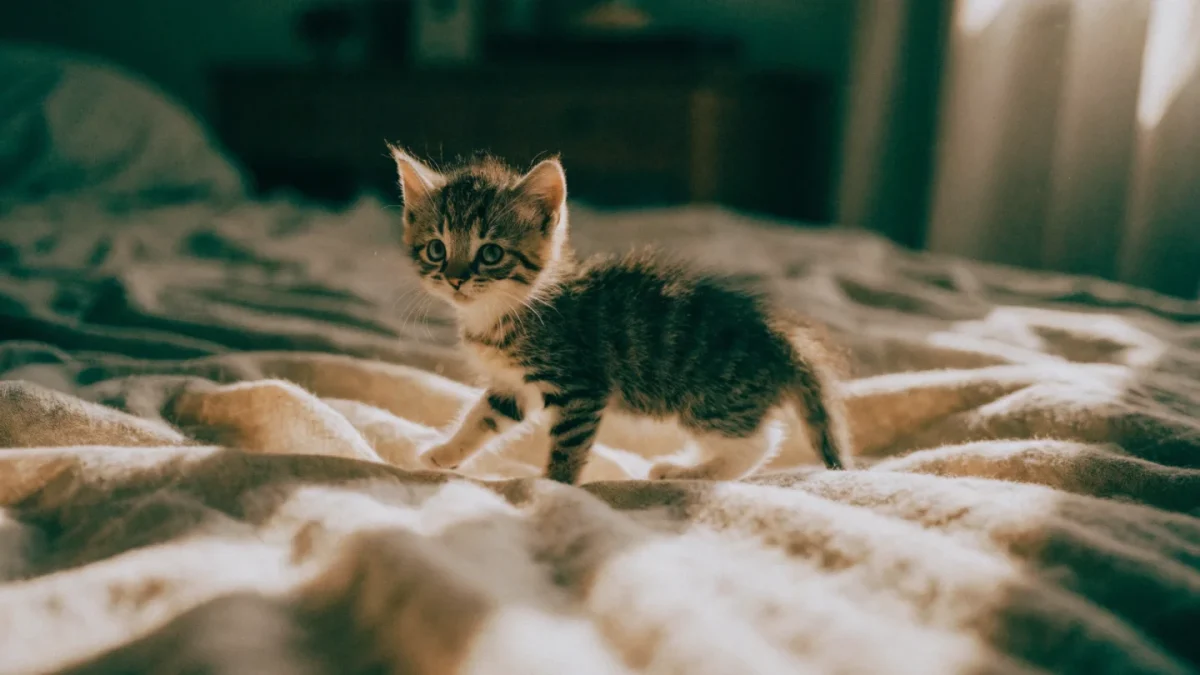
Here's what's actually going on when a tiny ball of fur arrives in your home — or when you're watching a litter develop from day one. Kittens are not just small cats. They're going through one of the most compressed developmental timelines in the mammal world, packing in behavioral changes that dogs take two years to work through in less than twelve months.
Kitten behavior stages run from birth to one year, with the most significant shifts happening in the first three months. The neonatal stage (0–2 weeks) is pure survival mode. The transitional stage (2–4 weeks) is when the world starts switching on. The socialization window (4–9 weeks) is where personality is shaped — arguably the most important weeks of your cat's entire life. Then comes the juvenile stage (9 weeks to 6 months), which is the window most people actually experience as new kitten owners. And finally, adolescence (6–12 months), which surprises everyone who thought their sweet kitten had turned into a chaos agent overnight.
Knowing what's coming at each stage doesn't just make you a more patient kitten caregiver — it lets you actively support their development instead of just reacting to it.
Stage 1: Neonatal (0–2 Weeks)
If you've never seen a newborn kitten up close, the first thing that hits you is how helpless they are. They can't regulate their own body temperature. Their eyes and ears are sealed shut. They can't eliminate on their own — the mother (or a human caregiver) has to stimulate them. Basically, everything that makes a cat a cat hasn't come online yet.
What they can do: root toward warmth, nurse, cry when cold or hungry, and respond to smell. Their mother's scent and the smell of milk are their entire world right now.
Behavioral milestones in this stage:
- Rooting reflex is strong — they'll push toward any warm surface
- Vocalizations are purely distress-based: hunger, cold, separation
- Sleeping takes up about 90% of their day
- Siblings pile together constantly for warmth regulation
What to expect if you're the caregiver: If the mother isn't present (orphaned litter, rejected kitten), you're doing everything she would. That means feedings every 2–3 hours, stimulation after each feeding, and keeping them in a warm environment around 32–34°C (89–93°F) in week one, dropping to around 27–29°C (80–85°F) in week two — according to veterinary guidance on orphaned kitten care (Little, Journal of Feline Medicine and Surgery, 2013). Honestly, this stage is exhausting, but also straightforward — their needs are completely physical.
Don't stress if they seem to do nothing but sleep and nurse. That is the job right now. Brain development is happening internally; you won't see it on the outside yet.
Stage 2: Transitional (2–4 Weeks)
This is when things get interesting. The eyes open — usually between 10 and 14 days, though some kittens take until day 16 or so. The ears unfold and start working. And suddenly, a kitten that was just a reflexive eating machine starts looking around like they've just landed in a strange new country. Which, in a way, they have.
Vision starts blurry and improves rapidly over this stage. Hearing kicks in and kittens become startleable — they'll flinch at loud noises for the first time. The first wobbly attempts at walking happen around week three, which is one of the more entertaining things you'll ever watch.
Behavioral milestones in this stage:
- Eyes open (around day 10–14)
- Ears open (around day 14–17)
- First attempts at standing and walking — extremely unsteady, lots of falling
- Begin to explore very short distances from the nest
- Start to interact with siblings through batting and light mouthing
- Begin to eliminate on their own (though mother still cleans them)
What to expect: Kittens at this stage are still highly dependent but noticeably more aware. They'll react to your face, follow movement, and may start to orient toward your voice. This is a good time to start brief, gentle handling if they haven't been handled yet — even just a few minutes of calm contact per day starts building comfort with humans.
Look — the wobbly walk is completely normal and kind of charming. Their coordination improves dramatically week by week, and by day 25 or so, most kittens are moving around with surprising confidence.
Stage 3: Socialization Window (4–9 Weeks) — The Stage That Shapes Everything
If there's one part of kitten development I'd want every future cat owner to understand deeply, it's this one. The socialization window is roughly weeks four through nine, and what happens during this period has a disproportionate impact on who your cat becomes.
This is when kittens are neurologically primed to form associations with the world around them. Positive experiences with humans, other animals, sounds, surfaces, and handling during this window wire in confidence and tolerance. Negative experiences — or simply absence of experience — wire in fear and suspicion. And those early associations are remarkably sticky. A kitten who was never handled during weeks four through nine is going to be a much more wary adult cat than a kitten who was cuddled daily, even if they eventually settle with patient socialization later on.
My own cat, Miso, came from a barn litter that wasn't handled until week seven. She's affectionate now, at five years old — but it took two years of patient trust-building to get there. Her littermate who was handled from week four? Total lap cat from day one.
Behavioral milestones in this stage:
- Play behavior explodes — stalking, pouncing, batting, wrestling with siblings
- Hunting instincts come online: interest in moving objects, crouching, ambushing
- Social hierarchy between littermates begins to establish
- First solid food interest (weaning begins around week four)
- Vocalizations diversify: chirps, trills, full meows
- Fear responses develop toward unfamiliar stimuli — this is normal and expected
- Attachment to familiar humans begins forming
How to support socialization: Handle kittens daily, from multiple people including children and different genders if possible. Expose them to different sounds at low volumes (household appliances, outdoor sounds). Let them explore different textures and surfaces. Introduce them to friendly, vaccinated cats or dogs briefly if the opportunity exists. None of this needs to be intensive — short, positive exposures are far more valuable than long stressful ones.
The real question people ask is: what if you're getting a kitten who's already past the socialization window? It's not a lost cause — it just takes more time and gentler strategies. But if you have any say in when you pick up a kitten, eight weeks is widely cited as the practical minimum — and honestly, the research suggests waiting longer if you can. A 2017 study in Scientific Reports that followed over 5,700 cats found that kittens separated before 8 weeks showed significantly more aggression as adults, and those who stayed with their mother until 12–13 weeks showed the best overall behavioral outcomes (Ahola et al., Scientific Reports, 2017). If a breeder or foster is willing to hold a kitten to 10–12 weeks, that's generally worth it.
Stage 4: Juvenile (9 Weeks to 6 Months)
This is the stage most people experience as new kitten owners, and it is A Lot. Kittens at this stage are mobile, energetic, curious about literally everything, and completely lacking in self-preservation instincts. If you have a kitten right now who is launching off furniture, ambushing your ankles, and treating the curtains as a climbing challenge, welcome to juvenile stage.
The brain is developing rapidly, but impulse control is still minimal. Think of it as all the energy of a fully functioning predator without the wisdom of experience telling them what's a reasonable target and what isn't.
Behavioral milestones in this stage:
- Coordination reaches near-adult levels
- Play hunting intensifies: specific stalking sequences, ambush behavior
- Independent exploration increases — they wander further from the nest/home base
- Social play with humans and other pets becomes a key activity
- Learning through play is at its peak — this is prime training time
- Adult teeth start coming in around 12 weeks (baby teeth fall out; watch for them)
- Fear responses to novelty gradually reduce as the world becomes more familiar
Play biting: Here's what's actually going on with the play biting that drives new kitten owners slightly mad. Kittens this age play-fight with their siblings constantly, and that play is how they develop hunting skills. When you become their primary playmate (especially if they're a solo kitten), all of that mouthing instinct gets directed at you. It's not aggression — it's play. But it still hurts, and it needs redirecting.
The move: when the kitten bites, immediately redirect to a toy. Wand toys and feather teasers work brilliantly because they put distance between your hands and the kitten's mouth. Never use your hands as toys. Honestly, this is where so many people accidentally create hand-biting adult cats — because wiggling fingers are irresistible and the kitten learns that hands are prey items. As Veterinary Partner notes, "encouraging rough or mouthing play can reinforce these tendencies and potentially result in biting behaviors in adult cats" (Gottlieb, Veterinary Partner/VIN, 2023).
First vet visit: Most kittens have their first full examination and vaccination series starting around 8–9 weeks. By the juvenile stage, they should be partway through or completing their kitten vaccination protocol. Spay/neuter is typically recommended somewhere in this stage depending on your vet's guidance.
Litter Training During Kitten Development
The good news about litter box training kittens: they're usually not that hard to train. Cats have an instinctive preference for eliminating in loose substrate, and kittens who watched their mother use a litter box have a head start. Most kittens pick it up quickly, especially if you set them up for success.
The critical period for litter habits actually overlaps with the socialization window. Kittens who are introduced to a litter box around weeks four to five tend to take to it readily. For litter box training and troubleshooting, the basics come down to: appropriate box size (low sides for tiny legs), appropriate litter texture (unscented, fine-grained), easy access, and placement away from food.
Common juvenile-stage litter box issues:
- Missing the box — often means the box is too far away or the kitten got distracted mid-play
- Scratching excessively — totally normal instinctive behavior; not a problem
- Using the wrong room — usually means you need more boxes or more accessible placement
Litter regression (a kitten who was using the box reliably and suddenly stops) can signal a medical issue, stress, or a problem with the box itself. Worth investigating rather than just correcting.
Introducing Kittens to Adult Cats
If you're bringing a kitten into a home with existing cats, the juvenile stage is when you're usually doing introductions — and the mismatch in energy levels is real. Adult cats, especially older or quieter ones, often find kitten energy absolutely insufferable at first. The kitten wants to play constantly; the adult cat wants the kitten to stop existing.
The key is a slow introduction that gives the adult cat control over the pace of contact. Start with separate spaces, scent swapping (swap bedding, rub a towel on each cat and let the other smell it), then controlled visual access before any direct interaction. Rush this and you'll set a negative tone that takes months to correct.
Most adult cats and well-socialized kittens reach a reasonable détente within two to four weeks. Some become genuinely bonded. Some settle into tolerant coexistence. Occasionally it doesn't work — but that's the exception, not the rule.
Stage 5: Adolescence (6–12 Months)
Nobody warns you about cat adolescence as clearly as they should. You've survived the newborn chaos. Your kitten is starting to look like a real cat. You think you're through the hard part. And then somewhere around six to eight months, things get weird again.
Cat adolescence brings hormonal surges (if your cat isn't yet spayed or neutered), increased territorial behavior, testing of social boundaries, and a burst of independence. Cats who were cuddly kittens may suddenly seem more aloof. Previously calm cats may become restless or vocal. Intact males may start spraying. Intact females will go into heat. Even spayed and neutered cats go through some version of this behavioral shift — it's not purely hormonal.
Behavioral milestones in this stage:
- Physical growth slows but muscles and coordination continue refining
- Territorial instincts strengthen — they may start patrolling and marking their space
- Social bonds solidify or shift — some cats become more or less affiliative with humans
- Hunting behavior reaches adult intensity
- Sleep patterns shift toward more adult patterns (longer sleep periods, less constant play)
- Vocalizations may increase, especially overnight
What's normal vs. what to watch: Increased independence is normal. Dramatic personality changes are worth noting. A kitten who was playful and social becoming truly withdrawn or a kitten who was calm becoming persistently aggressive warrants a check-in rather than just writing it off as adolescence.
The overnight yowling phase — particularly in intact cats — is genuinely one of the more disruptive parts of cat ownership. If your cat is yowling at 3am, they're usually either in heat, frustrated, or both. Spay/neuter resolves most of this.
Reading Your Kitten's Signals Through Every Stage
One of the most useful skills you can build during the first year is the ability to read your kitten's body language. This becomes easier as you get to know your specific cat, but there are universal patterns that hold across most kittens.
The tail position in play versus fear is a good starting point — a tail raised high is a greeting and confidence signal; a puffed tail is alarm or threat; a low lashing tail means the cat is agitated. Eye contact works differently in cats than in humans — a slow blink is affiliative, a hard stare is either focused attention or a challenge. Ear position tells you a lot: forward and alert means engaged, flat sideways means irritated, pinned back means frightened or aggressive.
For a thorough breakdown of what each signal means, learning to read your kitten's signals is one of the most immediately useful things you can do as a new cat owner. Kittens telegraph a lot — they just do it on cat terms, not human ones.
A Few Things That Trip New Kitten Owners Up
The "3am zoomies" are developmental, not a personality flaw. Cats are crepuscular — most active at dawn and dusk. Young cats haven't established adult sleep patterns yet, and their energy comes in bursts at inconvenient hours. This generally settles as they age, especially after spay/neuter.
Play aggression is not aggression. Pouncing, ambushing, grabbing, and biting during play is predatory play behavior. It needs managing and redirecting, but it's not a sign your kitten is aggressive or dangerous. The fix is consistent redirection to toys, not punishment.
Kitten appetite is intense and variable. They need more food per body weight than adult cats, and they may eat like they're perpetually starving. This is normal. But if food intake drops noticeably, or a kitten who was eating well suddenly goes off food, that warrants a vet call.
The teenager phase really does pass. Around 12–18 months, most cats settle into their adult personality. The chaotic, unpredictable kitten energy gradually gives way to something more consistent. Whatever you've been putting into socialization, routine, and gentle handling pays off in the kind of adult cat you end up with.
FAQ
Q: When do kittens calm down?
Most kittens noticeably calm down between 12 and 18 months as they reach social and physical maturity. Spayed and neutered cats tend to settle a bit earlier than intact cats. That said, some cats remain high-energy well into adulthood — it varies a lot by individual personality.
Q: Is it normal for kittens to bite and scratch during play?
Completely normal. Mouthing, biting, and scratching during play are how kittens practice hunting skills with their siblings. The key is consistent redirection to toys rather than hands, and making sure your kitten has enough play outlets. Kittens with adequate play time bite less during quiet periods.
Q: When should I be concerned about my kitten's behavior?
Sudden behavior changes — a social kitten becoming withdrawn, a calm kitten becoming persistently aggressive, or any kitten suddenly hiding, refusing food, or vocalizing in an unusual way — are worth a veterinary check-in. Behavior is sometimes the first visible sign of a health issue.
Q: How do I know if my kitten was well-socialized?
Well-socialized kittens are generally comfortable being handled, curious about new things rather than fearful, and recover relatively quickly from startle events. Poorly socialized kittens may flinch from touch, hide frequently, or hiss at unfamiliar people even after settling in. This doesn't mean they can't become confident cats with time — it just means they need more patient, gradual exposure.
Q: My kitten seems to ignore me during adolescence. Did something go wrong?
Almost certainly not. Increased independence during the 6–12 month stage is completely normal. Many cats who were velcro kittens become more selective about affection as adolescents, then settle somewhere in between as adults. Keep the positive interactions going — on their terms — and don't read the aloofness as rejection.