

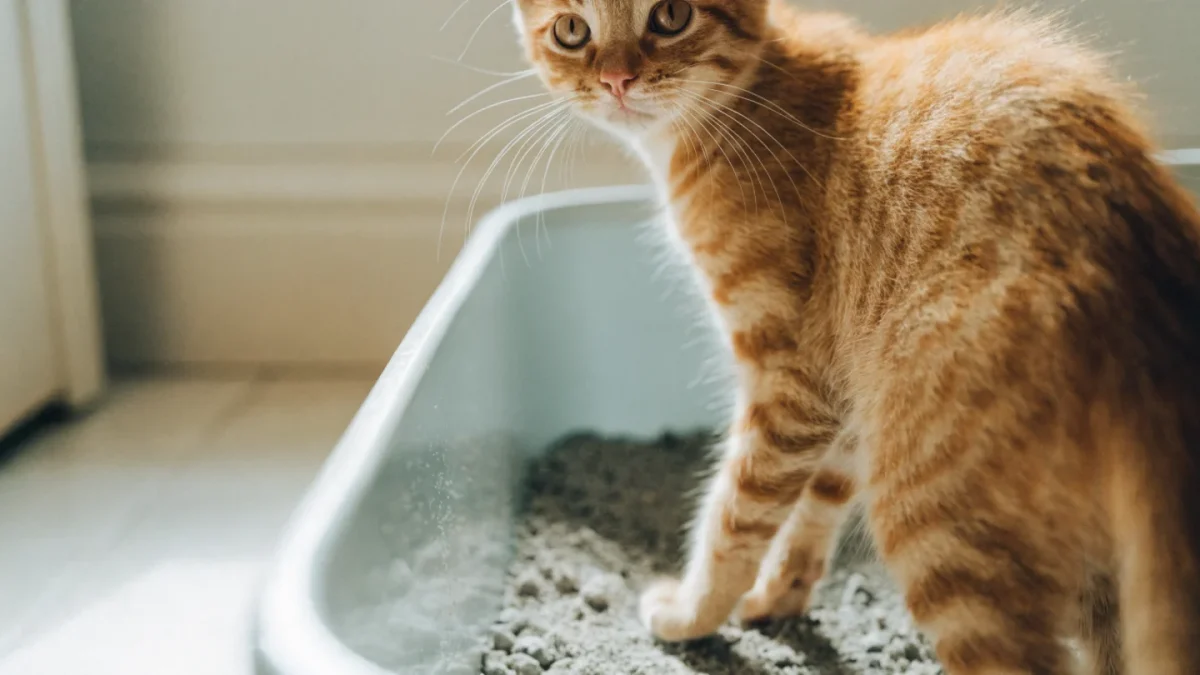
Here's what's actually going on when a cat uses a litter box perfectly — or refuses to: it's almost never about stubbornness. Cats have strong preferences about where and how they eliminate, and those preferences make total biological sense once you understand them. When the box works for the cat, training is almost effortless. When something's off, the cat will tell you the only way they know how.
This litter box training guide covers everything from setting up a new kitten's first box to diagnosing why an adult cat who always used the box has suddenly stopped. Real problems, practical fixes, no guesswork.
Getting the Basics Right First
Before troubleshooting anything, there's a checklist every cat owner needs to run through. Most litter box problems aren't behavioral — they're setup problems dressed up as behavioral ones.
The Right Number of Boxes
The standard rule is one box per cat, plus one. Two cats means three boxes minimum. This isn't arbitrary — cats are territorial about elimination sites, and even cats who get along well will sometimes guard a box from a housemate. When there are enough boxes, that pressure disappears.
Honestly, the most common litter box problem I hear about in multi-cat homes resolves completely once the family adds a box. It feels too simple, but it works.
Location, Location, Location
Boxes need to be:
- Accessible at all times — not behind a closed door, not in a laundry room that gets locked at night
- Away from food and water — cats are hard-wired to separate eating areas from elimination areas
- In a low-traffic spot — but not so isolated that the cat feels trapped. Basements work well for some cats; for others, the journey feels too exposed
- On multiple floors — in multi-story homes, older cats especially need a box on every level. The arthritic cat who won't use the basement box isn't being difficult; stairs hurt
Spread boxes around the home rather than clustering them in one room. Three boxes in the same corner functionally operate as one territory to a cat.
Box Size: Bigger Than You Think
Most commercially available litter boxes are too small for an adult cat. A cat should be able to turn a full circle, scratch around, and squat without any part of their body touching the sides. The 2021 AAHA/AAFP Feline Life Stage Guidelines put it precisely: at least 1.5 times the length of your cat from nose to tip of tail — and they note that most manufactured boxes don't meet this standard.
My cat Mochi is a large-framed domestic shorthair, and the "large" box I bought for her was laughably inadequate the moment she was full-grown. I ended up using a plastic storage bin with a low side cut out for entry — same litter, zero complaints ever since.
Entry Height Matters Too
High-sided boxes are great for litter kickers but terrible for senior cats, kittens, and cats recovering from injury or surgery. A box where the entry side is only 3-4 inches off the ground makes a real difference for a cat who's stiff in the mornings or fresh out of a vet procedure. This is worth thinking about proactively — the cat who used the same box for six years without issue may start avoiding it the moment arthritis sets in, not because they don't want to use it, but because getting in has become uncomfortable.
Litter Box Types: What Actually Matters
The market is full of options, and the marketing can make it hard to figure out what cats actually care about versus what humans find aesthetically pleasing.
Open vs. Covered
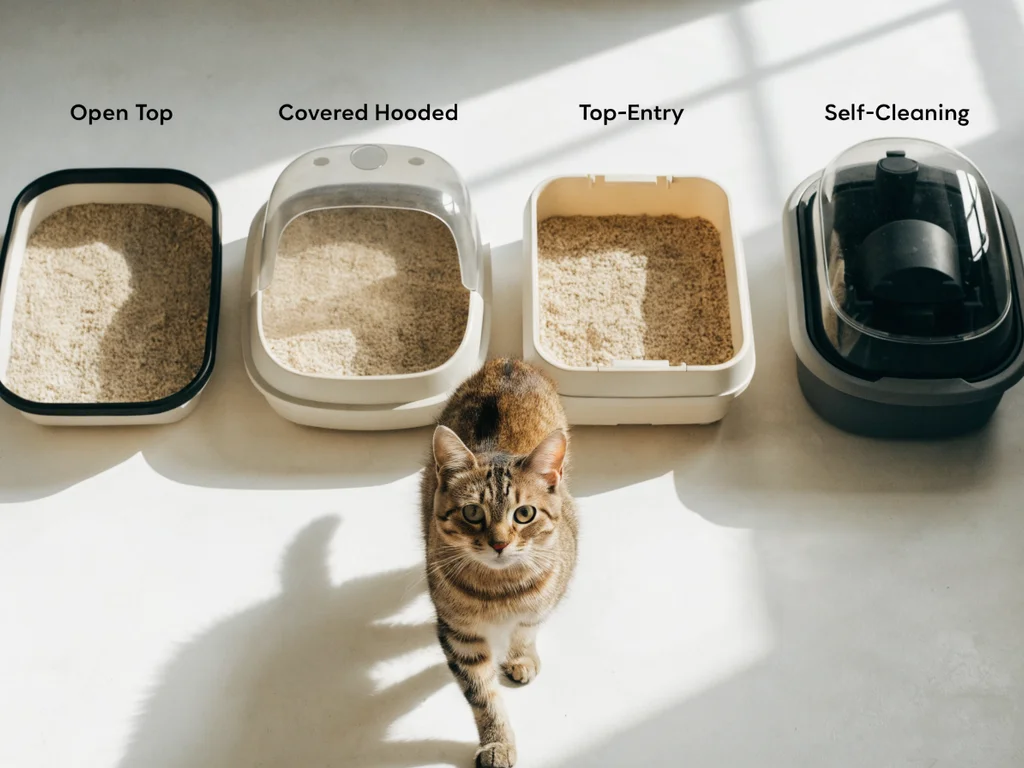
Covered boxes appeal to owners because they contain odor and look tidier. Many cats tolerate them fine. But covered boxes trap ammonia and odor inside — the exact smells the cat is trying to get away from. Cats with any respiratory sensitivity or strong odor aversion will avoid a covered box.
The cat who suddenly stops using a covered box they've used for years is often reacting to a buildup of odor. Clean the box more frequently, or swap to open-top and see what happens within a week.
Top-Entry Boxes
These work brilliantly for cats who kick litter out of the box (and for deterring dogs who would otherwise eat from the box — a deeply unfortunate fact of multi-pet life). The requirement is that your cat is agile enough to jump in comfortably. Kittens under four months, elderly cats, and cats with mobility issues don't have the coordination or physical ability to use top-entry reliably.
Self-Cleaning Boxes
These can work, especially in busy households where scooping every day is genuinely hard to maintain. The caveats: some cats are frightened by the mechanical movement or the noise; the boxes don't clean as thoroughly as manual scooping; and the scent sensors can malfunction. If you use one, keep a plain backup box available so the cat always has an option.
Box Material: Plastic, Stainless, or Disposable
The overwhelming majority of boxes are standard plastic, which is fine for the first year or two but does absorb odors permanently over time no matter how well you clean it. Stainless steel options exist and are genuinely easier to sanitize and deodorize — they're more expensive upfront but longer-lasting. Disposable cardboard boxes are mostly useful for travel or immediately post-surgery when hygiene needs are high and the cat shouldn't be climbing. For everyday use, a plain plastic box replaced every one to two years does the job.
Litter Types: The Variable Cats Care About Most
If there's one thing that separates successful litter training from a long standoff, it's litter choice. Cats have strong tactile preferences for what goes under their paws.
Clumping Clay
The most widely accepted litter type among cats. Fine-grain clumping clay feels closest to natural soil and sand — research on feline substrate preferences consistently finds cats favor clumping clay over alternatives, likely because it mimics the loose granular material cats instinctively seek out for elimination. It scoops cleanly, controls odor reasonably well, and is available everywhere. The downside is dust — fine-grain clay litters produce airborne particles that can be an issue for cats with respiratory sensitivities and for owners with allergies.
Silica Crystal
Absorbs moisture rather than clumping. Lasts longer between full changes. Many cats accept it fine, but the texture is unusual — harder and crunchier underfoot — and some cats with soft-paw preferences refuse it outright. Worth trying, but have a fallback ready.
Wood Pellet, Paper, and Corn/Wheat
These alternatives are often chosen for environmental or allergy reasons. They work for plenty of cats. They also require retraining some cats, particularly adults who've only ever known clay. The texture difference is significant. If switching litter type, do it gradually (see the transition section below).
Non-Clumping Clay
Worth a mention because it's still sold widely and tends to be inexpensive. Non-clumping clay doesn't form solid clumps around urine — it just absorbs moisture and the whole tray needs changing more frequently. The drawback is that it makes it harder to monitor elimination habits (you can't clearly see how many urine clumps there are day-to-day) and it can become saturated quickly in a multi-cat home. For a single cat, some owners use it with no issues. For anything beyond that, clumping is easier to manage.
Scented vs. Unscented
Unscented for cats, full stop. The perfumes and "fresh scent" additives in scented litters are designed to mask odor for humans. To a cat's nose — roughly 14 times more sensitive than a human's, according to VCA Animal Hospitals — those scents are overwhelming. Many litter avoidance cases trace back to scented litter.
Step-by-Step: Training a Kitten
The good news about kittens is that they typically need almost no training. The instinct to use loose substrate is already there. Your job is to make the box the most obvious and convenient option.
Step 1: Start confined. Put the kitten in a small room — bathroom, bedroom, spare room — with food, water, a bed, and a litter box. The smaller the space, the easier it is for the kitten to find the box quickly when the urge hits.
Step 2: Place after meals. Kittens often need to eliminate within 10–20 minutes after eating. When you see the kitten sniffing the ground and circling after a meal, gently place them in the box. Don't hold them in — just deposit them there and let them make the choice.
Step 3: Use appropriate litter depth. Two to three inches of litter is enough. Too shallow and there's nothing to scratch and cover with; too deep and some kittens struggle to move through it.
Step 4: Scoop daily. Kittens are particularly sensitive to a dirty box. A kitten who starts off using the box reliably and then starts missing is almost always reacting to cleanliness. Scoop at least once daily; twice is better with kittens.
Step 5: Expand space gradually. Once the kitten is using the box consistently — usually 3-5 days — you can slowly expand their access. Move a box to the new area before you expand access rather than after.
Step 6: Never punish accidents. If you find evidence of an accident, clean it thoroughly with an enzymatic cleaner (regular cleaners don't break down the odor compounds that draw cats back to the same spot). No scolding — it teaches nothing useful and damages your relationship with the cat.
Step-by-Step: Introducing an Adult Cat to a New Box
Adult cats coming into a new home need the same basic setup as kittens — confined space, accessible box, calm introduction — but they come with established preferences that need to be respected.
Step 1: Find out what litter they're used to. If the cat came from a shelter or another home, ask what litter type they were on. Start with that. Changing litter type at the same time as changing homes adds unnecessary stress.
Step 2: Confine initially. Even a confident adult cat benefits from starting in one room. This isn't punishment; it's reducing the decision space while they decompress.
Step 3: Show them the box, then leave. Pick the cat up, place them gently in the litter box, let them sniff around, then put them down nearby and walk away. Cats don't want an audience.
Step 4: Don't move the box. Once placed, the box stays. Cats build mental maps of their territory, and "the box is always in the corner of that room" is a fact they depend on. Moving it creates confusion and sometimes refusal.
Step 5: Watch for signs the box isn't working. Scratching outside the box, eliminating on soft surfaces (rugs, laundry, beds), or eliminating in a consistent spot that isn't the box are all signals. Address them within 48 hours — habits form fast.
Switching Litter Types: How to Do It Without a Strike
Cats resist sudden changes. The transition method that actually works:
Start by filling the box with your current litter as usual. Each time you scoop and top up, replace about 25% of what you add with the new litter. Over 10-14 days, the ratio shifts gradually until you're at 100% new litter. The cat has adjusted to the change in texture and scent so incrementally that most never notice.
If the cat starts avoiding the box during transition, slow down. Stay at the current ratio for a few more days before moving further. If they reject it entirely, go back to the previous litter — some preferences are non-negotiable. The specifics of kitten behavior tell a more interesting story than the summary here.
Troubleshooting: Why Cats Go Outside the Box
A cat eliminating outside the box is communicating something specific. The real question isn't "how do I make them stop?" — it's "what are they telling me?"
The Box Is Dirty
The most common cause. Cats will not use a box they find unacceptable, and their threshold for "unacceptable" is considerably lower than ours. If you're scooping every other day, scoop every day. If every day, scoop twice. If twice a day already — change the litter entirely and scrub the box.
Location Problem
If the cat is eliminating in a specific alternative spot consistently, that spot is telling you something about what the cat needs. Eliminating near a door? Possible anxiety about outdoor access or something outside. Eliminating near the food bowl? Box is too close to food. Eliminating on a bed or soft furniture? Often comfort-seeking, sometimes anxiety.
Move a box to the location where they've been going (or nearby). It feels counterintuitive, but it usually works.
Medical Cause
A cat who suddenly starts going outside the box after months or years of reliable use almost always has a medical reason. Urinary tract infections, kidney disease, diabetes, hyperthyroidism, and arthritis can all change elimination behavior — often before they show other obvious symptoms, according to veterinary guidance.
Look for: increased frequency of urination, straining in the box, blood in urine, or elimination immediately outside the box rather than in a different room. Any of these warrants a vet visit, not a behavior intervention.
Litter Aversion
The cat has developed an aversion to the current litter — sometimes because the type changed, sometimes because a scented litter was added to the routine, sometimes with no obvious trigger. Offer a second box with a different litter and watch which one gets used.
Box Aversion
Sometimes the box itself is the problem. If the cat had a frightening experience in or near the box (a loud noise, an ambush from another cat, pain while urinating that they associate with the box location), they may refuse that box while accepting an identical one in a different spot.
Add a new box somewhere different. If they use the new one readily, the old location or box is the issue.
Marking vs. Elimination
There's an important distinction between a cat urinating inappropriately (full squat, larger volume, usually on horizontal surfaces) and a cat spraying (standing, backing up to a vertical surface, smaller amount). Spraying is marking behavior and has different causes — usually territorial stress, anxiety, or in intact cats, sexual behavior.
Understanding reading your cat's body language can help you distinguish anxious marking from a cat who simply can't make it to the box in time.
Inter-Cat Stress
A cat being ambushed at or near the litter box by a housemate will start avoiding it. The ambush doesn't have to be aggressive — even a younger cat who just wants to play can make box access feel unsafe for a more timid cat.
Signs: the cat seems to rush to and from the box, or suddenly prefers going in unusual locations. Solution: more boxes, more locations, at least one with two exits (or in a room where the intimidating cat can't corner them).
When Nothing Else Is Working
Look, sometimes you do everything right — right number of boxes, right litter, right locations, clean daily — and a cat is still going outside the box consistently. At that point there are a few things left to check before you conclude this is an unsolvable behavior problem.
Rule out medical causes first. I can't stress this enough. A behavior that looks like stubborn litter avoidance is frequently a cat in pain or physical discomfort. One vet visit can either identify a treatable problem or give you a clean bill of health that lets you focus on the behavioral piece with confidence.
Consider whether something changed 2-4 weeks before the problem started. Cats sometimes don't react to a change immediately — a new pet, a move, a renovated room, a change in the household's schedule. The lag between trigger and behavior can make the connection hard to spot. Think back.
Try a litter preference test. Set up 3-4 identical boxes side by side, each with a different litter type. Leave them for a week and note which gets used. Cats vote with their paws, and it's often surprisingly decisive.
Strip it back to basics. Remove the covered box, the self-cleaning box, the fancier options. One plain open-top box, fine-grain unscented clumping clay, scooped twice daily. Some cats need simplicity more than convenience.
If none of this resolves it, a feline behavior consultant can be worth the investment — not because your cat is broken, but because they can often identify the specific trigger in one session that would take you months to isolate on your own.
Cleaning the Box: The Non-Negotiable Routine
- Daily: scoop clumps and solids
- Weekly: top up litter to maintain 2-3 inch depth
- Monthly (or sooner): empty completely, wash box with hot water and mild unscented soap, dry thoroughly, refill
- Never: bleach, ammonia-based cleaners, or scented cleaners — all can leave residues cats find repellent or that mimic the smell of urine and attract them back to the wrong spot
Replace the box entirely every 1-2 years. Plastic absorbs odors over time even with regular cleaning, and a box that smells wrong to you smells catastrophically wrong to a cat.
A note on "litter box deodorizers" — the powder-style additives you sprinkle in before refilling. Some cats tolerate them, but many don't. They're not necessary if you're scooping correctly and changing litter on schedule. If the box smells bad even with regular scooping, the litter has reached saturation and needs a full change, not a deodorizer on top.
FAQ
My kitten used the box perfectly for a month and now suddenly stopped — what happened?
The most common culprits: a change in litter, the box needs more frequent scooping, or the kitten has grown big enough that the box feels cramped. Check all three. Also look for a new stressor in the environment — a new person, a rearranged room, an outdoor cat visible through a window. Kittens are more sensitive to environmental changes than people expect.
How many times a day should a cat use the litter box?
Most cats urinate 2–4 times per day and defecate once or twice. Significant changes in frequency — either direction — can indicate a medical issue worth checking with a vet.
My cat scratches around in the box for a really long time before going. Is that normal?
Extended scratching and circling is normal cat behavior; they're arranging the substrate to their satisfaction. The threshold for "too long" is if they're straining or seem distressed rather than just thorough. Some cats are simply fussier about substrate prep than others.
Can I train an adult cat to use a new type of litter box (like a top-entry)?
Yes, with patience. Place the new box next to the existing box and let the cat investigate at their own pace. Some cats try it within a day; others take weeks. Don't remove the original box until the new one has been used consistently for at least two weeks. If the cat never voluntarily tries the new box, take the hint — not every cat will.
Should I put the litter box in the bathroom?
It's a common choice and often works well — bathrooms are low-traffic, already associated with elimination, and usually have easy-clean floors. The main risk is if the bathroom door gets closed. If that's likely in your home, add a box in a consistently accessible location as backup.