

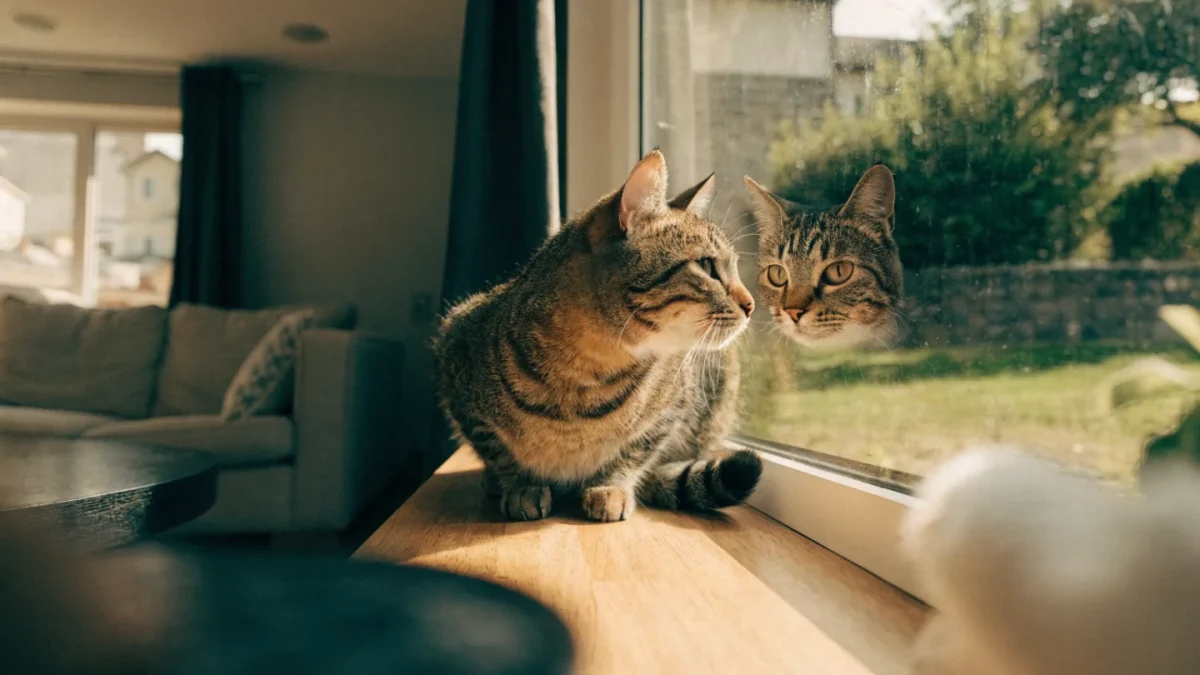
Here's what's actually going on when an outdoor cat acts miserable indoors: they're not being dramatic. For a cat who has spent months or years roaming, hunting, and reading the world through their nose, four walls and a food bowl genuinely feel like a demotion. The good news is that most cats do adjust — but the process looks nothing like flipping a switch. For the broader view, indoor vs outdoor cats is where everything comes together.
Transitioning an outdoor cat to indoor life is doable with the right approach, and "right" mostly means gradual, stimulating, and patient. It usually takes four to eight weeks to see real behavioral settling, sometimes longer for cats who've been outside for years.
Why Cats Resist Going Indoor-Only
My own cat, Basil, spent his first two years outdoors before I moved to an apartment. The first week inside, he stationed himself at the front door and yelled at it for approximately six hours a day. Not a metaphor. Six hours.
What I didn't understand then — and do now — is that outdoor cats organize their entire psychological world around territory. They have patrol routes, preferred hunting spots, social rivals, and scent landmarks. Removing access to all of that overnight doesn't just bore them; it genuinely disorients them.
The resistance you see — door-dashing, excessive vocalization, restlessness, scratching at windows — is your cat trying to re-establish what they've lost. Understanding this makes the whole process less adversarial and more collaborative.
Step 1: Audit Your Indoor Environment Before You Start
Before you restrict outdoor access, make your indoor space worth staying in. This is the step most people skip, and it's why they end up with a miserable, destructive cat who sprints for the door every time it opens.
Walk through your home and honestly ask: what is there for a cat to do here?
- Vertical space. Outdoor cats have trees, fences, rooftops. Indoor cats need tall cat trees, wall-mounted shelves, or cleared-off bookcases they can actually use. Aim for at least one perch at window height.
- Window access. A window with a view of birds, squirrels, or even a busy street buys you enormous goodwill. A bird feeder mounted outside a window is the closest thing to cat television money can buy.
- Hunting outlets. Outdoor cats hunt. Your indoor cat needs wand toys, puzzle feeders, and interactive play sessions to scratch that itch. If they're tearing up your couch, it's not spite — it's unspent predatory energy.
For a deeper look at this, designing your home around your cat's needs covers the room-by-room setup in detail. It's worth doing this groundwork before you even start the transition.
Step 2: Reduce Access Gradually, Not All at Once
The cold-turkey approach — one day outdoor access, next day none — creates the most behavioral fallout. Cats don't do well with abrupt change, and outdoor cats doubly so.
A gentler schedule:
Weeks 1–2: Night-only restriction. Keep your cat in at night but allow daytime outdoor access. This is actually a good baseline for any outdoor cat's safety. Use this time to reinforce indoor enrichment and start building positive indoor associations.
Weeks 3–4: Shortened outdoor windows. Limit outdoor time to one or two specific periods during the day — say, an hour in the morning and an hour in the late afternoon. Stick to a consistent schedule so your cat can predict it. Unpredictability is more stressful than the restriction itself.
Weeks 5–6: Supervised-only outdoor time. If you have a safe outdoor space, move to leash walks or a screened enclosure (catio) for any outdoor time. If not, phase out outdoor access entirely during this window.
Weeks 7–8: Fully indoor. By now your cat should have some indoor routines established and the initial protest behaviors should be subsiding.
This schedule is a guide, not a law. Some cats move faster; some need more time at each stage. Watch your cat's stress signals — if they're spraying, refusing food, or becoming aggressive, slow down and let them stabilize.
Step 3: Replace What They're Missing
Honestly, the transition fails when people think "indoor" means "safer and therefore fine." It's safe, yes. But safety isn't enrichment.
Scent exploration. Outdoor cats experience an enormous variety of smells daily. Indoors, bring that world to them: rotate toys, introduce new textures, try cat-safe herbs like silver vine or valerian. Even a paper bag from a shopping trip gives a new-smell experience.
Hunting simulation. Play sessions matter more than anything else during transition. Two 10-15 minute interactive sessions daily — morning and evening — are worth more than a roomful of ignored toys. Use a wand toy, move it like prey, let your cat catch it sometimes. The "kill" at the end of a hunt matters to cats more than most people realize.
Feeding enrichment. If your cat ate free-choice kibble before, this is a good time to switch to scheduled meals or puzzle feeders. Having to "work" for food occupies predatory instincts and gives indoor life some structure.
A safe outdoor alternative. A catio — a screened outdoor enclosure — is the single most effective transition tool for resistant outdoor cats. Even a small window box version gives them fresh air, sounds, and smells without roaming risk.
Step 4: Don't Punish the Protest
When Basil sat at the door wailing, everything in me wanted to tell him to knock it off. But punishment — even a sharp "no" — just adds stress to an already stressful period. It doesn't teach your cat that indoors is fine; it teaches them that you're unpredictable when they're already anxious.
Instead, interrupt door-dashing with redirection: a wand toy, a treat tossed across the room, anything that redirects attention without making them feel corrected. If they're vocalizing, don't respond to the vocalization itself — wait for a quiet moment, then engage them.
The real question with persistent protestors is usually whether the indoor environment is meeting enough of their needs. Before assuming your cat will never adjust, honestly audit what changed: Did playtime increase? Did they gain vertical space? Is there a window perch?
Step 5: Manage the Door Situation
A cat who learns to dash through an open door can undo weeks of progress in one second. A few things that help:
- Airlock mentality. Never open the front door without first putting your cat in another room if they're a known dasher. This sounds extreme but it becomes habit fast.
- Training the "sit" before the door. Basic threshold manners — sitting and waiting before you open a door — can be taught with treats and patience, even to cats who previously had no training.
- Make the door less interesting. Feed meals in a room away from the front door. Put their favorite perch on the opposite side of the house. If the best things are always away from the door, the door becomes less magnetic.
How Long Does It Actually Take?
Most outdoor cats reach a comfortable indoor baseline within six to twelve weeks. "Comfortable" doesn't mean they've forgotten outside exists — it means they've stopped actively campaigning to get back there and have started investing in indoor life instead.
A cat who finds a favorite sunny nap spot, who gets excited at wand-toy time, who greets you at the door (not to escape, but to say hello) — that's a cat who's made the adjustment. Basil took about ten weeks. He still watches birds from the window with an intensity that's slightly alarming, but he no longer yells at the door. Progress.
Frequently Asked Questions
Will my cat ever stop wanting to go outside?
Many do, yes — especially if the transition is gradual and the indoor environment is genuinely enriching. Cats are adaptable when their core needs (hunting, climbing, scent exploration, play) are met. Some cats remain window-watchers with a longing gaze forever, and that's okay too. It doesn't mean they're unhappy.
My cat is yowling constantly. Is this normal?
Yes, particularly in the first two to three weeks. Vocalization is how cats express frustration, and a cat who's lost outdoor access has something real to be frustrated about. Increase interactive play, check that they have vertical space and window access, and try to wait it out. If the yowling continues past week four or five without any improvement, it's worth a vet check to rule out an underlying issue.
What if my cat refuses to eat indoors?
Stress can suppress appetite, especially in the first week. Offer food in a quiet room away from household traffic. Warm the food slightly to increase its scent appeal. If your cat goes more than 24 hours without eating, contact your vet — prolonged food refusal can trigger hepatic lipidosis (fatty liver disease), especially in overweight cats, and can become life-threatening (VCA Animal Hospitals, Cats.com).
Can I ever let them outside again once they've transitioned?
Yes, with management. Many former outdoor cats do well with supervised outdoor time via leash walks or a catio, which gives them outdoor enrichment without roaming risk. The goal of going fully indoor doesn't have to mean zero outdoor exposure — it means controlled, safe outdoor exposure on your terms.