

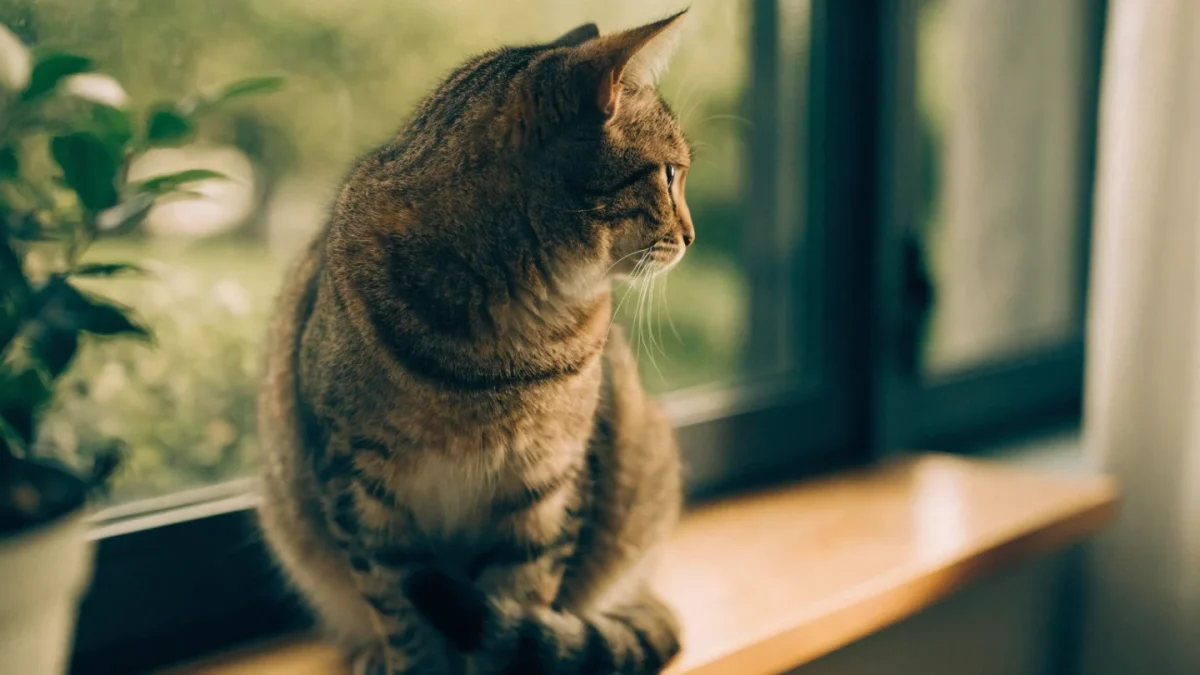
Here's what's actually going on when people argue about indoor versus outdoor cats: both sides usually have the cat's best interests at heart, and both sides are partially right.
The indoor vs outdoor cats debate is one of the most charged conversations in the cat world — right up there with wet food versus dry and whether cats actually love you or just tolerate you for the food. People have strong opinions. But the real answer, like most things with cats, is more contextual than either camp wants to admit.
The short version: for most cats in most places, indoor life is safer and leads to a longer lifespan. The longer version is that "longer" doesn't mean "better" unless you also make that indoor life genuinely good — behaviorally, mentally, and physically stimulating. And for some cats, particularly those with a strong outdoor history, the calculation shifts.
My cat Mochi has been indoor-only since I adopted her at six months. My previous cat, a big grey tom named Theo who came with the apartment I rented years ago, had been an outdoor cat his whole life. Trying to convert Theo to full indoor life was a disaster — one that taught me a lot about how individual this decision needs to be.
The Case for Keeping Cats Indoors
The statistics around outdoor cat safety are genuinely sobering. Indoor cats live, on average, significantly longer than cats with outdoor access — researchers finally confirmed what a lot of cat owners already suspected: the University of California, Davis puts the average indoor cat lifespan at 15–17 years, compared to just 2–5 years for cats who roam freely outdoors (UC Davis Veterinary Medicine).
That gap exists because outdoor life comes with real hazards that accumulate quickly:
Traffic. This is the biggest single killer of outdoor cats in urban and suburban environments. Cats have fast reflexes, but cars are faster. There's no clever enrichment solution for a cat who crosses a busy road at the wrong moment.
Predators. Depending on your region, outdoor cats face threats from dogs, foxes, coyotes, birds of prey, and other cats. These risks scale dramatically with how rural or wild-adjacent your area is.
Disease and parasites. Outdoor cats are exposed to feline leukemia virus (FeLV), feline immunodeficiency virus (FIV), feline infectious peritonitis (FIP), and a rotating cast of intestinal parasites that indoor cats typically avoid. Vaccines and preventatives help, but contact with infected cats, soil, or prey animals carries real risk.
Toxins. Gardens, parks, and neighboring properties contain things that can seriously harm cats: pesticide-treated plants, antifreeze runoff, certain mulches, rodenticides left out by neighbors. Most cat owners can't fully audit an outdoor environment the way they can their own home.
Fighting. Unneutered or unspayed outdoor cats fight — and even neutered cats who encounter territorial disputes can end up with serious bite wound infections. Cat bite abscesses are painful, expensive to treat, and can turn severe quickly if not caught.
Getting lost or stolen. Outdoor cats roam further than most owners realize, and not everyone who encounters your cat has good intentions. Microchipping helps for lost cats, but it doesn't prevent the situation.
Honestly, the cumulative picture is pretty compelling. If you live in a busy suburban area with traffic, other animals, and neighbors who may or may not be putting out toxic bait — keeping your cat inside is one of the clearest risk-reduction moves you can make.
The Case for Outdoor Access (And Why It's More Complicated Than "Just Keep Them In")
None of the above means outdoor access is automatically wrong or cruel. There's another side to this.
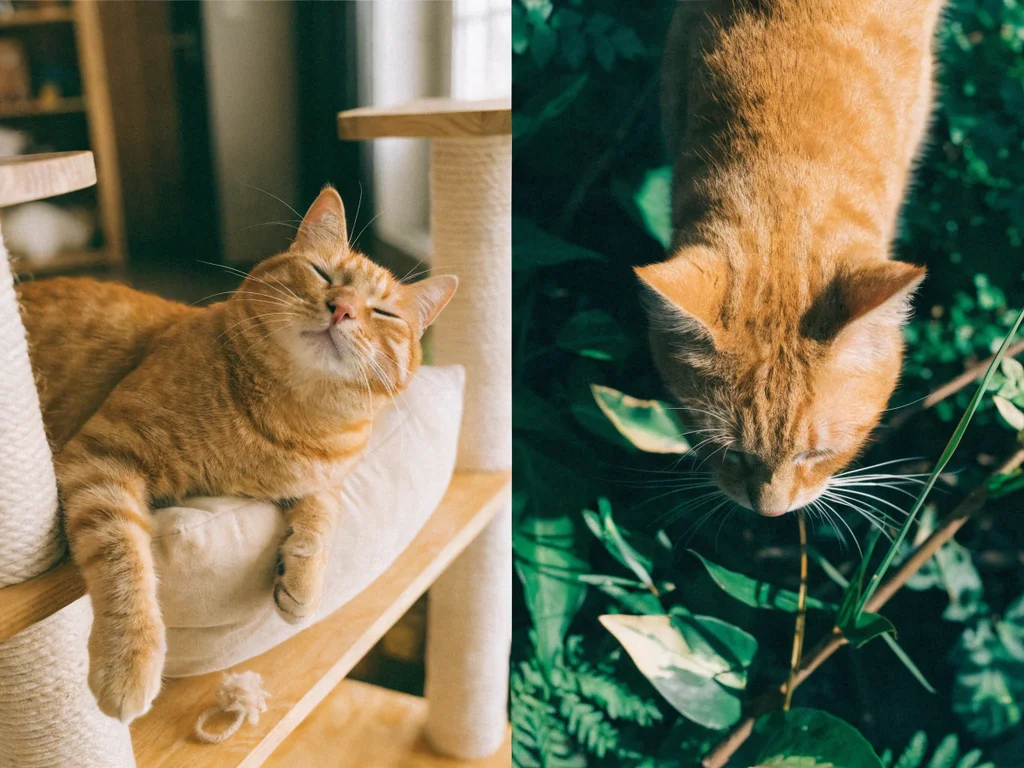
Cats evolved as hunters and explorers. Their brains, bodies, and behavioral systems are built around movement, unpredictability, territory, and sensory stimulation in ways that a standard living room — however comfortable — doesn't fully satisfy. A bored, understimulated cat is not a thriving cat, even if it's a safe one.
Outdoor time, when managed carefully, gives cats something that's genuinely hard to replicate indoors: novelty. Different smells every day, unpredictable things to investigate, prey-like movement from birds and insects, the specific physical engagement of rough terrain and real grass underfoot. For some cats — particularly those with high prey drive, large body mass, or a pre-existing outdoor history — the behavioral and psychological benefits are real.
The honest version of the indoor-only argument isn't "indoor is better, full stop." It's "indoor is safer, if you also commit to meeting your cat's behavioral needs in other ways." That second part is non-negotiable and often under-discussed.
A cat stuck in a bare apartment with no climbing structures, no mental stimulation, and two minutes of play per day is not living a good indoor life. It's just a safe, miserable one. The comparison isn't "outdoor cat vs. well-enriched indoor cat" — it's often "outdoor cat with some real stimulation vs. indoor cat with none."
What "Indoor" Actually Requires
If you decide (or have already decided) to keep your cat inside, you're taking on a real responsibility to make that environment work for a behavioral and cognitively complex animal. This means:
Vertical space. Cats feel safer and more confident when they can climb and observe from height. A home with no elevated surfaces forces a cat to exist entirely at floor level, which is behaviorally impoverished. Cat trees, wall-mounted shelves, window perches — these aren't luxuries. They're basic infrastructure.
Interactive play, daily. Not just leaving toys on the floor. Active play with a wand toy or similar, at least once a day, that simulates the hunt sequence: stalk, chase, pounce, catch. Most cats need 15-20 minutes of this. Many indoor cats get five minutes every few days, and it shows in their behavior — the midnight zoomies, the ankle attacks, the relentless meowing.
Environmental unpredictability. Rotating toys, changing furniture arrangements occasionally, introducing new textures and smells. Cats notice novelty, and novelty matters for a brain that's supposed to be tracking prey movements and investigating territory.
Windows. Not just light — actual sightlines to interesting outdoor activity. Birds, squirrels, leaves blowing, people walking by. Cats will spend hours watching outdoor activity from a good perch. It costs nothing and meaningfully improves indoor cat wellbeing.
Hiding spots. Enclosed, dark spaces where the cat can disappear completely. This is deeply instinctive and stress-reducing. Cardboard boxes work fine.
For a deeper look at how to set up your space strategically, designing a home that actually meets your cat's needs goes into the specifics — room by room, budget-friendly and not.
The Spectrum of "Outdoor Access"
One thing the indoor/outdoor binary misses is that there's a lot of middle ground, and for many cats, the middle ground is the right answer.
Supervised outdoor time. Take the cat out with you, in an enclosed yard or on a long line/leash. Not a perfect simulation of free roaming, but it adds novelty and stimulation without the worst risks. Some cats adapt to leash walking surprisingly well.
Catios. Outdoor enclosures — fixed or modular — that give cats fresh air, sights, smells, and sometimes real grass or perches, without free access to the street or neighboring properties. These range from window-mounted cages to room-sized attached structures. In terms of risk-benefit ratio, a catio is probably the best middle-ground option for most situations.
Enclosed gardens. With dedicated cat-proof fencing (specialized roller barriers or angled overhangs designed specifically for this purpose), some garden spaces can be made genuinely cat-safe. It requires investment, but it gives a near-outdoor experience with dramatically reduced hazards.
Controlled roaming in low-risk environments. Rural properties with no traffic, few predators, and cats that are already established outdoor roamers exist. In these situations, the outdoor risk calculation changes. A cat on a working farm who knows the terrain and has lived there for years is a different situation from a cat in a city neighborhood who slips out through a window.
The real question isn't always "indoor or outdoor" — it's "what does this specific cat need, and what level of risk am I able to manage responsibly?"
The Cat's History and Temperament Changes Everything
This is the part that doesn't get enough attention in the indoor/outdoor debate: individual cats vary enormously, and those differences matter.
Kittens raised indoor-only generally adapt well to indoor life and don't show strong frustration at not having outdoor access — provided their needs are met. They don't know what they're missing in a way that causes distress. If you want the specifics, cat anxiety and stress digs into this further.
Adult cats with a long outdoor history — like Theo — are a different story. Converting an established outdoor cat to indoor-only often creates real behavioral problems: increased vocalization, destructive behavior, aggression, and what can look like depression. Some cats make the transition fine given time and proper enrichment. Others genuinely struggle, and forcing it can reduce their quality of life significantly.
High-prey-drive cats (certain individuals, regardless of breed) tend to be more frustrated by indoor confinement than low-energy cats. These are the cats that sit at windows chattering at birds for hours, who need intensive daily play to stay balanced, and who may still show stress behaviors even in an enriched environment.
Fearful or anxious cats often actually do better indoors — the relative safety and predictability of an indoor environment can reduce their overall stress level compared to the constant novelty and stimulation of outdoor exposure.
If you're making this decision for an adult cat rather than a kitten, spend time honestly assessing your individual animal before deciding which direction to push.
Environmental Context: Where You Live Matters
The risk calculus for outdoor access is completely different depending on your environment.
In dense urban areas with heavy traffic, high-rise buildings, and limited green space, letting a cat roam freely carries enormous risk for relatively little behavioral payoff. The "outdoor enrichment" available in an alley behind a row of apartment blocks is not the same as an acre of countryside.
In suburban areas with moderate traffic and gardens, the risk is real but more manageable — especially with a catio or enclosed yard. Many suburban cats do well with supervised or enclosed outdoor access.
In rural settings with space, low traffic, and few immediate hazards, some owners reasonably decide that the benefits of free-roaming outweigh the risks — especially for cats who are already established outdoor animals. This is a legitimate assessment even if it wouldn't apply in a different environment.
One factor that's easy to overlook: your cat's impact on local wildlife. Free-roaming cats are significant predators of birds and small mammals — a landmark 2013 study published in Nature Communications estimated that free-ranging domestic cats kill 1.3–4.0 billion birds and 6.3–22.3 billion mammals annually in the United States alone, making them the single greatest source of human-linked bird and mammal mortality (Loss, Will & Marra, Nature Communications, 2013). This is worth factoring into the decision, not as a guilt trip, but as part of a complete picture.
Making the Decision: A Practical Framework
Rather than landing on a universal rule, here's how to think through it for your situation:
Start with safety baseline: What are the actual hazards in your environment? Traffic level, predators, toxic risks, other outdoor cats. Be honest about this — it's easy to underestimate if you haven't thought about it systematically.
Assess your cat's history: Did they have outdoor access before? Are they showing behavioral signs of frustration (not necessarily distress — just high drive, constant window focus, intense play behavior)? Or are they content loungers who sleep eighteen hours a day?
Be honest about your enrichment commitment: Indoor-only works well when it's done well. If you travel frequently, work long hours, and don't have the bandwidth to do daily interactive play sessions and maintain an enriched environment — that affects the equation.
Consider middle-ground options: Catio, supervised outdoor time, enclosed yard. These often resolve the tension better than a binary choice.
For a cat transitioning from outdoor to indoor: go slowly. Create a genuinely enriched environment before restricting outdoor access. Manage the transition over weeks, not days. Some cats make it without major issues; others need real time and patience.
FAQ
Q: Do indoor cats live longer than outdoor cats?
The evidence consistently points in one direction: indoor cats live significantly longer on average than cats with free outdoor access. University of California, Davis research cites an average of 15–17 years for indoor cats versus 2–5 years for outdoor cats — a gap large enough that it's hard to ignore when making this decision (UC Davis Veterinary Medicine). The major reasons are traffic, predators, disease exposure, and toxin risk.
Q: Is it cruel to keep a cat indoors all the time?
No — but it comes with real responsibility. A well-enriched indoor life that meets a cat's behavioral and cognitive needs is not cruel. An unstimulating indoor environment with minimal play, no climbing opportunities, and no novelty genuinely is a quality-of-life problem. The question isn't indoor vs. outdoor in the abstract; it's whether you're meeting your specific cat's needs, wherever they live.
Q: Can I convert an outdoor cat to indoor-only?
Sometimes, yes. It depends heavily on the individual cat and how long they've had outdoor access. Kittens and young cats adapt more easily. Long-term outdoor cats often struggle, and some never fully adjust. If you're attempting this transition, do it gradually, make the indoor environment as enriched as possible before restricting access, and watch for behavioral signs of chronic stress rather than just frustration. Some cats settle in; others genuinely don't.
Q: What if my cat cries to go outside?
Vocalizing at the door is common and not automatically evidence of suffering. Cats also vocalize at the sight of birds through a window, at meal times, and at 3 a.m. for reasons no one has fully decoded. Assess the behavior in context: is your cat otherwise healthy, engaged, and meeting normal behavioral benchmarks? Or do you also see other signs of chronic stress — excessive grooming, elimination changes, consistent hiding? If it's just door vocalization, a more enriched indoor environment and redirect play usually addresses it over time.
Q: How do I keep an indoor cat stimulated?
Daily interactive play is the foundation — a wand toy session that runs through the full hunt sequence (stalk, chase, pounce, catch) for 15-20 minutes. Add to that: vertical climbing options, window access to interesting outdoor views, puzzle feeders to make meals mentally engaging, rotating toys, and hiding spots. For many cats, a second cat as a companion makes a significant difference — though cat introductions require their own careful management.
Q: Is a catio worth it?
For cats that show strong interest in outdoors, yes — and for owners who want to provide outdoor experience without free-roaming risk. Catios let cats get fresh air, novel smells, and outdoor sights in a controlled environment. They range from window-box attachments to large walk-in structures, and the cost varies accordingly. If your budget is limited, even a well-positioned window perch with good sightlines provides meaningful enrichment. A catio is a step up from that, not a requirement.
Q: What about letting cats out at night?
Nighttime roaming carries higher risk than daytime for most cats — it's when traffic is harder to see, predators are more active in many regions, and the cat's whereabouts are hardest to track. If you allow outdoor access, limiting it to daylight hours and keeping the cat inside at night is a reasonable middle-ground risk reduction. That said, some cats are strongly nocturnal in their activity patterns, which makes this harder to enforce without behavioral fallout.