

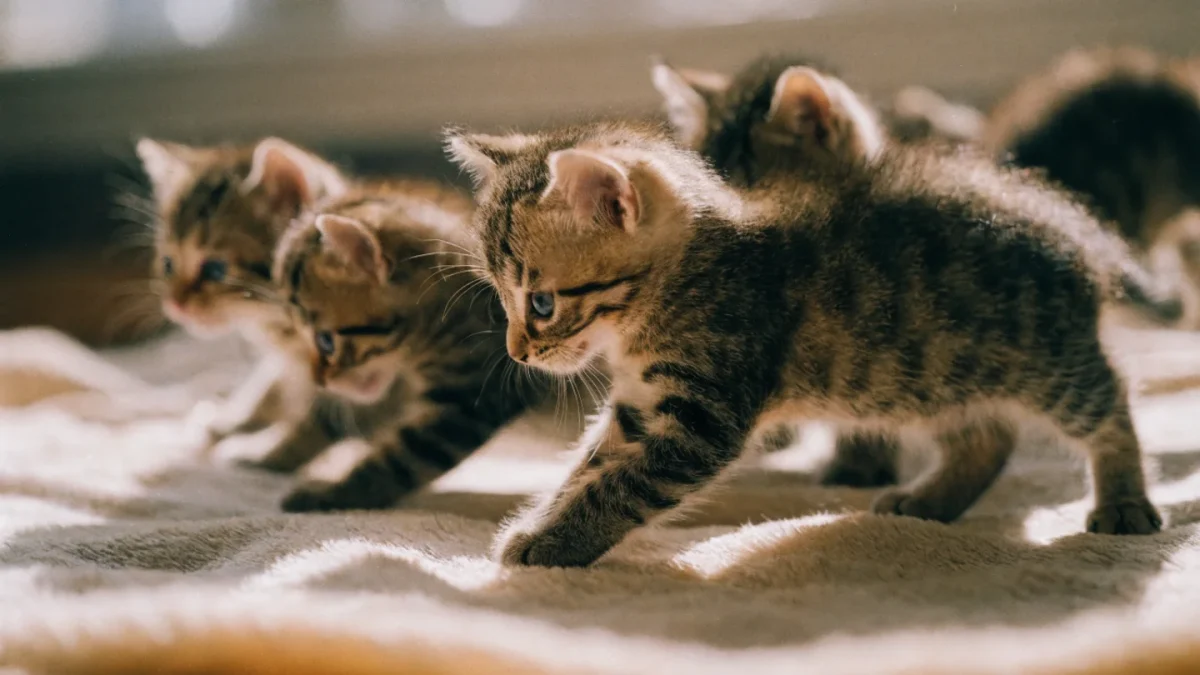
Here's what's actually going on when a kitten grows up confident and curious versus one that hides under the bed every time a visitor walks through the door: it almost always comes down to what happened between weeks two and nine of that kitten's life. The broader guide on kitten behavior is where I lay out the full framework.
The kitten socialization window is one of the most well-documented phenomena in feline development, and it's also one of the most squandered. Breeders, foster carers, and even experienced cat owners often don't realize they're sitting on a narrow, irreplaceable opportunity — and then wonder why their adult cat acts like every cardboard box is a threat.
What the Socialization Window Actually Is
Between roughly two and nine weeks of age, a kitten's brain is in a unique state. Fear responses haven't fully come online yet, which means kittens during this period can form positive associations with new stimuli far more easily than they ever will again — a point the AVMA's 2024 literature review on kitten socialization makes clearly, noting that kittens need exposure to people, other animals, and novel environments by nine weeks to obtain maximum developmental benefit (AVMA, Socialization of Puppies and Kittens, 2024).
The peak of this window — the absolute sweet spot — is weeks three through seven. During this phase, a kitten that encounters a calm human, a vacuum cleaner running in another room, or the family dog is far more likely to file that experience under "normal" rather than "terrifying." After the window closes, novel stimuli default to threat until proven otherwise.
This isn't a character flaw in cats. It's evolutionary logic. A wildcat kitten that reaches two months old and suddenly becomes cautious of strange shapes and sounds is a kitten that's more likely to survive. The problem is that modern pet cats live with dishwashers and toddlers and strangers at the door, and that ancient wariness doesn't serve them well in our world.
Why It Matters More Than You'd Expect
I adopted my cat Marigold as an adult rescue — she'd been a barn cat, minimal human contact before about four months old. Five years in, she still startles at sounds that wouldn't bother a well-socialized kitten at all. She's sweet and she trusts me completely, but she'll never be a lap cat for visitors. That ship sailed before I ever met her.
This isn't a sob story — Marigold is a happy cat. But it's a good illustration of just how durable early socialization (or its absence) turns out to be — researchers have confirmed this connection repeatedly, with a comprehensive review in Animals finding that individual differences in adult cats' behavioral responses to humans are substantially shaped by whether they received adequate socialization during the sensitive period (Riemer et al., 2020).
A kitten that misses the socialization window doesn't necessarily become unadoptable. But it will likely require significantly more patience, consistency, and time before it can comfortably exist in a typical household.
What to Socialize Kittens To
The goal isn't to overwhelm a kitten — it's to introduce variety gently and consistently during the window. There are a few key categories.
Humans and Handling
Daily gentle handling is the most important intervention you can make. This means holding the kitten, touching paws and ears, briefly restraining it (simulating vet exams), and letting it get used to human voices, breath, and faces.
Different people matter here. Kittens handled exclusively by one person may warm up to that person while remaining wary of everyone else. Research backs this up specifically: kittens handled by four or five different people — including both adults and children — before seven weeks of age are more social with strangers as adult cats than kittens handled by only one person, regardless of how much total handling they received. Exposing kittens to adults, children, and people wearing hats or glasses all helps.
Sounds
Household sounds during the socialization window are gold. Vacuums, washing machines, television noise, music, raised voices, doorbells — all of these at a reasonable volume help kittens categorize these sounds as background noise rather than alarms. Some experienced foster carers play recorded city sounds or baby crying during kitten care sessions for exactly this reason. It's interesting to compare this with kitten play biting — they overlap more than you'd think.
Surfaces and Environments
Kittens that only ever stand on soft bedding may become anxious on tile, wood floors, or grass. Introducing a few different textures — nothing dramatic, just setting them on a folded towel, then a smooth mat, then briefly on carpet — during the window builds environmental resilience.
Other Animals
Introducing kittens to friendly adult cats and calm dogs during this period significantly improves their odds of living peacefully with other animals later. The reverse — a kitten that never sees another species before the window closes — often means a cat that reacts with terror or aggression to the family dog it meets as an adult.
What Happens When the Window Is Missed
Feral kittens — those born outdoors with no human contact — typically reach the end of the socialization window without any of these experiences. The outcome is usually a cat that responds to human approach with fear and flight, or defensive aggression if cornered.
This isn't permanent trauma, but it is deep conditioning. A feral kitten that reaches 10-12 weeks without socialization will require weeks or months of patient, controlled exposure before it can tolerate being touched. Some never fully reach the comfort level of a well-socialized pet — the Feline Veterinary Medical Association's 2025 position statement on feral kitten socialization goes so far as to advise against attempting to socialize feral kittens over four months of age entirely, noting it may be detrimental to their emotional health (FelineVMA, 2025).
The takeaway for anyone fostering or caring for young kittens: every day of the window that passes is a day you can't get back.
Helping an Undersocialized Kitten
If you've got a kitten (or young cat) that missed the window, the work is slower but not impossible. Here's what actually helps.
1. Low-pressure exposure. Set up a safe room where the kitten can observe you without pressure to interact. Sit on the floor, read aloud, do quiet activities nearby. Let the kitten approach you, not the other way around.
2. High-value food as a bridge. Honestly, this is the most reliable tool in the undersocialization toolkit. Offer small amounts of something irresistible — a little bit of wet food or a soft treat — from your hand or near your body. Hunger and safety instincts compete, and over time, food wins.
3. Consistent handling in small doses. Brief, gentle, predictable. Pick up, hold for 30 seconds, set down. Repeat daily. Predictability is what allows a fearful cat to build trust — they need to be able to anticipate what happens next.
4. No forced affection. This is where a lot of well-meaning people stall their own progress. Grabbing or restraining a fearful cat to try to "teach" it that you're safe backfires spectacularly. You become the thing associated with fear. Give the cat agency.
5. Patience that's measured in weeks, not days. Some cats begin to open up in two weeks of this approach. Others take three months. The timeline varies with how much the window was missed and what the cat's individual temperament is like.
The Real Question: Does Early Socialization Guarantee a Friendly Cat?
Look, not entirely. Genetics play a real role in cat temperament — the friendliness of a kitten's father (even if absent) has been shown to influence its tendency to approach humans, a finding from a classic study in Applied Animal Behaviour Science that tested litters from friendly versus unfriendly sires and found the friendly-fathered kittens approached strangers faster and stayed closer, even though they had never met their fathers (McCune, 1995). A kitten with a feral-temperament father and excellent socialization will likely land somewhere in the middle of the friendliness spectrum.
Socialization is the biggest lever you can pull in those first weeks, but it works within a range set partly by genetics. The same way some humans are naturally more extroverted, some cats come wired to be more open to the world. Socialization expands that range dramatically — it doesn't override it entirely.
What it does guarantee is this: a kitten that receives varied, positive experiences during the window will function better in a household than the same kitten that didn't, regardless of genetics. The window isn't magic. But ignoring it is a real cost.
Frequently Asked Questions
Can you socialize a kitten after the window closes?
Yes, but it takes considerably more time and patience. After nine weeks, the default shifts toward wariness of new things. Progress is still possible — many undersocialized cats become affectionate companions — but you're working against the grain of their development rather than with it. The earlier you start, the easier it is.
What if I adopt a kitten at 8 weeks — is it too late?
Eight weeks is still within the tail end of the window, and there's time to make a real difference. Focus on daily handling, exposing the kitten to household sounds, and introducing it to any other animals in your home as soon as it's settled. The first few weeks after adoption matter a lot.
How much daily socialization does a young kitten need?
Short, frequent sessions beat long, infrequent ones. Fifteen to thirty minutes of gentle interaction spread across the day is more effective than a single hour-long session. Kittens tire easily and an overwhelmed kitten stops learning.
My kitten hisses when I pick it up — is that normal?
Short defensive reactions during early handling are common, especially if the kitten hasn't had much human contact. The key is not to back off entirely (which reinforces the behavior) but also not to force prolonged contact. Pick up, hold briefly and calmly, set down before the kitten panics. Consistency over time changes the association.