

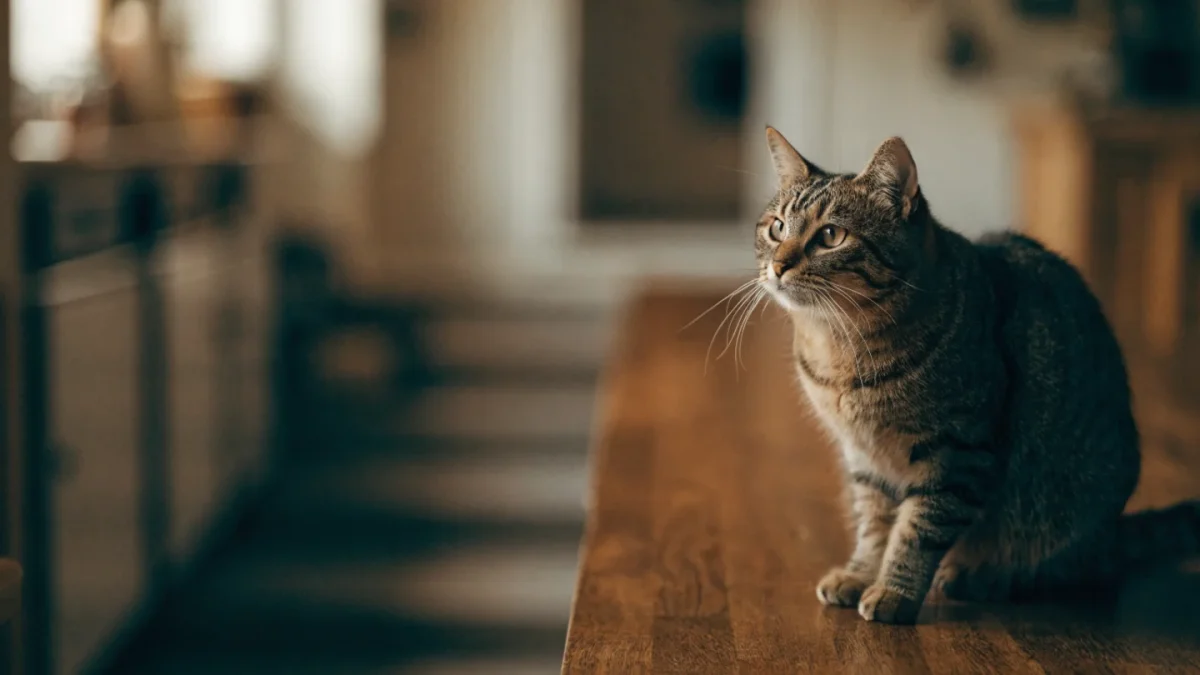
Here's what's actually going on when people say their cat "can't be trained": they're trying to use the wrong currency. Dogs work for praise. Cats work for things they genuinely want — and the clicker is just a very precise way of telling them exactly when they've earned it. For the broader view, cat training is where everything comes together.
Clicker training cats is one of the most effective and honestly underused tools for building a real relationship with your cat. It's not about turning them into tiny circus performers (though that's a fun bonus). It's about communication — giving your cat a clear, consistent signal they can actually understand. Once my own cat Miso figured out the system, I stopped feeling like we were talking past each other.
What Clicker Training Actually Is
A clicker is a small device that makes a short, distinct clicking sound when pressed. That sound becomes a "bridge" — it marks the exact moment your cat does the right thing, bridging the gap between the behavior and the reward that follows.
The reason it works better than just saying "good girl!" is precision and consistency. A click sounds the same every time. Your voice doesn't. Cats are quick — the window between a correct behavior and your reaction is tiny, and the clicker fills it perfectly.
The underlying method is called positive reinforcement. You're not correcting bad behavior; you're building good behavior by rewarding it. Cats respond to this extremely well because they're motivated by choice — they need to feel like they decided to do the thing, not that they were forced into it. The clicker creates that feeling.
What You Need to Get Started
The equipment list is short:
- A clicker. Any basic one will do. Look for one with a crisp, clean sound rather than something too loud or tinny. Some cats startle at loud sounds, so if yours is sound-sensitive, a box clicker (less sharp) or even a retractable pen works in a pinch.
- High-value treats. Not their regular kibble. You want something they get only during training — something that makes them actually stop what they're doing. Small soft pieces work best because they're quick to eat and don't interrupt the training flow. Freeze-dried meat, tiny pieces of cooked chicken, or small fish treats all tend to work well.
- A quiet space. No other pets, no loud TV, no distractions. At least to start.
- Short sessions. Five minutes is plenty. Cats have good focus but limited patience for repetition.
That's genuinely it. No special collar, no complicated setup. The magic is in the timing.
Step 1: Charge the Clicker (This Part Is Non-Negotiable)
Before you try to teach anything, your cat needs to learn what the click means. This is called "charging" the clicker, and skipping this step is the most common reason clicker training fails.
Sit with your cat when they're calm and slightly hungry — not starving, just a bit peckish. Click once, then immediately give a treat. Wait a few seconds. Click once, treat. Repeat.
You're not asking your cat to do anything yet. You're just building the association: click = food is coming. Do this for about five minutes, once or twice a day, for two or three days.
You'll know it's working when your cat's head whips toward you at the sound of the click. That's the moment the connection has formed. Miso's ears would swivel like little radar dishes — the click meant business, and she knew it.
Don't click if you don't have a treat ready. Don't skip the treat after a click. The click means "that thing you just did has been marked, and a reward is guaranteed." Break that promise once and you've muddied the signal.
Step 2: Shape Your First Behavior — "Sit"
Sit is the classic starting point because most cats do it naturally, which makes it easy to capture.
"Capturing" means waiting for the behavior to happen on its own, then clicking the instant it does, and treating. Watch your cat. The moment their rear end touches the floor, click, then treat. Say nothing at first.
After a few successful captures, your cat will start to notice the pattern. They'll start sitting more intentionally, watching you for the click. That's the goal — you want them to figure out what they did to earn the reward.
Once they're sitting reliably and looking at you like "is this it? is this what you want?", then you add the verbal cue. Say "sit" a half-second before they're about to do it (because by now you can read their body language). Click the moment they're down, treat.
After enough repetitions, the word becomes the cue. They'll sit on a verbal cue alone — but always reward it, at least with some frequency, or the behavior fades.
Step 3: Build From There
Once sit is solid, the method stays the same — you're just applying it to new behaviors. Some good next steps for beginners:
"Touch" (nose to hand). Hold out your finger or a target stick. When your cat sniffs or touches it with their nose, click and treat. This one comes together fast and becomes incredibly useful — you can use "touch" to guide your cat onto a scale, into a carrier, or onto a specific spot. If this part grabbed you, cat tricks is where I really unpack it.
Coming when called. Say your cat's name, and the moment they orient toward you or take a step in your direction, click and treat. Build up distance gradually. This is one of the most practical things you can teach a cat.
Going to a mat or spot. Toss a treat onto a small mat or folded towel. When your cat steps onto it, click. Repeat until they're deliberately walking to the mat. Add a cue ("place" or "mat"). Useful for mealtimes, vet prep, or keeping them out of specific areas.
The real question most people hit at this point is: how long does it take? Honestly, it depends more on the cat than the training. Some cats — especially food-motivated ones — pick up basic behaviors in just a few sessions. Others take a few weeks to warm up to the process. Neither is a problem.
Common Mistakes That Stall Progress
Clicking at the wrong moment. The click has to happen during the behavior, not after. If your cat sits and you click two seconds later when they've already stood back up, you've marked standing, not sitting. Precision matters more than enthusiasm.
Sessions that run too long. Once your cat walks away, stops taking treats, or starts pawing at your treat hand, the session is over. Ending on a success — even a simple one — is much better than pushing through until they check out.
Moving too fast. If you're struggling to get a behavior, you may have jumped ahead. Break it down smaller. If they won't sit on cue, go back to capturing. If they won't touch a target, reward any nose movement toward it first.
Rewarding stress instead of success. If your cat is crouched, ears back, not eating treats — they're not in a learning headspace. End the session and try again later. Training works best when the cat is relaxed and interested.
Using Clicker Training for Real-Life Problems
Here's where clicker training gets genuinely useful beyond just tricks. A cat who understands the clicker system is easier to work with in all kinds of situations.
Carrier training is a big one. Using a "touch" cue, you can guide your cat closer to and eventually into their carrier, clicking and treating every step. Pair this with leaving the carrier open in the house (lined with something soft) so it becomes a familiar, non-threatening object. Vet visits get a lot less dramatic.
Scratching on appropriate surfaces can be shaped the same way. If you catch your cat scratching their post instead of the couch — click and treat. Reinforce the right location enthusiastically and consistently.
Nervous cats who startle easily can actually become more confident through clicker training. The process itself — choosing behaviors, earning rewards, having reliable outcomes — builds a sense of control that reduces anxiety over time. Researchers reviewing shelter cat studies found preliminary evidence that clicker training decreases behavioral stress indicators, theorizing that predictable interactions give cats a greater sense of agency (Travers, Veterinary Evidence, 2022).
FAQ
Do I need to use a clicker, or can I use a word instead?
You can use a short, consistent verbal marker — something like "yes!" said in the same tone every time. It works. The reason clickers are popular is that they're more consistent than voice (same sound, every time, regardless of your mood), but a verbal marker is a perfectly valid alternative, especially if carrying a clicker around is inconvenient.
My cat ignores treats during training. What do I do?
A few possibilities: the treats aren't high-value enough (try something new, something smelly, something they rarely get), the cat isn't hungry enough (try training before a meal), or the environment has too many distractions. Start in the quietest, most familiar room. Some cats also prefer play rewards — if your cat goes crazy for a specific toy, you can use a short play burst as the reward instead.
How young or old does a cat need to be to start clicker training?
There's no age restriction. Kittens can start as soon as they're eating solid food and showing interest in their environment — some people start around 8 weeks. Older cats can absolutely learn too, including seniors. The process may be slower with older cats who have more ingrained habits, but it works. Cats don't age out of learning.
Can I clicker train a feral or semi-feral cat?
Yes, though it takes more patience and a much slower pace. The first goal is just getting a feral or fearful cat comfortable with your presence, which comes before any formal training. Tossing treats in their direction without requiring anything in return builds trust. Once they're consistently approaching you willingly, the clicker method can start — but with extremely low-pressure, short sessions and a heavy focus on letting the cat set the pace.