

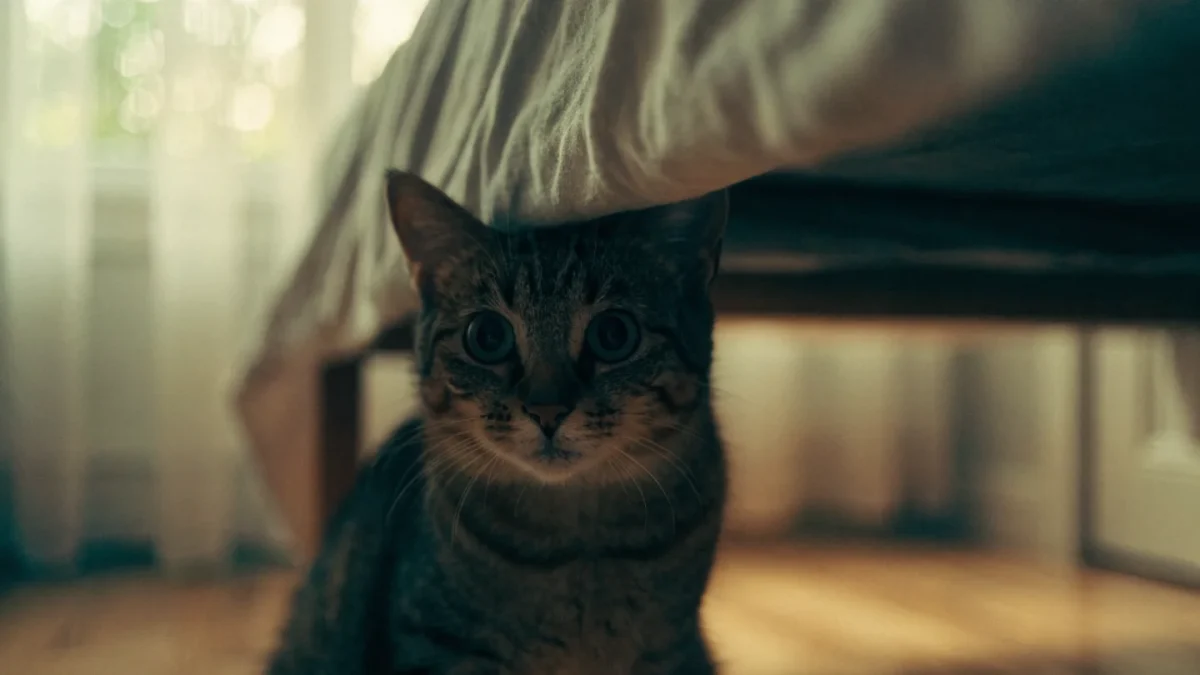
Here's what's actually going on when your cat hides under the bed for three days after you rearrange the living room: she's not being dramatic. She's genuinely stressed, and from her perspective, her entire world just shifted without warning.
My cat Mochi did this when I moved apartments a few years ago. I'd done everything "right" — kept her in one room during the move, set up her litter box and food before letting her explore — and she still spent a week communicating exclusively through low growls and the occasional hiss aimed at nothing in particular. I didn't recognize half of what she was showing me. Once I did, everything changed.
Cat anxiety and stress are more common than most owners realize, and they show up in ways that are easy to misread as bad behavior, stubbornness, or attitude. Understanding what your cat is actually communicating — and why — is the first step to helping her feel safe again. Most stressed cats can make a real turnaround with the right environmental changes and a bit of patience.
What Stress Actually Does to a Cat
Stress isn't just a mood. In cats, chronic stress triggers a genuine physiological response — the same fight-or-flight cascade that keeps prey animals alive in the wild. Cortisol rises, the immune system gets suppressed, digestion changes, and the brain stays on high alert. Research published in Frontiers in Veterinary Science confirms that chronic activation of the hypothalamic-pituitary-adrenal (HPA) axis in cats elevates cortisol, suppresses immune function, and contributes to a range of downstream health problems.
For a cat, that state is exhausting to sustain. And because cats evolved to hide vulnerability (showing weakness to a predator is dangerous), they often mask stress until it escalates into something you can't ignore — like suddenly refusing to use the litter box, or starting fights with a housemate they've lived with peacefully for two years.
Short-term stress — a thunderstorm, a vet visit, a single change — is normal and usually resolves on its own. Chronic stress is different. It's sustained, often layered, and can have real effects on a cat's physical health over time — researchers have found that chronically stressed cats show measurable changes in immune markers and are significantly more vulnerable to illness, according to a 2024 review in Applied Animal Behaviour Science.
The Real Causes of Cat Anxiety and Stress
Understanding what cats actually find stressful is half the battle, because some triggers are genuinely surprising.
Environmental Changes
Cats are territorial animals who rely heavily on scent mapping — their environment, to them, is essentially a map of familiar smells that signals "this is safe." Anything that disrupts that map can trigger a stress response.
Moving to a new home is the obvious one, but smaller changes matter too. New furniture (especially if it replaces something they loved). A renovation that changes how rooms smell. A new smell brought in from outside — a stranger's coat, a dog you petted at the park, even a new cleaning product. These all register as "something changed" in a cat's world, and some cats need time to re-establish their mental map.
Disrupted Routine
Cats are creatures of expectation. They know when it's feeding time, when you usually come home, when the household is quiet. Consistent routine provides a predictable environment, which translates to safety.
When routines shift — a new job with different hours, a baby in the house, a new work-from-home schedule that suddenly has you home all day — cats can struggle to recalibrate. The anxiety isn't about you being there; it's about the familiar pattern disappearing.
Social Stressors
Multi-cat households are a significant source of chronic stress for cats who don't get along, or who have to share resources they'd prefer to have separate. A cat who can't access the litter box without walking past a cat she dislikes isn't just inconvenienced — she's facing a daily threat to a core resource.
New additions to the household matter too: a new cat, a new dog, a new baby, a new person moving in. Even a new frequent visitor can keep a shy cat on edge indefinitely if there's no safe retreat space.
Lack of Control and Agency
Honestly, this one is underestimated by a lot of cat owners. Cats need to feel like they have some control over their environment — the ability to choose when to engage, where to rest, whether to be touched. Forced interaction, being picked up when they don't want to be, not having enough hiding spots or high perches — all of these erode a cat's sense of agency.
A bored cat with nothing to do and nowhere to go is a stressed cat. Environmental enrichment isn't a luxury; it's a genuine stress management tool.
Medical Causes
Before assuming a behavior change is purely stress-related, it's worth noting that some signs of anxiety — like increased vocalization, sudden aggression, or litter box avoidance — can also be symptoms of pain or illness. If the change is sudden and unexplained, a vet check is always a reasonable first step. Emily's rule: when in doubt, rule out medical first. This guide covers the behavioral side, but the two are often intertwined.
Recognizing the Signs of a Stressed Cat
Knowing what to look for is everything. Many of these signs are easy to dismiss or misread, which is why cats often suffer longer than they need to.
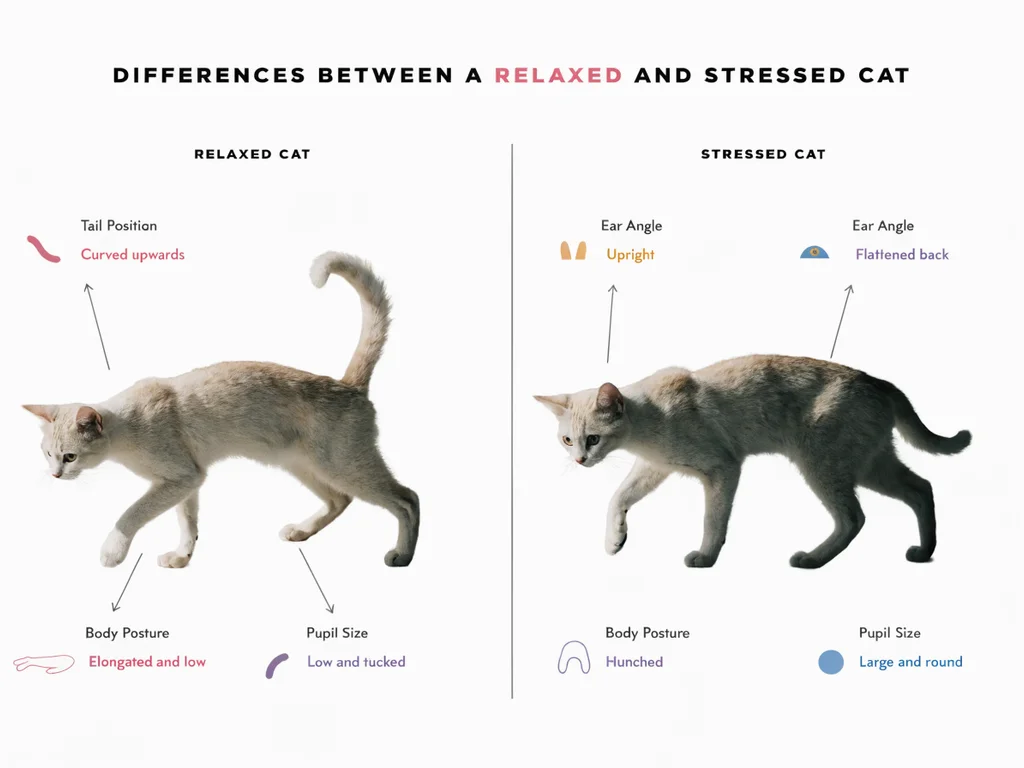
Understanding how to read your cat's full body language — reading your cat's body language across tail, ears, eyes, and posture together — helps you catch stress signals earlier, before they escalate.
Behavioral Changes
Hiding more than usual. A cat who's suddenly spending hours under the bed, in the back of a closet, or in any spot they haven't used before is telling you something. Cats hide when they feel unsafe.
Aggression out of nowhere. Swatting, biting, growling at people or other pets without obvious provocation. This is often redirected fear rather than "bad behavior." Mochi once launched herself at my leg after a car backfired outside — classic redirected aggression from fright. I was not appreciating the nuance at the time.
Litter box avoidance. Peeing or defecating outside the box is one of the most common — and most misunderstood — signs of stress. Before assuming it's defiance, rule out both a medical issue and a stress trigger.
Over-grooming or under-grooming. A stressed cat might groom obsessively, creating bald patches on their belly, inner legs, or tail base. Conversely, a cat who stops grooming may be too overwhelmed to engage in normal self-care behavior.
Appetite changes. Eating less, eating more, refusing food entirely, or becoming suddenly obsessive about feeding time.
Increased clinginess or complete withdrawal. Some cats cope by wanting constant contact; others disappear entirely. Both can be stress responses, just opposite ends of the dial.
Vocal Signs
Cats have an extensive vocal repertoire that shifts when they're stressed — more frequent meowing, yowling, hissing, growling, or a change in the quality of their usual sounds. A cat who's usually fairly quiet and suddenly can't stop vocalizing at night deserves attention. If you want to understand what different vocalizations actually mean, every sound your cat makes is worth a close read.
Physical Signs
Dilated pupils even in normal lighting. Ears rotated back or flattened. Tail tucked under the body or lashing slowly. Whiskers pulled back against the face. Body low to the ground or hunched. Piloerection — that puffed-up fur along the spine — in situations that aren't clearly threatening.
These physical signals often appear before the behavioral ones escalate. If you're seeing them regularly, chronic stress is worth addressing.
How Severe Is It? Assessing Your Cat's Stress Level
Not all stress is equal. A cat who's slightly unsettled by a new piece of furniture will probably self-correct in a few days. A cat who's been hiding for two weeks, stopped eating, and started overgrooming needs more active intervention.
A rough way to think about it:
Mild/temporary stress: Short-duration hiding, minor appetite change, slightly more cautious behavior. Usually resolves on its own as the cat adapts. Monitoring and some environmental support is appropriate.
Moderate ongoing stress: Persistent behavioral changes over days to weeks. Litter box issues, clear social tension, regular hiding. Needs active environmental and routine adjustments.
Severe or chronic stress: Physical symptoms like overgrooming with hair loss, sustained aggression, complete appetite loss, or signs of exhaustion. This level warrants a vet visit to rule out medical overlap and — if needed — a referral to a veterinary behaviorist.
The real question to ask yourself: has this been going on for more than two weeks with no sign of improvement? That's the threshold where "wait and see" starts becoming "this needs help."
How to Help a Stressed Cat: A Practical Guide
There's no single fix. But there are a set of changes that consistently make a real difference for anxious cats. You don't need to do everything at once — start with the highest-impact changes and add from there.
Step 1: Stabilize the Environment
Before adding anything new, stabilize what's there. If there's a specific change that triggered the stress, think about whether it can be undone, altered, or gradually introduced instead of all at once.
If you moved recently, give the cat time to scent-map the new space without forcing exploration. Set up a safe base room with all her familiar items — her bed, her litter box, her food, her scent — and let her expand her territory at her own pace.
If a new person or animal is the trigger, create physical separation until the cat can encounter the new presence on her own terms.
Step 2: Multiply Resources in Multi-Cat Homes
The rule of thumb is one litter box per cat, plus one extra — placed in different locations, not clustered together. Separate feeding stations. Multiple water sources. More than one high perch and more than one hiding spot.
The goal is that no cat ever has to walk through another cat's territory to access something she needs. Resource competition is one of the most consistent drivers of chronic household stress.
Step 3: Increase Environmental Enrichment
A mentally occupied cat is a less anxious cat. This is one of those things that sounds obvious but gets underimplemented because it requires actual effort.
Window perches with a bird feeder positioned outside. Puzzle feeders that require a little problem-solving. Vertical space — cat trees, shelves, wall-mounted ledges — that lets a cat observe the room from above rather than feeling exposed at floor level. Rotation of toys so they feel novel. Daily interactive play that lets the cat perform the hunt-stalk-pounce sequence.
For a cat who's stressed, interactive play isn't optional enrichment — it's one of the most reliable ways to discharge the arousal state that stress creates.
Step 4: Build Predictable Routines
Feed at consistent times. Play before meals if possible (mimics hunt → eat → groom → sleep, which is a cat's natural cycle). Keep household noise and activity as predictable as you can during the initial adjustment period.
Predictability tells a cat that her world is manageable. You can't verbally explain to a cat that the new schedule is temporary, but you can show her, through consistent pattern repetition, that her core needs will continue to be met.
Step 5: Create True Retreat Spaces
A hiding spot isn't enough if the cat doesn't feel actually safe in it. The retreat space needs to be:
- Enclosed on at least three sides, ideally with a small entrance the cat controls
- Elevated if possible (high spots feel safer to most cats)
- Off-limits to other pets and to visitors — even well-meaning interaction during a retreat session defeats the purpose
- Scented with the cat's own bedding — familiar smell = safe
A cardboard box with a cut entrance is a legitimately excellent retreat space. Cats don't care about aesthetics.
Step 6: Use Scent Thoughtfully
Cats experience the world largely through smell, so scent is a powerful tool in both directions. Synthetic pheromone products (available as diffusers, sprays, or collars) mimic the calming facial pheromone cats deposit when they rub against objects they feel safe around. Research on their effectiveness is genuinely mixed — studies have found positive results for specific applications like reducing stress during vet visits and limiting undesirable scratching, while evidence for broader anxiety reduction is rated as moderate at best — but some cats respond well, particularly to the diffuser format in a space the cat uses frequently.
Avoid strong-smelling cleaning products, plug-in air fresheners, and essential oil diffusers in areas the cat spends time. Many scents that smell pleasant to humans are overwhelming — or actively irritating — to cats.
Step 7: Reconsider Interaction Patterns
The most common well-intentioned mistake anxious cat owners make: trying to comfort the cat by seeking her out, picking her up, or petting her when she's clearly stressed. This usually makes things worse.
A stressed cat needs to feel in control of interaction. Let her come to you. Sit on the floor at her level, look away, and be boring — this is one of the fastest ways to get a fearful cat to approach voluntarily. Slow blinks in her direction. Offering a hand for her to sniff, not actively reaching for her.
It feels counterintuitive to do less when you want to help. But for a cat whose stress response is active, less is genuinely more.
When to Seek Professional Help
Look — sometimes the behavioral adjustments aren't enough, and that's not a failure. If your cat has been noticeably stressed for more than two to three weeks with no meaningful improvement despite environmental changes, it's time to bring in backup.
Your vet: First stop. They can rule out pain, hyperthyroidism, cognitive dysfunction (relevant in older cats), urinary issues, and other physical drivers of anxiety-like behavior. Some cats benefit from short-term anti-anxiety medication to break a chronic stress cycle — your vet can advise on whether this is appropriate.
A veterinary behaviorist: These are specialists in animal behavior — think of them as the cat equivalent of a therapist who also has a medical degree. For severe cases — multi-cat household breakdown, severe phobias, self-injurious overgrooming — a behaviorist can create a tailored behavior modification plan that goes beyond general environmental advice.
A certified applied animal behaviorist or cat behavior consultant: Not the same as a veterinary behaviorist (different credentials), but many are highly qualified and can offer practical household assessments that a vet visit alone won't provide.
Don't wait until a cat is in crisis to seek help. The earlier intervention happens, the better the outcome tends to be.
FAQ
How long does it take for a stressed cat to calm down?
Mild stress from a one-time event (a vet trip, a visitor) usually resolves within 24-48 hours once the trigger is removed. Moderate stress from an environmental change may take two to four weeks as the cat adapts. Chronic stress from ongoing triggers — a conflict with another pet, persistent resource competition — won't resolve until the underlying issue is addressed, no matter how much time passes.
Can cats develop anxiety disorders like humans do?
Yes. Cats can develop generalized anxiety, separation anxiety, and specific phobias. Noise-triggered fear responses — from thunderstorms, fireworks, or construction sounds — are recognized clinically and have been documented in veterinary behavioral literature, though phobias in cats are less formally studied than in dogs. These conditions tend to be more severe and persistent than situational stress, and often benefit from a combination of behavioral modification and veterinary guidance.
My cat suddenly started acting stressed after years of being calm. What changed?
Something changed — even if you can't see it. A new cat in the neighborhood using your yard. A change in your schedule. A smell or sound that's new. Medical pain is also a common driver of sudden behavior changes in previously calm cats. A vet visit is the right first move for sudden-onset behavioral shifts.
Is my cat stressed or just shy?
Shyness is a stable personality trait — a shy cat is consistently cautious with strangers but comfortable and relaxed in her normal environment. Stress is a change from baseline — a cat who was comfortable and is now hiding, or who was friendly and is now avoidant. If the behavior is new, stress is the more likely culprit.
Do pheromone diffusers actually work for cat anxiety?
Evidence is mixed. Randomized controlled trials have shown reduced stress behaviors in specific contexts — one 2016 study in the Journal of Feline Medicine and Surgery found lower stress scores during vet visits, and a 2023 RCT in PMC found significant reductions in undesirable scratching — but the overall evidence base is rated moderate, and effect sizes vary considerably between individual cats. They're generally safe to try and some owners find them genuinely helpful, particularly during high-stress transitions like moving or introducing a new pet.
Can stress make my cat physically sick?
Yes. Chronic stress suppresses immune function and is associated with conditions including feline idiopathic cystitis — a form of urinary inflammation where stress is so consistently implicated that multimodal stress reduction is now considered a primary treatment strategy, per a 2022 review in Frontiers in Veterinary Science and a 2006 study in the American Journal of Veterinary Research. Chronically stressed cats are also significantly more susceptible to upper respiratory infections, with one study finding stressed cats nearly five times more likely to develop upper respiratory illness. Physical symptoms alongside behavioral stress signals warrant a vet visit.
Should I let my stressed cat hide, or try to coax her out?
Let her hide. Access to a safe retreat is a core stress management tool for cats — removing it doesn't help. Make sure her hiding spot is genuinely comfortable, ensure food, water, and a litter box are accessible without forcing her to cross threat zones, and let her re-emerge on her own timeline. Forced interaction during a stress response delays recovery.
Mochi is sprawled across my keyboard as I write this, which is her way of reminding me that she's fine now, the move was years ago, and could I please stop talking about it. She's not wrong. Most cats get there — they just need the right conditions and enough time.
The difference between a cat who stays stuck in a stress cycle and one who genuinely settles is almost always in the details: the retreat space that actually feels safe, the resources that aren't contested, the routine that stops shifting. Small changes, consistently applied. That's what actually moves the needle.