

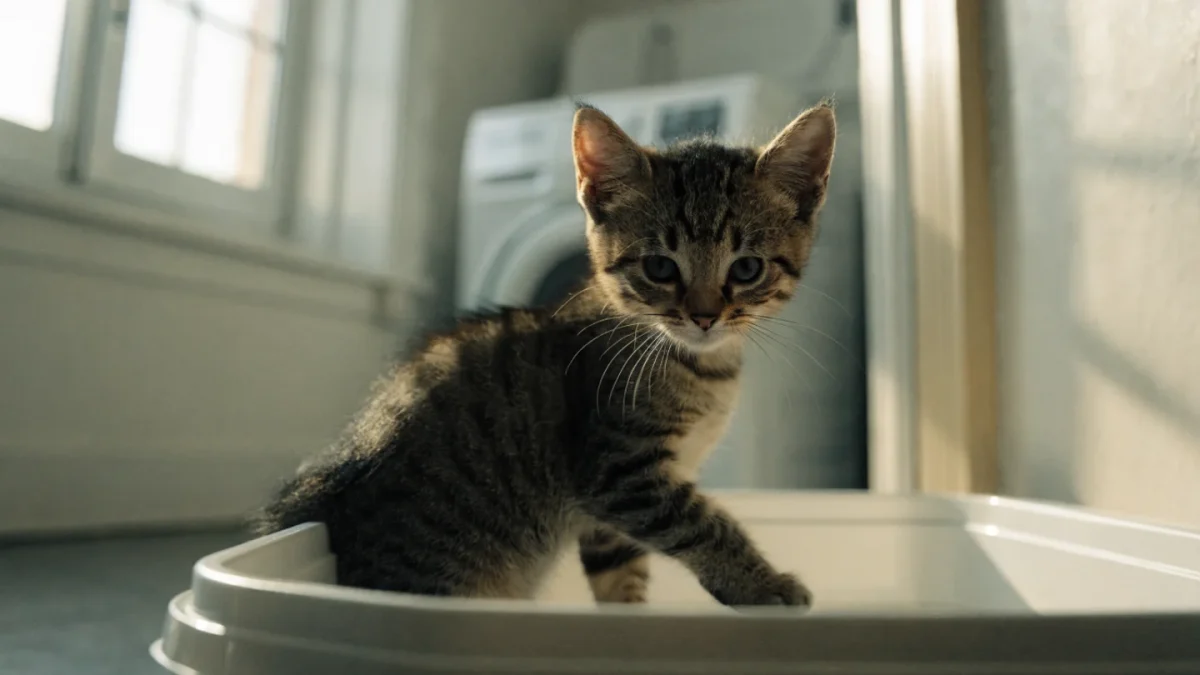
Here's what's actually going on when a new kitten seems to ignore the litter box: they're not being stubborn. They just haven't been shown where it is, or something about the setup is putting them off. Kittens have a strong natural instinct to bury their waste — your job is really just to point them in the right direction and keep the experience positive. I covered litter box training and troubleshooting in full separately — it provides the foundation for what I'm talking about here.
To litter train a kitten, set up a shallow box in a quiet, low-traffic spot, introduce your kitten to it shortly after meals and naps, and keep the litter clean. Most kittens pick it up within a few days. The ones that take longer usually have a fixable issue — wrong box size, wrong litter type, or a location that feels too exposed.
Setting Up the Litter Box Before Your Kitten Arrives
Before you bring a kitten home, have the box ready. This sounds obvious but a lot of new owners scramble to set it up after, which means the kitten has already started exploring without any guidance.
Box size and depth matter. Standard adult boxes have high sides — fine for a grown cat, but a 10-week-old kitten can't reliably step over a five-inch wall. Look for a box with at least one low-entry side (two to three inches), or use a plastic storage container and cut down one edge. The kitten needs to be able to get in and out without effort.
Litter choice. Unscented, clumping clay litter works well for most kittens. Avoid heavily scented varieties — cats have a much more sensitive sense of smell than we do, and a litter that smells like a pine forest to you is overwhelming to them. Fine-grained litter is generally more comfortable on young paws than coarse or pellet-style options — larger pellets can be painful on sensitive paws and may cause kittens to avoid the box altogether, according to Preventive Vet's litter guidance (Preventive Vet).
Fill depth. About two inches. Enough to allow digging and burying, but not so much that it shifts dramatically underfoot.
Location. Quiet, accessible, away from food and water. Kittens won't use a box that's right next to their food bowl — that's a hard no for cats of any age. A bathroom, laundry room, or a corner of a bedroom works well. Avoid high-traffic hallways where the kitten might get startled mid-use.
Number of boxes. The general rule is one box per cat plus one extra. For a single kitten in a small home, two boxes in different locations reduces accidents significantly and gives you useful information — if the kitten keeps choosing one over the other, that tells you something about what they prefer.
Introducing Your Kitten to the Litter Box
When you first bring your kitten home, carry them directly to the litter box before letting them explore the rest of the space. Set them in gently. Let them sniff around. They may use it immediately, or they may just step out and wander off — both are fine.
The key moments to revisit the box:
- Right after waking up. Carry or lead them to the box as soon as they're up from a nap. Kittens almost always need to go within a few minutes of waking.
- After meals. Same principle — digestion moves quickly in young cats, and they'll often need to eliminate 15 to 30 minutes after eating.
- After active play. The physical activity gets things moving. What I cover in kitten behavior maps onto this almost perfectly.
You don't need to place their paws in the litter or simulate digging for them. Some guides suggest this, but honestly, most kittens find it annoying and it can create a negative association with the box. Just setting them in and letting them figure it out is enough.
If your kitten eliminates in the box, let them finish and then give a calm, positive response — a quiet "good job" or a small treat immediately after they step out. You're reinforcing the location, not the act of eliminating (they were going to do that anyway). Keep it low-key; cats don't need fanfare.
Keeping the Box Appealing
This is where most litter training problems actually live. The kitten learned to use the box just fine, but then stopped — usually because the box became unpleasant.
Scoop at minimum once a day. Kittens are fastidious. An adult cat might tolerate a box that hasn't been scooped since yesterday morning; a kitten is more likely to just find a corner of the bathroom rug instead. I learned this the hard way with my cat Mochi — she was perfectly trained at eight weeks and then started going outside the box at 12 weeks. The only change was that I'd gotten busy and was only scooping every other day. Two days back on a daily schedule and the problem disappeared.
Do a full litter replacement every one to two weeks. Even clumping litter builds up odor over time that you can't fully remove by scooping. Dump it, wash the box with mild soap (avoid strong disinfectants with heavy scents — again, the smell sensitivity issue), dry it, and refill fresh. Not using the litter box? common causes takes this one step further.
Don't move the box. Once a kitten has learned where the box is, moving it — even across the room — can cause accidents. If you need to relocate it eventually, do it gradually: a few inches per day toward the new location.
Troubleshooting Common Problems
Kitten keeps going just outside the box. Almost always a box size or wall-height issue. The kitten is trying to use the box but not quite making it in. Switch to a lower-entry option.
Going in a specific corner or spot instead of the box. Move the box to that location. You can gradually relocate it later once the habit is established. Fighting the kitten's preferred spot early in training is a losing battle — meet them where they are.
Suddenly stopped using the box they were using fine. Look at what changed: cleanliness, litter brand, box location, new pets, new people, schedule disruptions. Cats are creatures of routine and a litter box issue is almost always a communication issue. The real question isn't "how do I get my kitten to use the box" — it's "what has made the box less appealing than the alternative?"
Occasional accidents during play. Normal for young kittens. Reliable litter box behavior typically isn't fully established until around 12 to 16 weeks, which lines up with overall physical maturation at that age (PrimaCat Kitten Development Guide). Accidents during intense play should decrease on their own as they get older. Just clean up thoroughly with an enzymatic cleaner to remove the scent — if they can still smell a previous accident, they may return to that spot.
The Setup That Works Long-Term
By the time your kitten is four to six months old, litter training should be a non-issue. The habits formed in those first weeks tend to stick. What sets you up for long-term success isn't any trick — it's consistency in the setup and keeping the experience clean and predictable.
Keep the box in the same place. Keep the litter type the same unless you need to change it (transition slowly by mixing new litter in gradually). Scoop every day. That's genuinely most of it.
Frequently Asked Questions
How many litter boxes does a kitten need?
Start with two, especially if you have a multi-level home. Kittens move fast and may not make it to a single box in time, particularly when they're very young. Two boxes also helps you see which placement and litter type your kitten prefers.
What if my kitten keeps missing the litter box?
Check the box height first — this is the most common cause. If the entry side is too high, kittens crouch just outside the box instead of fully inside. A lower-sided box or a cut-down storage bin usually fixes it immediately.
When can I switch from kitten to adult litter?
Most kittens can use adult-style litter from the start, as long as it's unscented and fine-grained. Avoid litters with large pellets or crystals for young kittens — the texture can discourage use, and the 2021 AAHA/AAFP Feline Life Stage Guidelines confirm that most cats prefer fine-grained, unscented litter (AAHA General Litter Box Considerations).