

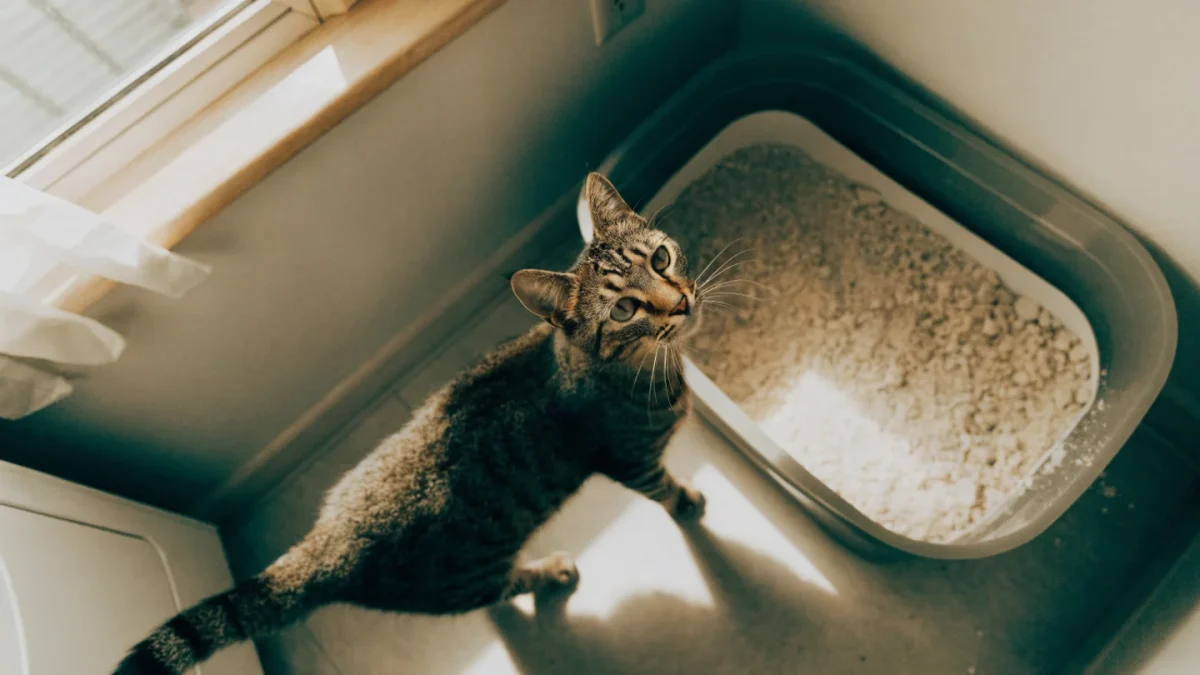
Here's what's actually going on when your cat suddenly decides the litter box is no longer an option: almost nothing about this behavior is random. Cats are meticulous creatures, and when they start going elsewhere — on the bathroom mat, behind the couch, in the corner of the bedroom — they're usually responding to something specific that crossed a threshold for them. For context on where this fits, litter box training and troubleshooting covers the full landscape.
A cat not using the litter box is one of the most common behavioral complaints, and it's also one of the most solvable. The key is understanding that there's almost always a cause, and that cause usually falls into one of a few predictable categories.
The Box Itself Is the Problem
This is where I always start, because it's the most common cause and the easiest to fix. Cats are not subtle about their cleanliness standards. My cat Miso once staged a full protest over a single day of missed scooping — chose the bathmat, left me an unmistakable message.
It's too dirty. Most cats want a clean box every time, or close to it. Honestly, imagine using a port-a-potty that hasn't been serviced in a week. That's the litter box experience for some cats. Scooping at least once a day — twice if you have multiple cats — is the baseline. If you're hitting that mark and still have issues, the box itself may need a deeper clean. Residual ammonia smell in a plastic box can put cats off even when the litter looks clean.
The litter is wrong. Cats develop preferences, and those preferences can be stubborn. Unscented, fine-grained clumping litter is the most widely accepted type. Scented varieties are designed for humans, not cats — strong fragrance often reads as a deterrent rather than an invitation. If you recently switched litter brands or types, that switch is a strong suspect.
The box is the wrong size. A lot of commercial litter boxes are too small for adult cats. The general rule is that a box should be at least 1.5 times the length of your cat from nose to base of tail. If your cat has to crouch awkwardly or can't turn around, they'll find a spot with more room.
The lid is the problem. Covered boxes trap odor, which cats experience far more intensely than we do. Some cats tolerate them fine; others refuse. If you have a covered box and a cat who's gone off it, try removing the lid for a week and see what happens.
Location and Context
Where the box sits matters enormously. Cats are prey animals in the wild, and that wiring doesn't disappear just because they live in an apartment. They want to be able to see their surroundings while they're vulnerable.
A litter box tucked inside a cabinet, pushed into a tight corner, or positioned right next to a noisy appliance like a washing machine puts a cat in a position they don't love. My friend moved her box next to the dryer and couldn't figure out why her cat stopped using it — then the dryer went off mid-session and that was the end of that location.
High-traffic areas are also a problem. If the box is in a spot where kids run through, dogs patrol, or there's constant household activity, some cats will hold it rather than risk being startled.
The real question with location is: does my cat feel safe and private here, while still being able to see who's coming? If the answer is no, try moving the box somewhere quieter.
Multi-cat households have their own layer. The standard recommendation is one box per cat plus one extra — a guideline supported by the American Association of Feline Practitioners and the Cornell Feline Health Center. If one cat is guarding the box — even subtly, just by sitting nearby — other cats will stop using it. You may not even notice the guarding behavior unless you watch for it. If this interests you, litter train a kitten explores a closely related behavior.
Medical Issues You Can't Ignore
Look, this one is uncomfortable to talk about but it needs to be first on your list if the box problems came on suddenly. A cat who was reliably using the litter box and then stops overnight is often in pain.
Urinary tract infections, bladder inflammation, kidney issues, and constipation can all make the litter box feel like a place of discomfort. A cat in pain may start associating the box itself with that discomfort and avoid it even after the medical issue is treated. That's why catching it early matters.
Signs this might be medical:
- Frequent trips to the box with little to no output
- Crying or vocalizing while trying to go
- Blood in urine or stool
- Going just outside the box rather than completely avoiding it
- Any sudden change in a cat who was previously reliable
If you're seeing any of these, talk to a vet before trying behavioral fixes. No amount of box repositioning helps if the cat has a urinary tract issue — whether it's a bacterial infection or stress-related inflammation, both require veterinary diagnosis and treatment.
Surface and Location Preferences
Sometimes the problem is that your cat has developed a strong preference for a different surface or location — and they've been reinforcing it for long enough that it's now a habit.
Soft surfaces like carpet, fabric, and clothing are common favorites. This often starts because the cat tried it once (maybe the box was too dirty that day) and found the texture preferable to litter. Once they go somewhere a few times, the smell draws them back.
This one takes more active work to address. You need to make the preferred spot unappealing while simultaneously making the litter box more attractive. That might mean covering the spot temporarily, placing a box nearby as a transitional step, and deep cleaning the area to remove scent traces.
Stress and Household Changes
Cats are sensitive to environmental change in ways that can catch people off guard. Moving furniture, a new pet, a new baby, a change in your schedule, construction noise, even a different brand of cat food — any of these can trigger a stress response that shows up as litter box avoidance.
This isn't the cat being spiteful. That framing misses what's actually happening: the cat's routine and sense of security have shifted, and their coping mechanism is to mark territory or seek comfort in familiar smells. Understanding that distinction changes how you respond.
If something changed in your household around the time the box problems started, that connection is probably not a coincidence.
Working Through It Systematically
Most cases of litter box avoidance can be resolved by going through a short checklist:
- Rule out medical issues first, especially if the change was sudden
- Evaluate the box — cleanliness, size, type, lid
- Check the litter — type, scent, depth
- Assess the location — safety, traffic, proximity to food or noisy appliances
- Look for household changes that coincided with the behavior
- Address any surface preferences by blocking access and deep cleaning
The majority of cats respond to changes in one or two of these areas. It's rarely a deep behavioral mystery — it's usually something in the environment that the cat is trying to communicate, in the only language available to them.
Frequently Asked Questions
My cat is going right next to the litter box but not in it — what does that mean?
This is almost always a box problem rather than a training problem. The cat clearly knows where to go; something about the box itself is the barrier. Check: is it too dirty? Too small? Is the litter too deep or uncomfortable on their paws? Cats who go just outside the box are often trying to use it but stopping short for a specific reason.
Could my cat be doing this out of spite?
No. Cats don't operate on spite the way we imagine — they're not thinking "I'll show you." What reads as spiteful is usually stress, discomfort, a strong surface preference, or a medical issue. Reframing the behavior makes it easier to solve because you're looking for a cause rather than trying to discipline an attitude.
My cat started doing this after we got a new pet. What now?
New pet stress is a very common trigger. Make sure your original cat has a litter box in a spot the new pet can't easily access or guard. Adding an extra box in a separate location is often enough to resolve it. Give your cat more one-on-one time during the transition period — it helps more than people expect.
How do I clean spots my cat has used so they don't go back?
Enzymatic cleaners are the only reliable option. Regular household cleaners neutralize the smell for humans but don't break down the compounds cats detect. A spot that smells clean to you may still smell like a bathroom to your cat. Apply the enzymatic cleaner liberally, let it soak, and allow it to air dry completely.
At what point should I see a vet?
Go sooner rather than later if: the behavior started suddenly, you see blood or straining, the cat seems to be in pain, or they're going to the box frequently with little output. Urinary blockages in particular can be life-threatening. When in doubt, a vet check is always worth it — you're ruling out the most serious causes first, which is just good logic.