

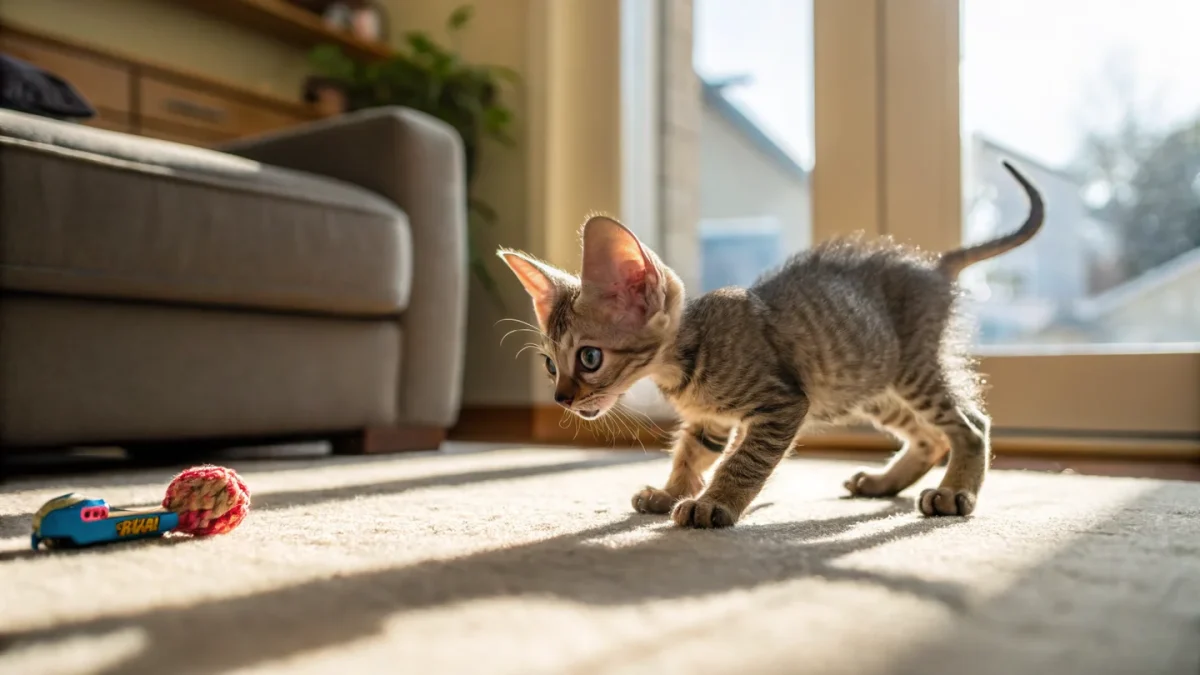
A Devon Rex kitten in full flight is one of the more chaotic experiences the cat world offers. The ears — already comically oversized relative to the tiny head — are the visual anchor, but the behavior is the real story: constant motion, investigation of every accessible surface, and a social drive that has been operational since approximately week three of life.
The Devon Rex breed guide and health overview covers the full breed context. This article focuses on what the kitten period specifically involves — what's normal, what needs attention, and how to set this breed up well from the start.
What to Expect in the First Weeks Home
Devon Rex kittens typically leave their breeders between 12 and 16 weeks, by which point they've been socialized with their littermates and ideally with a variety of household sounds, surfaces, and people. A well-socialized Devon Rex kitten arrives curious rather than cautious — expect immediate investigation of the new space, not hiding under the bed for three days.
The energy level is significant. These kittens sprint, leap to surfaces they probably shouldn't reach yet, play with anything that moves, and have essentially no interest in rest until they physically need it. Then they sleep deeply, wake up, and restart.
Normal Devon Rex kitten behavior includes: climbing your legs (claws first, enthusiastically), stealing food from plates within reach, vocal solicitation of attention through a range of chirps and trills, and sustained fetch behavior that starts spontaneously in many individuals.
The first few days: Confine initially to one or two rooms while the kitten adjusts. Provide hiding spots that aren't truly inaccessible — a cat bed in a corner is better than underneath a heavy appliance. Allow the kitten to set the pace of exploration.
Socialization: Building on What's There
The Devon Rex's natural openness to new people and experiences is a genuine breed characteristic, not just luck of the individual. Capitalizing on this during kittenhood creates a socially confident adult.
Handle regularly. Not just petting — picking up, brief restraint for pretend claw trimming, ear examination practice, gentle mouth opening. The more comfortable the kitten is with these manipulations as a youngster, the easier veterinary care becomes throughout its life.
Introduce varied stimuli. Different household sounds, different visitors, different textures and surfaces. The Devon Rex's curiosity means these introductions are typically welcome rather than stressful — watch the kitten's body language and keep exposures brief and positive.
Play actively. Wand toys with irregular movement are the Devon Rex's natural medium. Twenty-minute play sessions that genuinely tire the kitten out serve double duty: they satisfy the play drive and they create the positive association with human-initiated interaction that deepens the bond.
Coat Care from the Start
Starting gentle grooming as a kitten matters more for Devon Rex than for most breeds, because the adult coat routine — rubber glove or dampened hand, never aggressive brushing — is unfamiliar to most cat owners. A kitten introduced to handling, ear examination, and light coat grooming early accepts it easily as an adult.
The kitten coat is typically softer and sometimes fuller than the adult coat will be. As the kitten grows into its adult coat, some thinning and increased wave is normal. The natural sparse patches that appear in adult Devon Rex coats — especially around the ears and belly — may not be present in the kitten and shouldn't be expected as an adult defect if they do appear.
For the detailed approach to Devon Rex coat care for the fragile wavy fur, that article covers the adult routine completely.
Health Monitoring in Kittenhood
Devon Rex kittens should have a veterinary baseline assessment within a few days of arriving home. The vet should be familiar with the breed's specific health concerns:
Cardiac: Hypertrophic cardiomyopathy screening is relevant from young adulthood, but establishing a vet relationship with a baseline cardiac assessment early gives you a baseline for comparison later.
Devon Rex myopathy: If the kitten shows any muscle weakness, head tremors, or difficulty swallowing, this warrants immediate veterinary attention. Reputable breeders screen for this condition, but owner awareness of the signs matters.
Ears: Large, warm Devon Rex ears accumulate wax readily. Establish the weekly ear inspection habit early — the kitten will become comfortable with it, and you'll catch any issues before they develop.
Skin: The sparse coat means skin is easier to examine in this breed than in most. Check during play and handling sessions for any redness, flaking, or unusual texture.
Feeding a Devon Rex Kitten
The Devon Rex's lean adult build and high activity level mean kittens benefit from high-protein, age-appropriate food in multiple small meals rather than one or two large ones. The small stomach and high energy expenditure of a growing kitten support frequent feeding more than adult maintenance schedules do.
Transition gradually from the breeder's food if you're switching — abrupt food changes in kittens cause digestive upset more readily than in adults.
Managing the Chaos Constructively
The Devon Rex kitten's energy level is not a problem to be solved; it's the natural expression of the breed during its most active developmental phase. The management approach that works is enrichment, not restriction.
Cat trees from day one. Rotating toys to maintain novelty. Play sessions that genuinely tire the kitten. Puzzle feeders that engage the problem-solving drive productively. A companion animal — another Devon Rex or a compatible breed — takes significant social pressure off the household during working hours.
The kitten that gets genuine enrichment is the kitten that becomes the adult you actually wanted: interactive, warm, and channeling its intelligence into appropriate activities rather than into your belongings.