

The average time between receiving an evacuation order and a structure becoming uninhabitable in a fast-moving wildfire is around 20–30 minutes. In a tornado warning, it might be five. A house fire gives you less time than that to get out.
None of those timelines are compatible with figuring out where your cat carrier is, deciding where to go, or remembering what medications to grab.
The evacuation plan — and I mean a real, specific, written plan, not "we'll figure it out" — is the difference between getting everyone out and making terrible choices under impossible pressure.
Step 1: Identify Pet-Friendly Destinations Before You Need Them
This is the part most people skip, and it's the most critical.
Option A — Hotels and motels. Call ahead. Pet policies vary wildly — some accept one dog under 25 lbs, some accept four large dogs, some have changed their policy since their website was last updated. Find at least two pet-friendly options in different directions from your home, minimum 30–50 miles away, and save the address and phone number in writing.
Option B — Friends or family. Identify at least one household willing and able to shelter you and your animals. Be honest about your animals: if you have three large dogs and a cat, make sure your friend can actually accommodate that. Have this conversation explicitly.
Option C — Emergency pet shelters. Since the PETS Act passed in 2006, federal disaster declarations require states to accommodate pets in emergency plans. Most counties now have either combined human/pet shelters or co-located pet shelters. Call your county emergency management office and ask: (1) Do you have a pet-friendly emergency shelter? (2) Where is it? (3) What's the admission policy? Write this down.
Never count on finding accommodation spontaneously. In major disasters, hotels within 100 miles fill in hours. Have backup options identified.
Step 2: Plan Your Loading Order and Assign Roles
With multiple animals, who does what matters.
If there are two adults in the household: one person loads the go-bag into the vehicle; one person captures and secures the animals. Agree on this assignment in advance. The person who gets distracted helping with bags while the cat hides under the bed is the person who leaves the cat.
If you're alone: practice the sequence. Which animal do you secure first? The one most likely to hide (usually cats). Then the easiest ones. Then the one who will walk to the car on leash. Run through this in your head — or actually practice it.
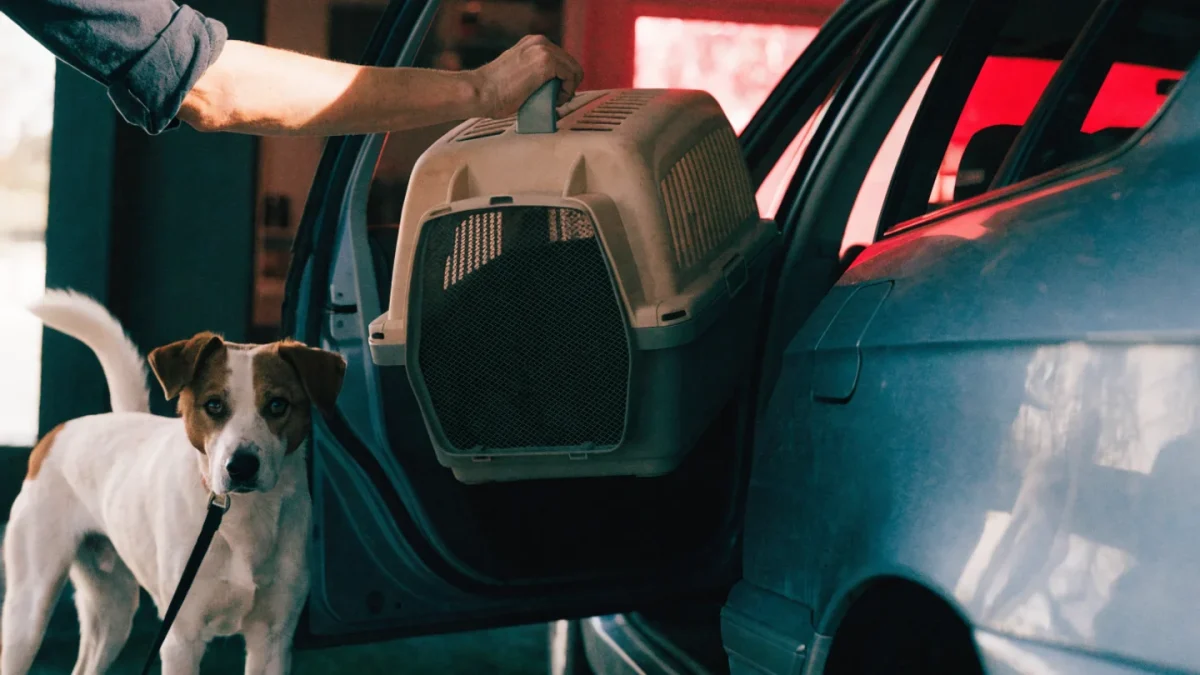
Carrier placement. Know where your carriers are right now. All of them. In a fast evacuation, twenty seconds looking for a cat carrier is time you may not have. Keep carriers accessible — not buried in the garage behind boxes.
For cats specifically: if they're stressed, they'll hide. Some owners with difficult-to-catch cats keep their cats' secure area (a bedroom or bathroom) accessible so they have a smaller space to corner the cat in if needed. This is worth thinking through ahead of time.
Step 3: Know Your Route and Alternatives
Map your two main exit routes from your neighborhood. At least one should avoid major bridges, underpasses, and roads that flood. In a wildfire evacuation, be aware that embers travel and roads can become impassable from smoke and fire — know alternatives.
If you're evacuating by necessity and your primary car is unavailable: Do you have a neighbor, family member, or friend you could call at 2 a.m. who has a large enough vehicle? Is their number saved in your phone and also written down (phones die)?
Google Maps navigation fails when infrastructure goes down. Know the route without GPS dependence, or have a paper map. This sounds old-fashioned and I mean it sincerely.
Step 4: Manage Animals in the Vehicle
Animals in cars during evacuations present specific challenges:
- Stressed animals may not be reliably manageable
- Cats especially may howl continuously, become panicked
- Dogs who aren't car-trained may be difficult in a long evacuation drive
Carriers for cats and small dogs: secured in the back seat or cargo area so they can't become projectiles. Never in front with active airbags.
Dogs: crated or secured with a car harness. A frightened dog loose in a car during an emergency evacuation is a dangerous distraction.
Never leave animals in a vehicle during evacuations — vehicle temps rise fast even with windows cracked, and you may be delayed unexpectedly.
If you have a working prescription for your pet's anxiety (trazodone, gabapentin, alprazolam) — consider having it on hand and having discussed with your vet whether pre-medicating for evacuation scenarios is appropriate for your specific animal.
Step 5: When You Arrive
At a hotel or friend's home: Keep animals in their carriers or a secure room until they've had time to settle. A stressed dog or cat in a new environment may bolt at the first door opening. Don't assume they'll be fine because they were fine in the car.
At an emergency shelter: Most pet shelters require proof of current vaccination (especially rabies). This is in your go-bag documents — you have them. Register your animals immediately on arrival.
First 24 hours in a new location: Maintain routines as much as possible — feeding schedule, water, a piece of familiar bedding. Stress affects digestive function in both dogs and cats; some diarrhea in the first days at a new location is common and usually self-resolving. If it becomes severe or bloody, or if your animal stops eating or drinking entirely, that warrants veterinary attention.
The Pet Left Behind Scenario
Sometimes evacuation orders are issued when you're at work, on travel, or otherwise away from home. What's your plan?
Someone needs a key and authorization to retrieve your animals. This needs to be a real, specific person you've spoken to, not a vague "someone." They need to know: where the carriers are, how to handle your animals (some cats bite when stressed), and where to take them.
Leave a note on the inside of your front door visible when it opens: "[Pet name] is inside this house. Contact: [name and number]." First responders look for this. During declared disasters, some areas also have voluntary animal registries that local emergency management can check.
See the complete emergency preparedness guide for the full system, and build a pet emergency go-bag covers what should be packed and ready. For pet identification for evacuations, microchip and GPS options matter most when animals get separated in the chaos.
FAQ
I have four cats. I literally cannot get them all in carriers in under 10 minutes. What do I do?
Practice more, and consider investing in at least one very large carrier that can hold two cats temporarily. Carrier training (keeping carriers out with comfortable bedding) reduces the catch-and-stuff time significantly. Also: have a room plan — if you know all four cats will retreat to the master bedroom when stressed, you can close them in there, reduce the search area, and work systematically.
My dog becomes extremely aggressive in the car when stressed. How do I handle evacuation transport?
Talk to your vet now about pre-evacuation sedation options. Dogs who are genuinely dangerous in vehicles during stress need a medication plan in place — not figured out in the moment. A muzzle in the go-bag is also reasonable for dogs who bite when panicked.
If I'm ordered to evacuate and I leave my pets behind, could I face legal consequences?
This varies by jurisdiction but many states have animal cruelty laws that can apply to abandonment, and some apply in disaster contexts. More practically: homes left in disaster zones are often inaccessible for days to weeks, and pets left with insufficient food and water don't survive. I'd focus less on the legal dimension and more on the practical one: plan so you don't face this situation.
My cats will never get in a carrier fast enough in an emergency. Should I just use pillowcases?
This is actually an accepted emergency method used by animal shelters — a pillowcase allows temporary safe containment of a panicked cat. It's not comfortable for long, but for a 30-minute drive to safety it's better than no containment. If you have carrier-resistant cats, have pillowcases or large cloth bags accessible in your emergency area.
How early should I start evacuating? Waiting for the order feels overly cautious.
If you're in a fire or flood area and conditions are deteriorating, don't wait for an official order if you can leave safely. The people with animals who have the most trouble are often those who waited for certainty and then had to leave in the most chaotic phase of the evacuation. Leaving early with animals is a reasonable conservative choice.