

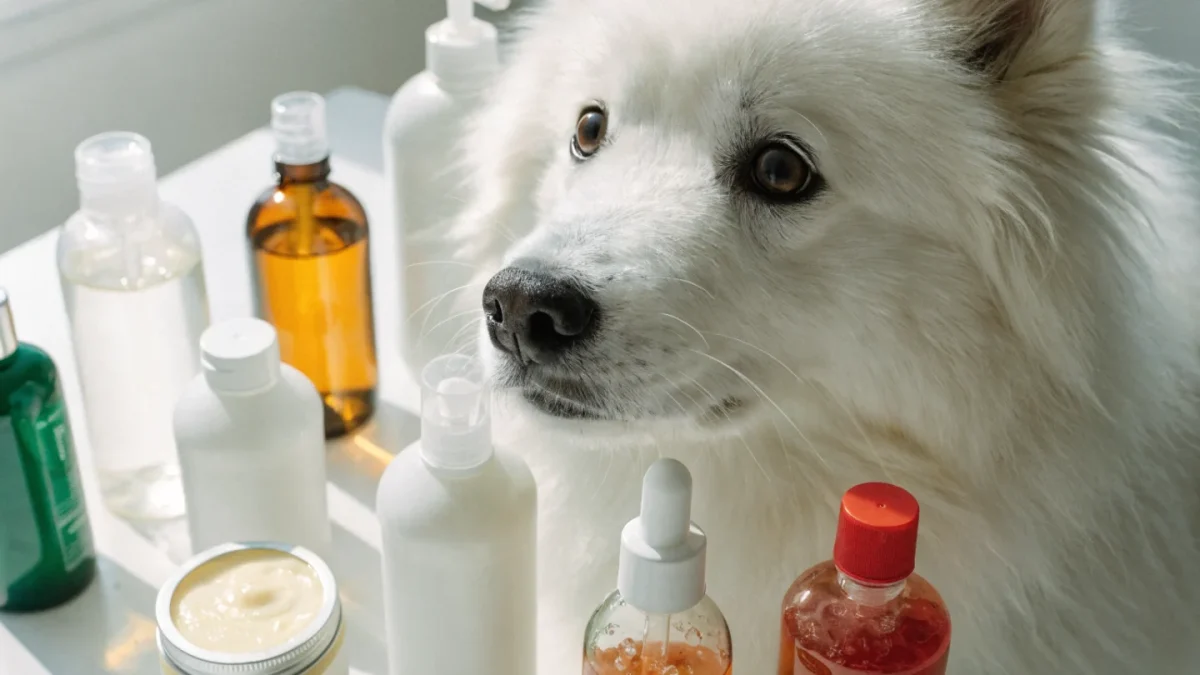
Walk down the pet store shampoo aisle and the options are genuinely bewildering: oatmeal, medicated, 2-in-1, whitening, deodorizing, volumizing, waterless, natural, hypoallergenic. Most of these categories are legitimate; some are marketing. Understanding what each formula actually does helps cut through the noise. The complete bathing guide for dogs and cats covers frequency and technique; this article focuses specifically on shampoo selection.
The Basics: pH and Formulation
Dog shampoos are (or should be) formulated for the pH of dog skin—approximately 6.2 to 7.4, compared to human skin at roughly 4.5 to 5.5. This difference matters because shampoo pH affects the skin barrier. Human shampoo disrupts dog skin pH and contributes to dryness, irritation, and increased susceptibility to bacterial and yeast overgrowth.
Beyond pH, dog shampoos vary in surfactant type (the cleaning agent), conditioning agents, active ingredients, and fragrance. The base formula makes the biggest difference in day-to-day suitability; specialty additives address specific needs.
Standard Moisturizing Shampoo
The right choice for most healthy dogs with normal coats. A gentle formula with a moisturizing agent—glycerin, aloe, panthenol—that cleans without stripping the natural skin oil. Suitable for regular bathing at any frequency.
Look for: short ingredient list, no artificial fragrances (which are a common source of skin reaction), no sulfate-heavy surfactants that over-clean.
Oatmeal Shampoo
Colloidal oatmeal has a legitimate evidence base for soothing irritated skin. It works primarily as a skin barrier support and mild anti-inflammatory, reducing itching and redness in dogs with mildly sensitive or reactive skin.
Good choice for dogs that scratch or show mild skin irritation that doesn't have an identified specific cause. Not a treatment for diagnosed skin conditions (allergic skin disease, seborrhea, fungal infection)—but a reasonable choice for day-to-day maintenance on sensitive-skinned dogs.
Medicated Shampoo
The most significant functional category. Medicated dog shampoos contain specific active ingredients with therapeutic effects:
- Chlorhexidine (antibacterial, antifungal): used for bacterial skin infections, hot spots, surface skin infections
- Ketoconazole (antifungal): used for yeast skin infections, Malassezia dermatitis
- Selenium sulfide (antifungal, antiseborrheic): manages seborrhea and certain fungal conditions
- Benzoyl peroxide (degreasing, antibacterial): manages greasy seborrhea, deep bacterial folliculitis
- Salicylic acid (keratolytic): breaks down scale in certain skin conditions
Medicated shampoos should be used under veterinary guidance for diagnosed conditions. Using an antifungal shampoo on a dog with a bacterial infection doesn't help; using a degreasing shampoo on an already dry-skinned dog makes things worse. Get a diagnosis first.
Contact time matters for medicated shampoos—most need to sit on the coat for five to ten minutes to provide therapeutic effect. This is different from rinsing immediately after application. After bathing with any shampoo, how to dry your dog after bathing is the next essential step—incomplete drying causes more problems than the wrong shampoo.
Whitening or Brightening Shampoo
For white, cream, or light-colored coats that yellow over time or show staining. These products typically contain optical brighteners (which reflect more light and appear to whiten) and sometimes mild bleaching agents or purple/blue toning pigments that neutralize yellow.
Appropriate for light-colored dogs as an occasional brightening treatment—not as a regular shampoo. The active agents in whitening formulas can be drying with frequent use.
Puppy Shampoo
Formulated to be gentler than adult dog shampoos, with milder surfactants and no or minimal fragrance. Appropriate for dogs under a year old and for adult dogs with particularly sensitive skin. Puppy shampoo is safe for cats as well in a pinch, since it's typically the gentlest available formula.
2-in-1 Shampoo and Conditioner
Convenient but generally provides less effective conditioning than a separate conditioner product. The chemistry of conditioning and cleansing agents works against each other somewhat—conditioning agents are designed to deposit on the hair shaft, while shampoo surfactants are designed to remove deposits. The compromise tends to favor adequate cleansing with suboptimal conditioning.
For coats that benefit from conditioning (long silky coats, dry or frizzy coats), a separate conditioner used after shampooing and rinsed out is significantly more effective.
Waterless or Dry Shampoo
Foam or spray products that clean the coat without water. Convenient for spot-cleaning or for dogs that strongly resist full baths, but don't provide the same thorough cleansing as a water bath. Residue buildup is a concern with regular use—they're supplementary tools, not replacements for periodic full baths.
FAQ
Can I use baby shampoo on my dog?
Occasionally, as a substitute when you've run out of dog shampoo—it's gentle and unlikely to cause immediate problems. As a regular practice, dog-specific shampoo is preferable because it's formulated for dog skin pH and appropriate cleaning requirements.
Should I use conditioner after every dog bath?
For short-coated dogs: usually not necessary. For long silky coats (Yorkies, Maltese, Collies) and curly coats (Poodles, Doodles): yes, conditioner after every bath significantly improves coat manageability and reduces mat formation. The conditioner should be rinsed out, not left in, unless it's specifically a leave-in formula.
My dog has dry flaky skin. What shampoo should I use?
Start with a gentle moisturizing shampoo and reduce bathing frequency if you're currently bathing weekly or more often. If dry flaky skin persists, a vet visit is worthwhile—it may be seborrhea (a skin condition with specific treatments), nutritional deficiency, allergic skin disease, or another diagnosable condition that a specific shampoo type could address once identified.
Are natural or organic shampoos better for dogs?
Not inherently. Natural origin doesn't guarantee safety or efficacy—many natural ingredients cause skin reactions. Synthetic ingredients aren't automatically harmful. The more useful criteria are: appropriate pH, gentle surfactants, no unnecessary fragrances or colorants, and formulation for dog skin specifically.