

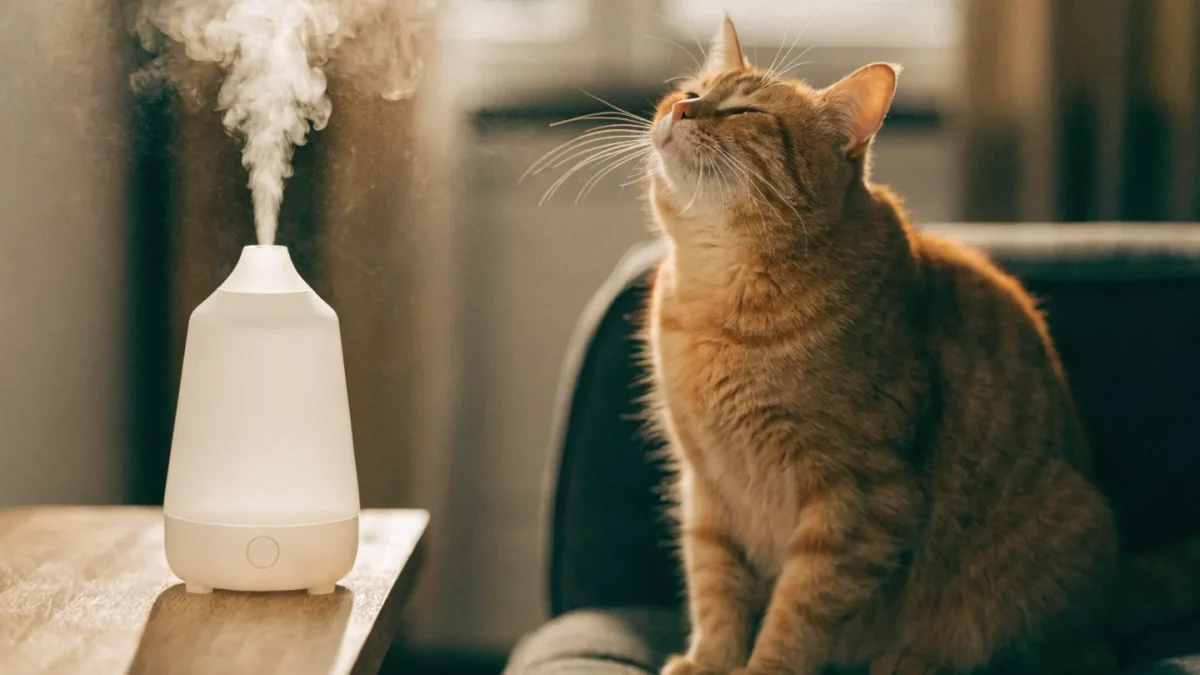
Essential oils have had their cultural moment — the diffusers, the DIY cleaning sprays, the wellness culture around aromatherapy. And I'm not here to dismiss any of that for humans. But I'll tell you honestly: the essential oil cases I've seen in practice have genuinely concerned me.
Not because essential oils are uniquely mysterious. The mechanism is well-understood. It's the combination of how concentrated these compounds are, how readily cats absorb them, and how enthusiastically they're being diffused throughout homes where pets live all day.
Why Cats Are Most at Risk
This requires a brief biology digression. Cats lack a specific liver enzyme — glucuronyl transferase — that's essential for metabolizing many phenolic and terpenoid compounds. These compounds are present at high concentrations in essential oils.
What this means practically: a cat's liver cannot break down and safely excrete many essential oil components. Instead, those compounds accumulate. The result can be hepatotoxicity (liver damage), neurological effects, and respiratory distress — from concentrations of exposure that would be entirely inconsequential for a human adult.
Dogs have the same enzyme and process these compounds more efficiently, but that doesn't mean they're immune. High concentrations of certain oils cause problems in dogs too — particularly when oils are applied directly to skin, ingested, or in very high-concentration diffuser environments.
The Most Dangerous Oils
Tea tree oil (Melaleuca alternifolia) tops the list. I've devoted a separate article to this one because it's so commonly misused — including in some pet products, which genuinely frustrates me. Even small topical amounts can cause wobbliness, weakness, CNS depression, low body temperature, and liver failure in cats. Dogs are less sensitive but can still be seriously affected by concentrated exposure.
Pennyroyal — Originally used in flea-repellent products, pennyroyal (pulegone) is a significant liver and reproductive toxin. Should never be used on or around cats.
Eucalyptus — Toxic to both cats and dogs. Causes neurological signs, respiratory issues, GI upset.
Clove and cinnamon — Contain high concentrations of eugenol, which is particularly hepatotoxic in cats.
Citrus oils (lemon, orange, grapefruit, lime) — Cats are repelled by citrus for a reason. These oils cause GI irritation and CNS depression; concentrated application can cause more severe effects.
Pine and fir oils — Phenol-containing; same hepatotoxicity concerns for cats as pine-based cleaners.
Wintergreen — Contains methyl salicylate, essentially an oil form of aspirin. Aspirin is toxic to cats. Wintergreen is very toxic to cats.
Ylang ylang, thyme, oregano — Various degrees of concern; most are more of a "significant exposure" problem than catastrophic at low concentrations, but worth avoiding.
The Diffuser Debate
This is where I want to be careful and honest, because the data isn't as clear as some sources suggest.
Passive diffusion of heavily diluted oils in a well-ventilated room is probably lower risk than direct skin application or ingestion. But it's not zero risk for cats, particularly with prolonged daily exposure. The cats most at risk are those who live primarily indoors with limited ventilation and are exposed to diffusers running for extended periods.
What I generally recommend: if you use a diffuser, run it in rooms your cat doesn't spend the majority of their time in. Ensure good ventilation — open windows when diffusing. Don't diffuse the most toxic oils (tea tree, eucalyptus, pennyroyal, clove) in any cat-occupied space. Give your cat an escape route to a non-diffused room.
I go back and forth on how strongly to advise against diffusers in cat homes. Some colleagues are more absolute about it than I am. I think the risk level depends significantly on which oils, at what concentration, in what ventilation environment, and with what frequency. A single lavender diffuser session with good airflow is different from a eucalyptus diffuser running in a small room all day.
Topical Application
This is clearer: don't apply essential oils directly to pets. Full stop. Don't add them to pet bedding or collars. Don't use DIY flea treatments containing essential oils.
The skin absorption route is more concentrated and direct than inhalation, and I've seen bad outcomes from "natural" flea remedies containing tea tree or pennyroyal.
Signs of Essential Oil Toxicity
Drooling, vomiting, lethargy, ataxia (wobbling), disorientation, low body temperature, respiratory difficulty, pale or yellowish gums (in severe cases, from liver involvement). In cats, these signs can appear quickly after direct exposure.
If you suspect essential oil toxicity, call your vet immediately. Bring the product if possible.
The other household chemicals and hazards for pets guide covers the broader context, and cleaning products that are toxic to dogs and cats addresses the overlap between cleaning products and scented home products.
Frequently Asked Questions
What about lavender? I've heard it's calming for pets.
Lavender contains linalool and linalyl acetate — both can cause problems in cats at sufficient concentrations. Heavily diluted lavender in a well-ventilated space is lower risk than many oils, and it's used in some veterinary stress-reduction protocols. But "lower risk" isn't "no risk." Diffusing lavender directly around cats isn't something I'd endorse, and applying it to cats directly shouldn't happen.
Can I still use my essential oil diffuser if I have a dog?
Dogs are generally more tolerant of diffused essential oils than cats, but that doesn't mean risk-free. The most toxic oils should still be avoided. If your dog shows any respiratory symptoms, eye watering, lethargy, or discomfort when the diffuser is running, remove them from the room and stop using that oil. Watch particularly for any signs that worsen over time.
I accidentally applied a small amount of tea tree oil to my cat. What do I do?
Rinse the application site thoroughly with dish soap and water (wear gloves) to remove the oil. Don't let the cat groom the area before rinsing. Then call your vet or animal poison control immediately, even if the cat seems fine at that moment. Tea tree oil can cause delayed neurological and liver effects.
Are essential oil-based cleaning sprays safe to use in homes with pets?
Not if they contain the oils listed above, particularly tea tree, eucalyptus, or pine. The residue left on surfaces after spraying can be a source of ongoing paw contact and subsequent grooming exposure. I'd recommend checking ingredients carefully and avoiding these formulations for surfaces that pets walk on or that cats rub against.