

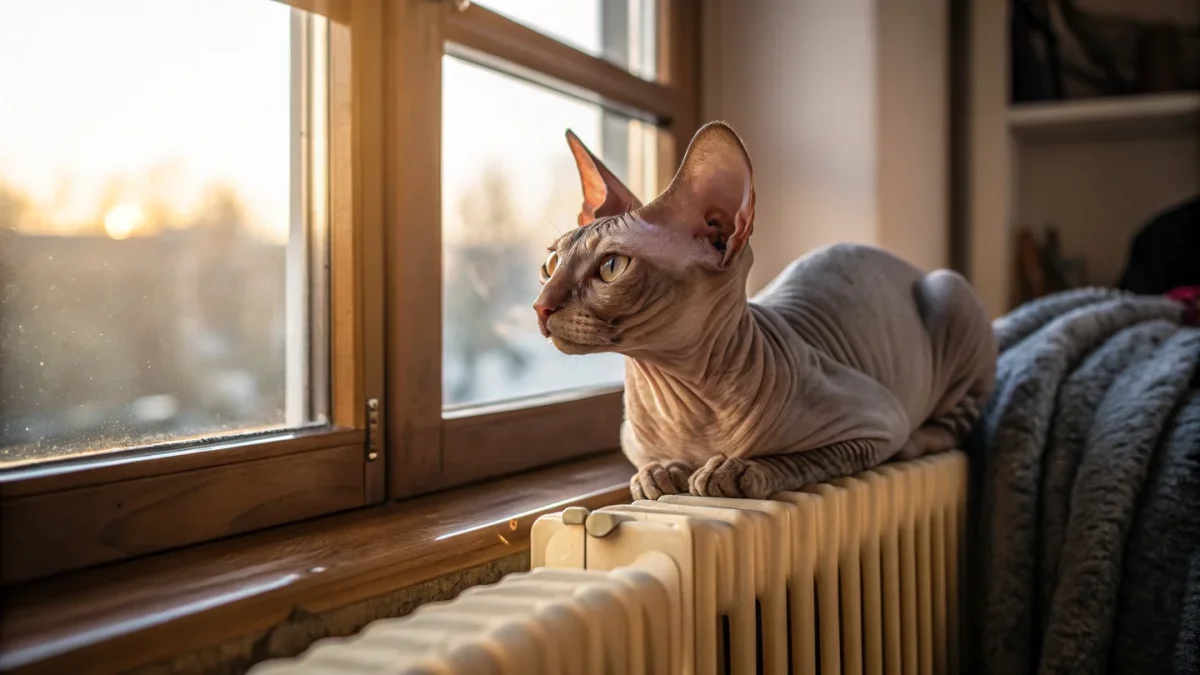
The first time most people encounter a Sphynx, the reaction lands somewhere between fascination and uncertainty. The wrinkled skin, the enormous ears, the warm suede feel — it doesn't fit the mental model of "cat." Yet Sphynx owners are among the most devoted in the cat world, and for good reason: once you understand what you're actually dealing with, the hairless breeds are remarkably engaging animals.
For context in the full breed landscape, the cat breed categories guide covers the full picture.
The Genetic Diversity of Hairlessness
Hairlessness in cats has appeared multiple times as independent genetic mutations — the different hairless breeds are not all related.
Sphynx: The most recognized hairless breed. The hr (hairless) gene responsible for Sphynx hairlessness is recessive — two copies required for the hairless phenotype. The breed traces to a single hairless kitten named Prune, born in Toronto in 1966 to an ordinary black-and-white domestic shorthair queen. Modern Sphynx lines were developed by outcrossing to Devon Rex and domestic shorthairs to widen the gene pool — a 2010 genetics paper later confirmed the Sphynx's hairless "hr" mutation and the Devon Rex's curly "re" mutation sit on the same gene, KRT71, but as different alleles, which is why the two breeds don't actually share a hairlessness gene despite the shared ancestry in the breeding program.
Donskoy (Don Sphynx): A Russian hairless breed discovered in 1987. The Don Sphynx hairlessness comes from a dominant mutation — a cat with only one copy of the gene can be hairless, unlike the Sphynx's recessive inheritance. This genetic distinction makes them separate breeds despite the similar appearance.
Peterbald: Developed in Russia from Donskoy and Oriental Shorthair crosses. The hairlessness expression in Peterbalds ranges from completely bald to a fine, peach-fuzz coat. The Oriental body type is clearly evident.
What Hairless Cats Actually Need
The absence of fur creates specific care requirements that potential owners often underestimate.
Weekly bathing: Without fur to absorb and distribute skin oils, oils accumulate on the skin surface. Hairless cats develop a greasy, sometimes brownish oily residue on their skin — particularly visible in skin folds and around the ears. This needs to be washed off weekly or the skin becomes irritated and develops odor. A properly bathed hairless cat has clean, soft, warm skin. An unbathed one doesn't.
Temperature management: No coat means no insulation. Hairless cats are genuinely cold in temperatures that other cats would handle comfortably. They seek heat actively — heated cat beds, warm laps, under blankets. Indoor temperatures below 18°C (65°F) are uncomfortable; below 15°C (59°F) can be health concerns.
Sun protection: Hairless cats can sunburn. Direct sun exposure through windows or outdoors needs management, particularly for cats with light or pink skin. Shaded areas and limited direct midday sun exposure is sensible.
Ear cleaning: The large, open ears accumulate visible debris. Weekly ear cleaning is practical.
The Personality Reality
The Sphynx is consistently described as one of the most affectionate and people-focused breeds in the domestic cat world. The Sphynx breed profile covers the full bathing protocol, temperature requirements, and the ear-cleaning routine that the breed needs. The attachment style is physically oriented: they press against people, crawl under blankets, drape across shoulders, and seek warm contact constantly. The warmth you feel from a Sphynx is literal — body heat radiates directly through the skin surface.
They are vocal, extroverted, and approach strangers with interest. In multi-pet households, they integrate well and often become central social figures in the household dynamic.
The Peterbald tends to carry a similar personality profile — active, social, and people-focused — influenced by the Oriental Shorthair heritage. The curly-coated rex breeds share a related care characteristic: the Devon Rex breed profile covers how the Devon's reduced outer coat creates the same oil-accumulation issue that hairless breeds manage weekly — a useful parallel for anyone deciding between the two unusual coat types.
The Allergy Consideration
Hairless cats are often recommended for allergy sufferers, but as the cat breed categories guide mentions, this rests on a misconception. Fel d 1 — the primary cat allergen — is produced in skin sebaceous glands and salivary glands, not in fur. Hairless cats produce it just like coated cats. Many allergy sufferers find they react to Sphynx cats just as strongly as to other breeds. Test before committing.