

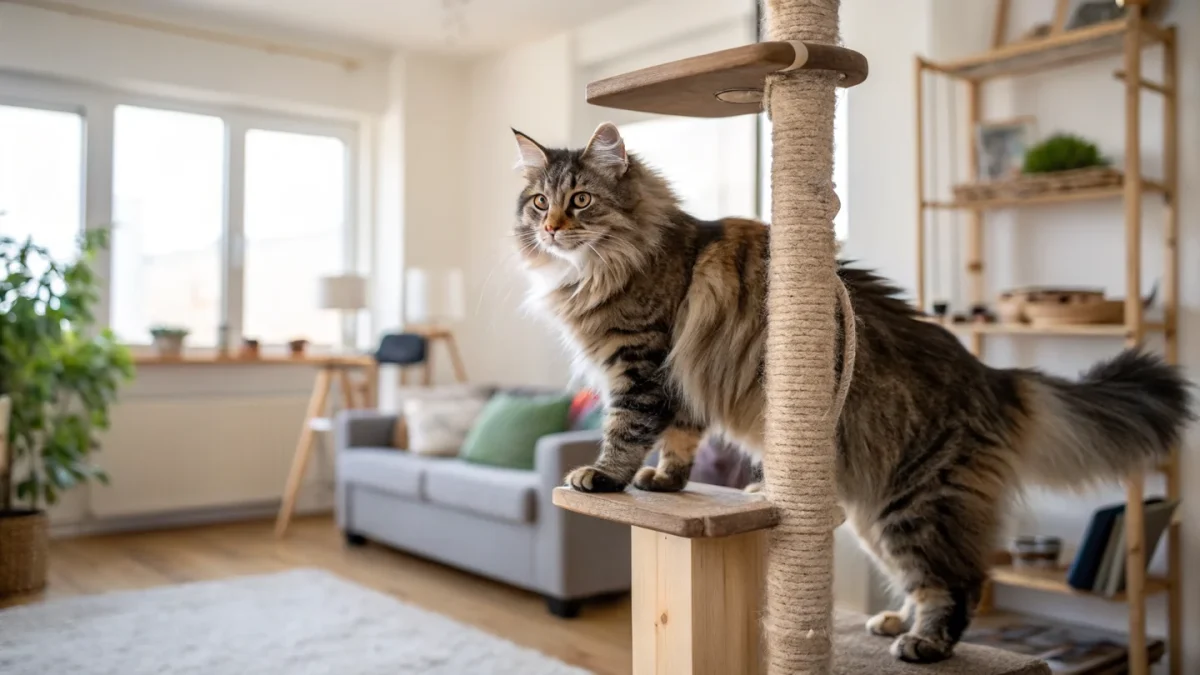
The Norwegian Forest Cat is a cat that makes an impression. Physically large, beautifully coated, and possessed of an obvious confidence — people see a Wegie and want one. The decision should be made on practical grounds, not aesthetic ones, because the coat and the personality both come with requirements that not every household can meet.
What the Norwegian Forest Cat Genuinely Needs
Tall climbing structures. The Norwegian Forest Cat temperament includes a genuine athletic drive and a strong preference for elevated vantage points. A cat tree that reaches close to the ceiling — sturdy enough to support a 6-kilogram cat launching itself from the top — is not a luxury item for this breed. It is as essential as a litter box. Without appropriate climbing options, the Wegie will find its own routes to elevation, which will involve your furniture and your shelving.
Active grooming during spring shedding. Weekly maintenance is manageable and not particularly time-intensive. But the spring shedding season — when the dense undercoat releases over roughly four to six weeks — requires daily grooming to prevent mat formation. This is the non-negotiable part of the coat care commitment. Owners who will struggle to maintain daily brushing for that period should either invest in professional grooming or reconsider the breed.
Environmental enrichment. The Wegie is intelligent and prey-driven. Puzzle feeders, rotating toy selection, and interactive wand toy sessions satisfy these needs in a well-managed indoor environment. Without enrichment, the Norwegian Forest Cat will create its own — typically by redesigning whatever surfaces it has access to.
Adequate indoor space, or safe outdoor access. The Norwegian Forest Cat is among the larger domestic breeds and is physically active. It handles apartments with appropriate enrichment, but small, sparsely furnished spaces without climbing options are not suitable environments.
Who the Norwegian Forest Cat Suits
People who want a large, impressive companion without constant social demands. The Wegie is affectionate on its own schedule — warm, present, and genuinely engaging — without the persistent attention-seeking that characterizes Burmese or Sphynx. For households that want company rather than clinginess, this is exactly right.
Owners who are consistent with grooming routines. Not necessarily fast or expert — just consistent. The weekly session and the spring intensive are manageable for anyone who can commit to the schedule. Inconsistency is what creates mat problems.
Families with older children who understand appropriate interaction. The Wegie's confidence and physical robustness make it a good family cat in practical terms. It won't be traumatized by a noisy household. It does maintain its own standards about when and how it accepts handling, which older children can understand and respect.
Multi-pet households. The Norwegian Forest Cat generally establishes comfortable arrangements with other cats and with dogs, provided introductions happen at a reasonable pace. The breed's confidence means it doesn't yield easily, but it doesn't escalate unnecessarily either.
Who the Norwegian Forest Cat Doesn't Suit
Anyone who wants a lap cat that seeks constant proximity. The complete Norwegian Forest Cat breed guide is explicit about this — the breed's affection is genuine but independent. If you want a cat that demands to be held and petted at all times, you want a different breed.
Households where the spring grooming commitment can't be met. A Wegies coat in full spring shed with inadequate grooming develops mats that are uncomfortable for the cat and require professional or veterinary attention. This is a predictable, manageable requirement — but only if it's actually managed.
People who can't provide adequate vertical space. A tall cat tree is genuinely non-optional. An apartment without one is an unsuitable environment for this breed, full stop.
Anyone considering outdoor access in an unmanaged environment. The Wegie's athleticism and size give it significant capacity to roam, and its forest-cat heritage means it takes to that roaming enthusiastically. If outdoor access is part of the plan, it needs to be managed — enclosed gardens, supervised access — not simply leaving the cat to its own devices.
The Practical Bottom Line
The Norwegian Forest Cat is genuinely rewarding for the right household: a large, beautiful, independent-natured cat that offers consistent affection on honest terms, handles household life with confidence and equanimity, and provides the specific satisfaction of being chosen by an animal that chooses for itself.
The requirements are real. The vertical space, the spring grooming, the environmental enrichment — these aren't suggestions. Households that meet them consistently get the full value of what the breed offers. Those that can't meet them will find the coat and the behavior both create problems that could have been avoided.