

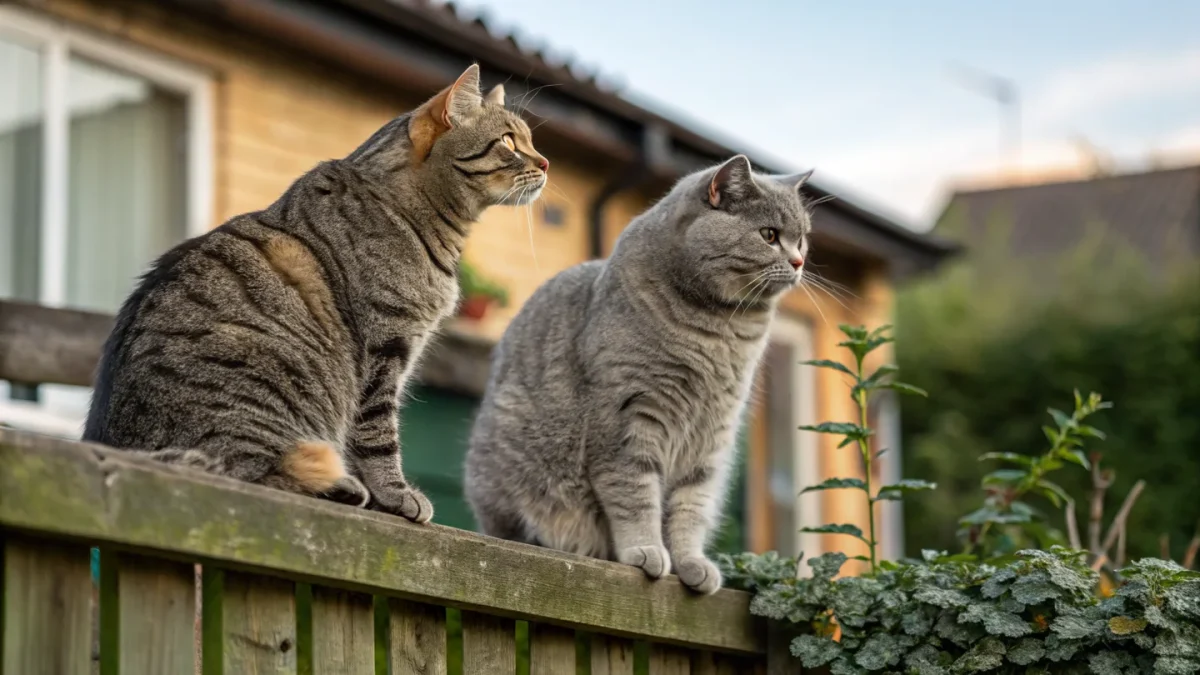
Most cats in the world are not pedigreed. The domestic cat population worldwide consists overwhelmingly of random-bred cats whose ancestry is a complex mix of whoever was nearby and available over the generations. Pedigree cats — cats with documented ancestry, breed standards, and registration — represent a small fraction of the total.
Yet the question of whether to get a pedigree cat or a mixed-breed ("moggy") comes up constantly, and it's worth taking seriously. The answer is more nuanced than "pedigrees are better" or "pedigrees are unnecessary marketing."
For the overall framework on breed selection, the cat breed categories guide and how to choose the right cat breed are both relevant.
What a Pedigree Actually Provides
Predictability: The most significant practical advantage of a pedigree cat is the ability to anticipate temperament, coat type, adult size, and care requirements before the cat exists. A Maine Coon kitten will grow into a large, playful, weekly-grooming-required companion. A British Shorthair kitten will grow into a calm, independent, minimal-demand companion. This predictability is genuinely valuable when it matches specific lifestyle needs.
Documentation: Registered pedigrees include health testing records for parents and documented ancestry. For breeds with known genetic health conditions (HCM in Maine Coon, osteochondrodysplasia in Scottish Fold), documented health screening is a real protection.
Community: Breed-specific knowledge communities exist for every recognized breed — breeders, owners, and veterinarians with breed-specific experience who can support new owners.
What Mixed-Breed Cats Actually Provide
Genetic diversity: Mixed-breed cats have broader gene pools, reducing the concentration of recessive disease genes that create breed-specific health conditions. A random-bred domestic cat doesn't have breed-specific HCM, or brachycephalic disease, or osteochondrodysplasia. This isn't a guarantee of health, but it changes the risk profile.
Longer average lifespans: Mixed-breed cats generally outlive most pedigree breeds, reflecting the health advantages of genetic heterozygosity. A 2024 VetCompass UK cohort study covering roughly 8,000 cats put mixed-breed life expectancy at 11.89 years — only two of the pedigree breeds studied, the Burmese and the Birman, beat that number.
Lower cost: Purchasing a registered pedigree kitten can cost significantly more than adopting a mixed-breed cat from a shelter. Adult cats from shelters are often very low cost.
What you see: An adult shelter cat's personality is largely established. Adopting an adult mixed-breed cat whose behavior has been assessed by shelter staff offers different but useful predictability compared to breed selection.
The Health Comparison: Nuanced
The common narrative — "pedigrees are sicker than mixed-breeds" — is partly true and partly oversimplified.
Pedigree cats with breed-specific health conditions rooted in their genetic program (Persian brachycephaly, Scottish Fold osteochondrodysplasia, Bengal progressive retinal atrophy) do have specific elevated risks that well-managed mixed-breed cats don't share.
However:
- Not all pedigree breeds have significant concentrated health concerns
- Well-tested lines from responsible breeders have lower disease rates
- Mixed-breed cats are not disease-immune; they have their own individual genetic risks
The stronger claim is this: choosing a pedigree cat from a breed with well-documented health screening and responsible breeding practices is not inherently a higher-health-risk choice than adopting a mixed-breed cat. The risk profile is different, not necessarily worse or better.
Cost Considerations
Pedigree kittens from registered, health-tested breeders command significant prices. This cost reflects the breeder's investment in health testing, appropriate socialization, and the management of a small breeding program. It is also real money that not all potential owners can afford.
Adopting from shelters and rescues is considerably less expensive and provides a home for an animal in need. Both are legitimate paths.
The Honest Answer
Choose a pedigree cat if:
- Specific behavioral or physical traits matter significantly to your lifestyle
- You value the predictability that breed selection provides
- You can afford the purchase cost and the breed-specific health monitoring
- You've researched the specific breed thoroughly and are prepared for its actual care needs
Choose a mixed-breed cat if:
- Predictability matters less to you than finding an individual animal you connect with
- You want to reduce breed-specific health risks
- You're open to meeting available cats at shelters and basing the decision on the individual
- Cost is a significant consideration
Many lifelong cat owners develop a mix over time: one or two breeds they return to because the match is known and good, interspersed with shelter adoptions because the individual animal was compelling. Both approaches produce excellent cat relationships.
FAQ
Is a pedigree cat smarter than a mixed-breed cat?
No. Intelligence in cats is not clearly correlated with purebred status. Specific breeds may show higher trainability or problem-solving drive (Abyssinian, Bengal, Siamese), but these traits come with demanding ownership requirements. There is no evidence that random-bred cats are less intelligent than pedigrees.
Can I get a cat that looks like a specific breed without buying a pedigree?
Often yes — coat patterns and physical types that resemble pedigree breeds occur regularly in mixed-breed cats. A "tuxedo cat" isn't an American Shorthair; a "tabby" isn't an Abyssinian. The appearance is not the breed, and the personality predictability that comes with breed registration doesn't transfer. The American Shorthair vs domestic shorthair comparison illustrates this difference well — the two look similar but have meaningfully different genetics and documented characteristics.
Do pedigree cats make better pets?
No. "Better" depends entirely on what you need from a companion. A pedigree British Shorthair is no better as a pet than a calm, affectionate shelter cat who happens to look similar. The pedigree provides predictability, not quality.
Should I feel guilty for buying a pedigree cat when shelter cats need homes?
This is a personal ethics question and not mine to answer definitively. The relevant consideration is that responsible breeders who health-test and provide careful socialization are providing animals with good welfare and a specific kind of predictability. Adopting from shelters addresses a genuine need. Both choices can be made responsibly. The choice that's wrong is getting any cat without being prepared for what that animal actually needs.