

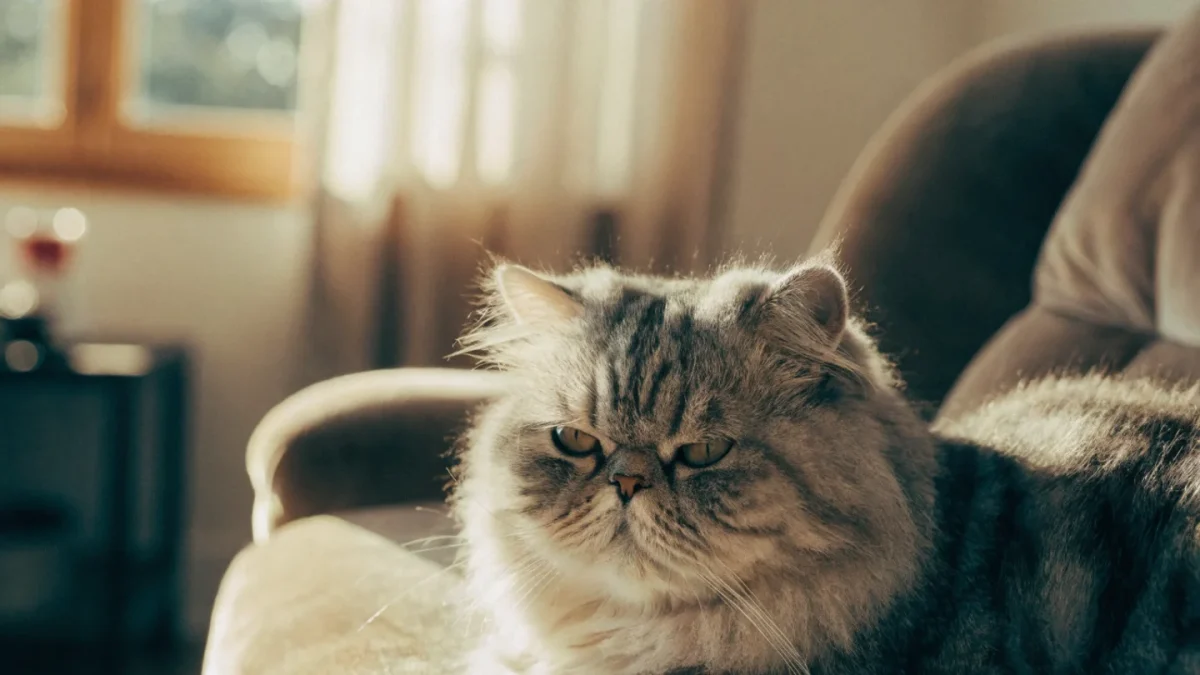
The Persian has accumulated more color and pattern varieties than perhaps any other domestic cat breed. Centuries of selective breeding, combined with the full expression of feline coat genetics in a long, dense coat, have produced a range that encompasses most of what the cat genome can do.
For the complete breed overview, see the complete Persian cat breed guide. For the facial structure differences that affect some varieties, see flat-faced vs traditional Persian cats.
How Persian Color Classification Works
Cat registries classify Persians into color divisions, and the divisions differ somewhat between organizations. The major categories are:
- Solid: one uniform color
- Tabby: striped, spotted, or blotched patterns
- Silver and Golden: shaded, shell, and smoke patterns
- Colorpoint: Himalayan pattern (colored points, blue eyes)
- Bicolor: white combined with another color
- Particolor: tortoiseshell and calico patterns
Within each category, multiple color variants exist.
Solid Colors
White is the iconic Persian color — the one most associated with the breed's regal image. White Persians have blue, copper/orange, or odd eyes (one of each). Blue-eyed white cats have a substantially higher incidence of congenital deafness, caused by the same pleiotropic gene (an allele of KIT) that suppresses both pigmentation and hearing. Research on white cat populations has found deafness prevalence of 65–85% in blue-eyed white cats, compared to 17–20% in white cats without blue eyes, according to studies including those by Strain at Louisiana State University. Copper-eyed or odd-eyed white Persians are less likely to be deaf, but any white kitten should have hearing tested before adoption.
Black Persians are striking and relatively uncommon in popular imagination — most people think of white when they picture a Persian. Black fur in a long coat shows sun bleaching as "rusting" — black coats kept out of direct sunlight maintain richer color.
Blue (dilute black) — a cool gray — is a classic color that appears in many breeds. In Persians it produces a dignified, monochromatic appearance that's quite different from the dramatic contrast of colorpoint or bicolor individuals.
Cream (dilute red), red, chocolate, and lilac complete the range of recognized solid colors, with genetics that follow standard feline color inheritance patterns.
Tabby Varieties
Persian tabbies occur in classic (blotched), mackerel (striped), and spotted patterns, in colors including silver, brown, blue, cream, and red. The most visually distinctive is the silver tabby: silver-white background with dense black or blue markings, giving a high-contrast appearance that reads very differently than the solid colors.
Persian tabby coats are interesting because the dense, long fur changes how the pattern reads — classic tabby blotches in a long coat look softer and less defined than in a shorthaired cat, though the genetic pattern is identical.
Silver and Golden Shaded
These are among the most visually striking Persian varieties. The silver series — chinchilla, shaded silver, and smoke — involves the "inhibitor" gene that causes the colored pigment to be restricted to the tip of each hair, with the rest of the hair shaft appearing white or silver.
Chinchilla (shell): the palest form. Tipping is very light, producing an almost glittering silver-white appearance. The greenish eyes with black pigment rims give chinchilla Persians a distinctive appearance.
Shaded silver: more heavily tipped than chinchilla, with clearer silver color on the back and sides and white underparts.
Smoke: the most heavily tipped, producing a cat that appears solid-colored (black, blue, red, etc.) at rest but reveals a white or silver undercoat when the fur moves.
The golden series replaces the silver-white base with a warm cream or gold. Golden Persians have green eyes, in contrast to the copper eyes of most Persians. Shaded golden individuals — cream-gold with darker tipping — are particularly sought after.
Colorpoint (Himalayan)
Colorpoint Persians — often called Himalayans — carry the same gene that produces the pattern in Siamese cats: color restricted to the cooler extremities (face/mask, ears, legs, tail), with a lighter body. The eyes are always vivid blue.
The genetic interaction between the colorpoint gene and the Persian's color varieties produces a range: seal point (dark brown points), blue point, chocolate point, lilac point, red (flame) point, cream point, and tortie-point combinations.
The Himalayan is recognized as a separate breed by some organizations and as a color division within Persian by others. The cats themselves are identical in temperament and coat; the distinction is administrative.
Bicolor and Particolor
Bicolors combine white with another color or pattern. The classic example is a black-and-white or blue-and-white Persian with clearly delineated white patches. The distribution of white is influenced by the piebald gene, and the degree of white varies from minimal (a few white toes) to predominantly white with colored patches.
Particolors — tortoiseshell (black and red) and calico (tortoiseshell with white) — appear almost exclusively in female cats, because the gene controlling orange/red coloration is X-linked and the tortoiseshell pattern requires heterozygosity at that locus (one orange allele, one non-orange), which is only possible in cats with two X chromosomes. Male tortoiseshells exist but are rare — approximately 1 in 3,000 — and are almost always sterile, typically carrying an XXY chromosome configuration analogous to Klinefelter syndrome in humans.
What Color to Choose
Color doesn't affect temperament or health — with one important exception. If you're drawn to a white Persian with blue eyes, specifically ask about hearing testing. The dominant white gene (W, an allele of KIT) that produces white coat color and blue eyes is the same gene associated with cochlear degeneration — published research puts congenital deafness prevalence at 65–85% in blue-eyed white cats. A professional breeder will test kittens using the BAER (brainstem auditory evoked response) test; if they haven't, it's worth doing independently. A deaf Persian can have a perfectly good life with appropriate management, but knowing in advance allows informed preparation.
For all other color choices, it's genuinely a matter of visual preference. The coat, temperament, and care requirements are the same across every Persian variety.