

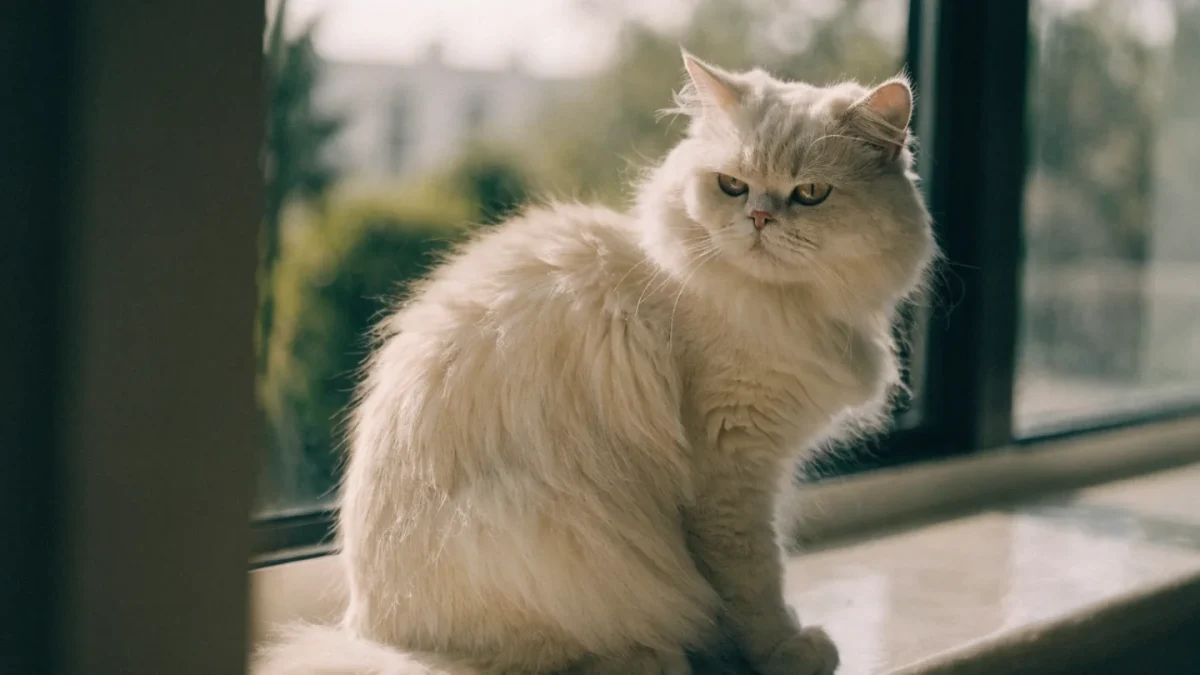
Some breeds attract more mythology than others. Persians — with their ancient history, unmistakable appearance, and reputation that's been filtered through decades of pop culture — have accumulated quite a collection. Some myths lead people to acquire a Persian poorly prepared for what they're getting. Others lead people to dismiss the breed without understanding it. All seven are worth correcting.
For the full breed picture, see the complete Persian cat breed guide and Persian cat temperament.
1. "Persians Are Lazy"
This one conflates two distinct things: low activity level and laziness. Persians have a genuinely low activity level for a domestic cat — they move through the house with deliberation rather than sprinting around at 2 AM, and their play sessions are shorter and calmer than more active breeds.
But within that low activity level, Persians are observant, curious, and cognitively engaged with their environment. They watch what's happening. They notice changes. They have preferences and opinions that they express when they want to. The cat sitting on the windowsill looking peaceful is not doing nothing — it's following the birds, registering the mail carrier's arrival, and tracking the patterns of its household.
"Calm" is accurate. "Lazy" implies an absence of engagement that doesn't match how Persian cats actually are.
2. "You Only Need to Groom Them Occasionally"
This is probably the most practically harmful myth about Persians. The coat requires daily combing — not occasionally, not when it looks tangled, but daily. The woolly undercoat mats within a few days of neglected grooming in the problem areas (armpits, belly, behind the ears, hindquarters).
The myth may originate from people who've seen short clips of Persians looking immaculate and assumed that condition is self-maintaining. It is not. A Persian's immaculate coat is the result of daily work.
People who acquire Persians under the impression that the grooming is optional often end up with matted cats by 6 months. The mats cause discomfort. Severe matting requires professional removal. The solution — daily grooming — was always the requirement; the myth just delayed the discovery.
3. "Flat Face Means Sick Cat"
This myth is a reasonable reaction to legitimate welfare concerns about extreme brachycephaly, but it overstates the case. Not all Persians have the same facial structure.
Traditional (doll-face) Persians have moderate facial structures with normally positioned nostrils and good tear drainage. They have the Persian coat and temperament without most of the health consequences associated with the extreme flat face. They're not routinely sick cats.
The welfare concerns are real and apply most strongly to extreme flat-face individuals — those with noses at eye level, significant breathing restriction, and chronic tear overflow. If you're choosing a traditional-faced Persian from a breeder who tests for inherited conditions, you're not acquiring a sickly cat.
4. "They're Unfriendly or Cold"
This misreads the Persian's affection style. Persians are not aloof — they're private. They don't perform affection on demand, and they don't greet every guest with enthusiasm. What they do is form genuine bonds with their household members and express those bonds on their own terms.
A Persian that trusts you will come find you when it wants contact, slow-blink at you from across the room, and seek proximity without being theatrical about it. A Persian that doesn't know you will simply wait and assess before engaging. Neither of these is unfriendliness; they're the signature self-possession of the breed.
5. "They're High Maintenance in Every Way"
The coat is genuinely high maintenance. Everything else about Persian ownership is fairly moderate. They don't need large spaces, extensive exercise, complex enrichment setups, or constant entertainment. They're quiet cats. They adapt well to apartment life. They're not destructive when bored.
The grooming requirement is real and substantial. But it's worth separating the coat commitment from everything else about the breed, which is considerably less demanding than the coat might suggest.
6. "All Persians Are White"
The white Persian is iconic — white fur, flat face, jewel-toned eyes — and so dominant in media representations that many people assume all Persians are white or close to it. In reality, Persians come in nearly every color the cat genome produces: black, blue (gray), chocolate, lilac, cream, red, and a full range of tabby patterns, tortoiseshells, colorpoints, silvers, and goldens.
The golden shaded Persian, for instance, is warm cream with darker tipping and green eyes — about as far from the white-cat icon as the breed gets. Both are genuinely Persian cats.
7. "Persians Can't Handle Being Left Alone"
Persians are calm, home-adapted cats that actually handle moderate alone time better than more anxiously social breeds. They don't pace. They don't shred things. They settle into their routine and wait.
What they need is a stable, consistent household, sufficient human presence overall (not every hour, but reliably most days), and daily grooming that requires someone present. If you work normal office hours and have a consistent return-home schedule, a Persian can manage your absence without visible distress.
The myth may come from the breed's well-known sensitivity to disruption — they don't adapt well to unpredictable schedules or household chaos. That's different from being incapable of being alone for a workday.