

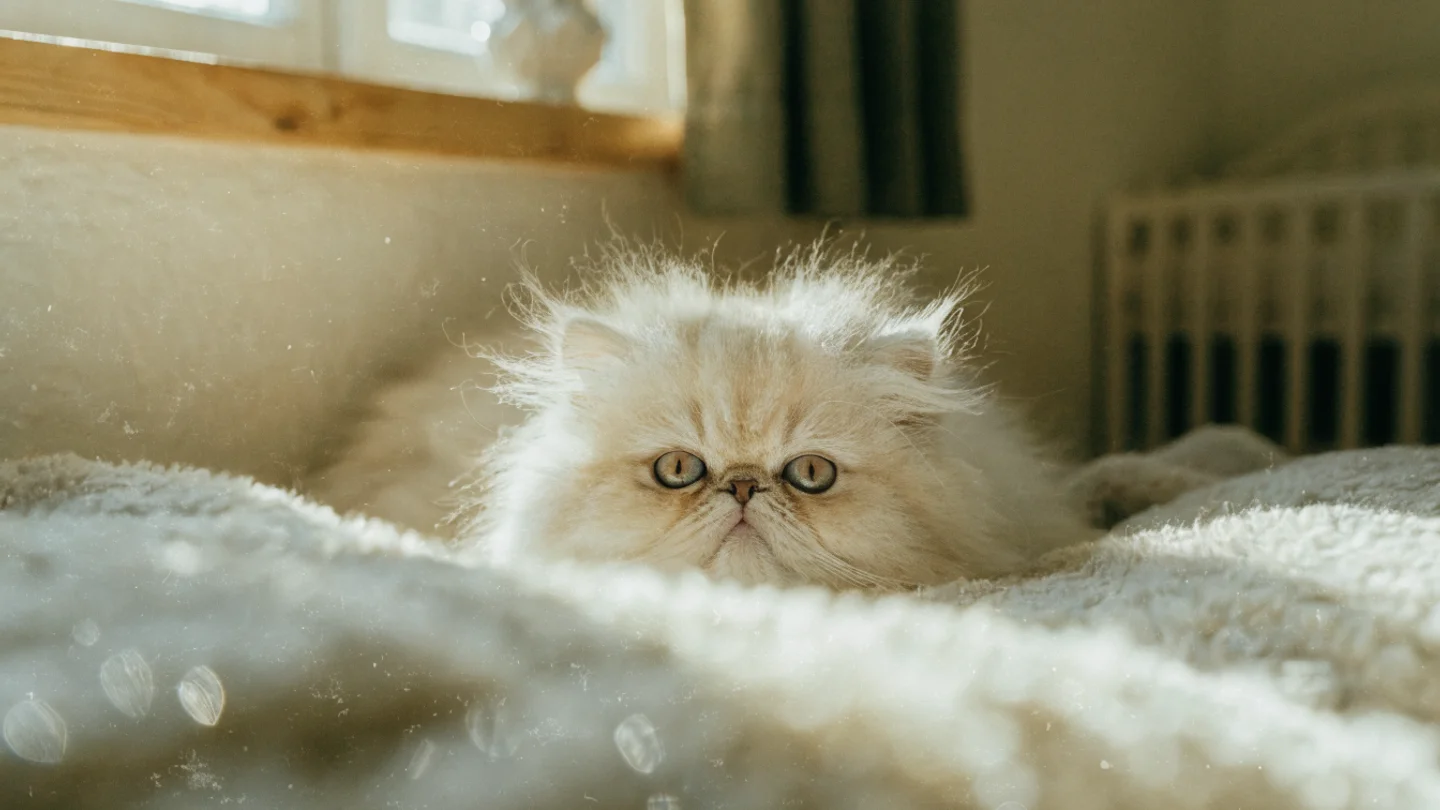
Persian kittens are among the most visually captivating things in domestic animal ownership — round faces, enormous eyes, and baby fluff that makes the adult coat look modest by comparison. They're also in a critical developmental window during the first year that determines how cooperative and comfortable a cat they'll be for the next 15 years.
The single most important thing you can do with a Persian kitten is establish grooming tolerance early. Everything else — diet, veterinary care, enrichment — follows fairly predictable kitten patterns. The grooming investment is Persian-specific and genuinely matters. For the adult grooming approach, see Persian cat grooming. For the full breed overview, see the complete Persian cat breed guide.
Preparing Your Home
Before a Persian kitten arrives, a few adjustments help:
Low-sided litter box. Young kittens need a litter box they can actually step into easily. A high-sided box is fine for an adult but creates a barrier for a small kitten. Have a shallow-entry option available.
Safe, limited initial space. A single kitten-proofed room lets the kitten establish confidence rather than feeling overwhelmed. Expand access gradually over the first week or two as the kitten grows comfortable.
No sharp or rough surfaces near sleeping areas. Persian fur catches on rough textures and develops mats faster in areas of friction.
Grooming supplies ready. Wide-toothed metal comb, soft cloth for eye cleaning, appropriate cat shampoo. Having these ready rather than scrambling when the kitten arrives lets you start the routine immediately.
The First Grooming Sessions
Start the day you bring the kitten home, or within the first few days. The goal in the first weeks is not coat maintenance — kitten coats are simpler — but systematic handling that establishes grooming as normal.
Short sessions, 2-5 minutes, while the kitten is calm (not right after play, not when the kitten is overtired). Run the comb gently through the coat in a few sections. Handle the paws — press each toe pad to extend the nail. Look at the face and gently wipe under the eyes with a damp cloth. Check inside the ears.
Combine with soft verbal reassurance. Follow with a treat when the kitten accepts handling well.
The goal: by 6 months, the kitten should accept a full comb-through without significant resistance. By 1 year, grooming should be part of the daily routine with minimal drama. The investment in these early sessions prevents the genuinely difficult situation of trying to introduce grooming to a resistant adult Persian.
Eye Care
Begin eye cleaning within the first week, using the same approach you'll use lifelong: soft damp cloth, gentle wipe from inner corner outward. Even if the kitten's eyes aren't showing obvious discharge, the handling itself is the important part.
As the kitten grows and the flat-face characteristics become more pronounced, the eye cleaning becomes more functionally necessary. Establishing the routine before it's visually necessary means the cat already accepts it by the time it matters.
If the kitten shows excessive eye discharge, mucus, or eye redness, consult a veterinarian — some eye conditions in Persians require early treatment.
Feeding in the First Year
Persian kittens need food formulated for kittens (higher protein and fat for growth) through approximately 12 months. The flat face creates a practical challenge: brachycephalic kittens have difficulty picking up and chewing standard round kibble because their bite is too shallow to engage it properly — a feeding difficulty documented by International Cat Care for flat-faced breeds. Flat-shaped kibble designed for brachycephalic cats, or wet food, eliminates this problem and is worth testing early rather than waiting for the kitten to struggle.
Some Persian kittens show preference for wet food over dry — the texture is easier to manage with a brachycephalic jaw. This is an individual consideration, but it's worth testing if the kitten shows difficulty with dry food.
Fresh water should always be available. Persians are not especially water-drinkers, but adequate hydration matters for coat quality and urinary health. A cat water fountain sometimes encourages drinking in cats that ignore still water bowls.
Veterinary Milestones
Standard kitten veterinary care — vaccinations, parasite prevention, first wellness exams — applies to Persians the same as any kitten.
Persian-specific additions:
- Early cardiac evaluation if the breeder didn't test the parents for HCM. Polycystic kidney disease (PKD1) is also worth screening: published studies find the PKD1 mutation in approximately 36–49% of Persians globally, making it one of the most prevalent genetic conditions in the breed.
- Dental evaluation, as flat-faced kittens sometimes have teeth coming in with poor alignment
- Follow-up on eye drainage: if tear overflow is excessive early, a veterinary ophthalmologist consultation may be appropriate to evaluate whether the drainage duct can be treated
Spaying or neutering timing varies by veterinary guidance and individual development. Brachycephalic cats carry specific anesthesia risks — their shortened nasal passages and potentially elongated soft palate make airway management more demanding, and veterinary sources including the University of Illinois College of Veterinary Medicine recommend informing the veterinarian of brachycephalic status before any procedure involving anesthesia or sedation throughout the cat's life.
Socialization
Persian kittens benefit from exposure to multiple people and gentle handling during the first 12 weeks — the primary socialization window. A kitten raised by a single person in a quiet household will bond deeply with that person but may be significantly less comfortable with other humans and handling.
Even in a single-person household, inviting friends to interact with the kitten during this period produces an adult cat that's better able to handle veterinary visits, grooming by multiple people, and household guests.
Gentle exposure to normal household sounds — appliances, conversation, music — prevents the sound sensitivity that can develop in Persians raised in very quiet environments.