

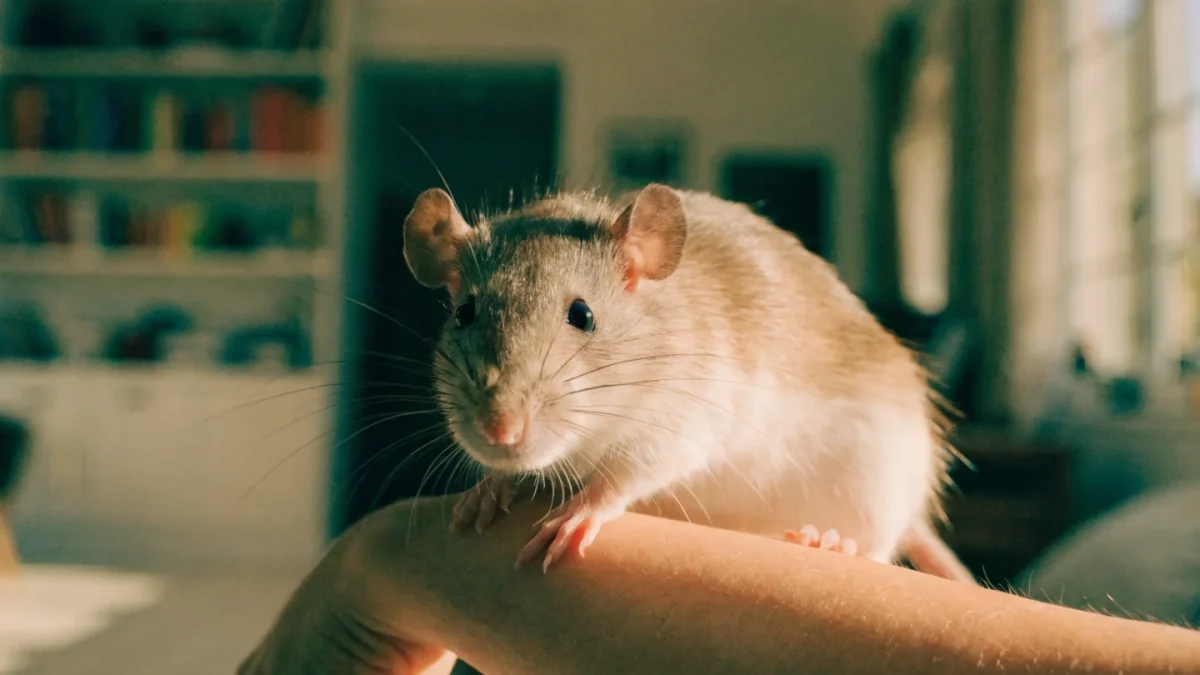
Three years ago I helped a friend's teenage daughter pick out her first pet. She wanted something interactive, something that would actually recognize her. Her parents vetoed a dog. I suggested rats, and the look I got — from everyone at the table — was pure skepticism. Six weeks later that same family had a dedicated Instagram account for their two dumbo rats, and the dad was building custom cage shelves on weekends.
Pet rats need a spacious wire cage with at least one companion, a diet built on lab blocks supplemented with vegetables and occasional protein, and roughly an hour of daily out-of-cage time. They're intelligent, genuinely social, and form bonds with their owners that rival some traditional companion animals. But they're not low-maintenance, and their short lifespan means you're signing up for an intense relationship with an expiration date.
The Intelligence Factor
Rats learn fast. Not "for a rodent" fast — genuinely fast. They respond to their names, come when called, and learn tricks through positive reinforcement in days rather than weeks. I've had rats figure out multi-step puzzle feeders that were designed for much larger animals.
What surprises most new keepers is the emotional range. Rats brux (grind their teeth) and boggle (their eyes vibrate in and out of the sockets) when content — the first time you see boggling it's startling, but it's basically the rat equivalent of purring. They get excited when they hear your voice. They play with each other in ways that look like they're genuinely having fun, because they are.
A 2011 study from the University of Chicago, published in Science by Inbal Ben-Ami Bartal and colleagues, demonstrated that rats will free a trapped companion even when chocolate is available — and share the chocolate afterward. That study gets cited constantly in rat communities, and while I'd caution against over-anthropomorphizing, anyone who's kept rats has seen empathetic behavior firsthand.
Housing Your Rats
The basics: wire cage, solid floors, multiple levels. Bar spacing no wider than 2.5 cm for adults, 1.2 cm for babies. Minimum footprint for a pair is roughly 60 x 40 cm, but I've never met a keeper who regretted going larger.
Rats are vertical explorers. They want shelves to climb to, hammocks to sleep in, ropes to navigate. A cage with three or four levels connected by ramps gives them the spatial complexity they need. Solid shelves over wire ones — bumblefoot is painful and preventable.
Location matters. Avoid direct sunlight, drafts, and rooms where temperature swings more than a few degrees through the day. My own cages sit in a room that stays between 18 and 22 degrees Celsius year-round. Rats are sensitive to heat — anything above 28 degrees starts becoming dangerous, and they can't sweat.
Our rat and mouse care guide covers cage setup and bedding choices in more depth, including the specifics on why certain wood shavings are harmful.
Feeding for Health and Longevity
A quality lab block forms the base. Look for 14-16% protein and 4-5% fat for adult maintenance. The block format prevents selective feeding — rats will absolutely pick out the tasty bits from a seed mix and leave the nutritionally important parts untouched.
Supplement daily with small portions of fresh vegetables: broccoli, peas, kale, bell pepper. Cooked grains, a small piece of egg, or lean cooked chicken a few times a week adds variety. Fruit in moderation — rats love banana and blueberries but the sugar adds up.
Treats are where discipline matters. A sunflower seed or a tiny piece of plain cereal makes an excellent training reward. A pile of seeds in the food bowl creates a chubby rat with a shortened lifespan. I had a rescue come in once at nearly 700 grams — more than double a healthy weight for a female. She was on a diet of parrot seed mix and table scraps. It took months of careful dietary transition to get her to a reasonable weight.
The Social Contract
Rats need rats. This isn't a suggestion. A single rat, regardless of how much time you spend with it, is missing something fundamental. They sleep piled on each other, groom each other, play-wrestle, and communicate in ultrasonic frequencies we can't even hear. You're not a substitute for that.
Two is the minimum. Three is better because when one eventually passes, the survivor isn't suddenly alone. Same-sex pairs or groups work well. Mixed-sex groups require neutering unless you want dozens of pups — and you don't, because females can become pregnant again within hours of giving birth.
Introductions between unfamiliar rats take patience. Expect it to take one to two weeks of supervised neutral-territory sessions before cage sharing. Some scuffling during introductions is normal dominance behavior. Blood means separate and reassess.
Daily Routine
Here's roughly what rat ownership looks like each day:
Morning: check water bottle, refresh food if needed, quick visual health check on each rat. Takes about five minutes.
Evening: at least thirty to sixty minutes of free-roam time in a rat-proofed space. This is when you interact — let them climb on you, run obstacle courses, explore. Spot-clean the cage while they're out. Replace any soiled hammocks.
Weekly: full bedding change, wipe down shelves and cage bars, wash fabric accessories.
That evening time isn't optional. Rats that don't get enrichment and interaction develop stereotypic behaviors — repetitive cage climbing, excessive self-grooming, aggression. They're telling you they're bored and understimulated, and it's not a small thing.
Health Realities
The average pet rat lives two to three years. Exceptional individuals make it to three and a half. That's not long, and it means health problems arrive faster than you'd expect.
Respiratory infections are almost inevitable. Nearly all domestic rats carry Mycoplasma pulmonis — it's endemic in the population. Stress, poor air quality, or dusty bedding triggers active infection. Sneezing, porphyrin staining around the nose, and labored breathing are the warning signs. Catch it early, get antibiotics from an exotic vet, and most rats recover well. Ignore it, and you're looking at chronic disease.
Mammary tumors hit roughly 50% of unspayed females. They grow alarmingly fast. Most are benign and surgically removable, but surgery on a two-year-old rat involves real anesthetic risk, so there's no simple answer. Some keepers spay females early to reduce tumor incidence. Others take a watch-and-respond approach. Both have trade-offs.
Find an exotic vet before you need one. Not every clinic treats rodents, and the last thing you want during a health emergency is a frantic search for someone qualified.
Frequently Asked Questions
Do pet rats bite?
Rarely. Well-socialized rats almost never bite their owners. Most bites happen when a rat is startled (grabbed from above) or mistakes a food-smelling finger for a treat. I've been nipped once in over a decade of handling — by a rescue rat that had never been properly socialized. Even then, it was more of a warning pinch than an actual wound.
How much time do rats need out of the cage?
An hour daily is the baseline I recommend. Some keepers offer more, and their rats are usually the most well-adjusted. Under thirty minutes a day and you'll start seeing behavioral problems within weeks. Quality matters too — passive time near the cage isn't the same as active interaction and exploration.
Can I keep a single rat if I give it lots of attention?
I genuinely advise against it. I've seen people try, with the best intentions and hours of daily interaction, and the rat still shows signs of stress that disappear once a companion is introduced. You can't groom them the right way, sleep piled on them, or communicate in their frequency range. Two rats aren't significantly more work than one, and the difference in their wellbeing is dramatic.