

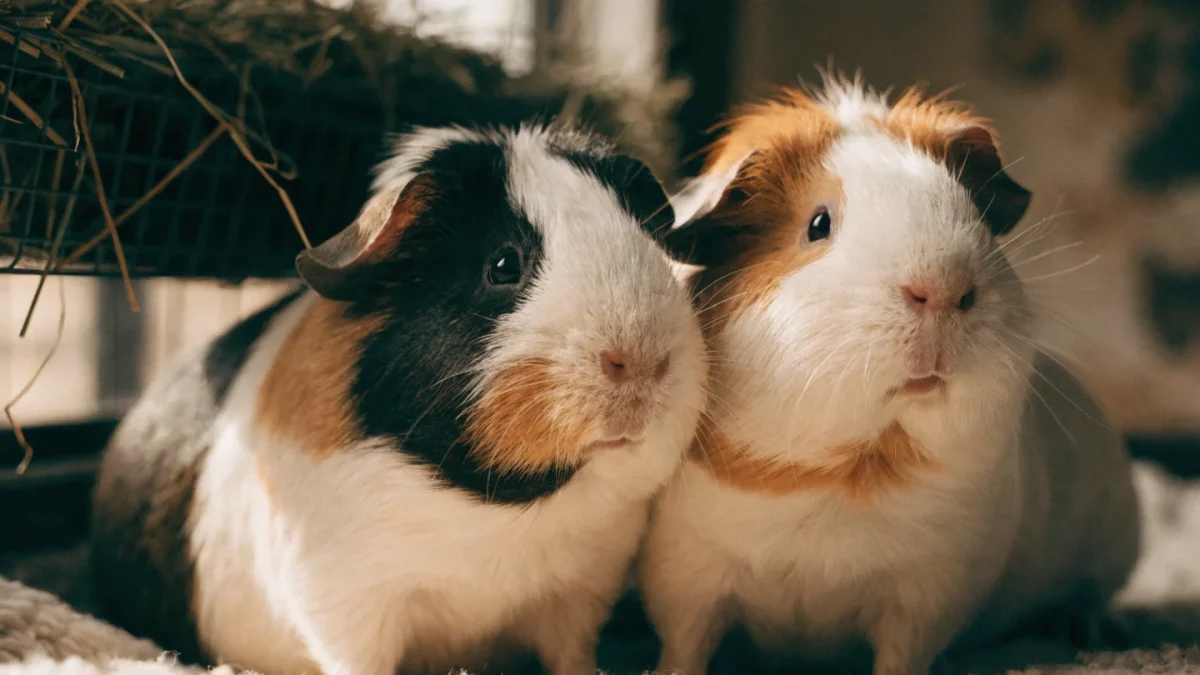
I got my first guinea pig because a friend's daughter lost interest. That's how it starts for a lot of people — someone hands you a small, squeaking potato and suddenly you're researching hay types at midnight. That was fifteen years ago. I've kept cavies continuously since then, alongside my reptile collection, and I'll say something that surprises people in the exotic pet world: guinea pigs are harder to keep well than most beginner reptiles.
Guinea pigs (Cavia porcellus) require a spacious enclosure, unlimited grass hay, daily vegetables providing vitamin C, at least one same-species companion, and regular health monitoring including weekly weigh-ins. They live 5-8 years, sometimes longer, and they are deeply social herd animals that suffer measurably when housed alone.
That gap between "easy to acquire" and "actually meeting their needs" is where most problems start.
Why Guinea Pigs Aren't the Simple Starter Pet People Expect
Pet stores sell guinea pigs next to hamsters and mice, in cages designed for hamsters and mice, and the impression sticks. A small cage, some pellets, a water bottle — done.
Not done. Not even close.
The minimum enclosure size for a pair of guinea pigs is approximately 0.7 m² (about 7.5 square feet), and honestly, I consider that a floor, not a ceiling. Most commercially sold "guinea pig cages" fall short of this. I've walked through pet stores and measured the cages on the shelf — the majority are under 0.5 m². An animal that needs to run, popcorn, and establish personal space within a social group can't do any of that in a hamster-sized box.
If you're coming from hamster care, the shift in scale is real. Hamsters are solitary and compact. Guinea pigs are neither.
Then there's diet. Guinea pigs cannot synthesize their own vitamin C — one of only a handful of mammal species with this limitation, shared with humans and a few primates. A pellet-only diet will eventually produce scurvy. Literal scurvy.
And they need a friend. A single guinea pig in a cage by itself isn't just lonely in the way we project human emotions onto animals. Studies on cortisol levels in isolated guinea pigs show measurable chronic stress. Several countries have made it illegal to keep a guinea pig alone.
Housing That Actually Works
The enclosure needs to be large, open, and escape-proof — which is easier than it sounds, because guinea pigs can't climb and rarely jump higher than about 30 cm.
Grid-and-coroplast enclosures (commonly called C&C cages) have become the standard in the guinea pig community, and for good reason. They're customizable, affordable to build, easy to clean, and you can make them as large as your floor space allows. A basic 2×4 grid setup gives you roughly 0.7 m², which works for two guinea pigs. Three pigs need a 2×5. More pigs, more grids.
The enclosure goes indoors. Guinea pigs are sensitive to temperature extremes — they're comfortable between about 17-24°C (63-75°F). Drafts, direct sunlight, and proximity to radiators all cause problems. I keep mine in a spare room with a consistent temperature, and I've never had a respiratory issue in that group. A friend kept hers in a garage one winter and dealt with URI after URI until she moved them inside.
Hideouts are non-negotiable. Each pig needs at least one hiding spot — ideally more than one — plus a shared larger hide for group sleeping. Without places to retreat, subordinate pigs get stressed and dominant pigs get aggressive.
For a deeper look at the specifics of small animal enclosures, the guide on habitat setup fundamentals covers the general principles that apply across species.
Hay, Vegetables, and the Vitamin C Problem
Eighty percent of a guinea pig's diet should be grass hay. Timothy hay is the gold standard for adults. Orchard grass and meadow hay work too. Alfalfa hay is appropriate only for young, pregnant, or nursing pigs — it's too high in calcium for healthy adults and can contribute to bladder stones.
Hay isn't a supplement. It's the foundation. Guinea pigs need the long fiber strands to keep their constantly growing teeth worn down and their gut motility functioning. A pig that stops eating hay is a pig heading for a dental or digestive emergency.
Daily vegetables provide the vitamin C that guinea pigs can't make on their own. Bell peppers (especially red and yellow) are the single best source — one slice of red bell pepper has more vitamin C than most supplements. Romaine lettuce, cilantro, parsley, and a small amount of kale round out a good rotation. Introduce new vegetables slowly to avoid digestive upset.
Fruit is a treat, not a staple. I give mine a small slice of apple or a couple of blueberries a few times a week. The sugar content is real, and overweight guinea pigs develop many of the same health problems as overweight humans.
Pellets should be plain timothy-based, with added vitamin C, and served in small measured quantities — about an eighth of a cup per pig per day. Those colorful pellet mixes with dried fruit and seeds? The pigs pick out the junk and leave the nutrition behind. I threw away a lot of money on those before I learned better.
The Social Question
Guinea pigs are herd animals. In the wild, they live in groups. In captivity, they need at minimum one companion of their own species.
The ideal pairing depends on what you're prepared for. Two sows (females) are the easiest combination — they almost always get along after a brief adjustment period. A neutered boar (male) with one or more sows works well and produces interesting social dynamics. Two boars can coexist peacefully, but they need more space and can have personality clashes — I've seen bonded boar pairs that lived together happily for five years, and I've seen pairs that fought within a week.
Never house an intact boar with a sow unless you're prepared for babies every 59-72 days. Guinea pig reproduction is no joke — sows can become pregnant as early as four weeks old, and pregnancy carries real risks, especially for sows over about seven months old who haven't previously given birth. The pelvic bones fuse, making delivery dangerous or impossible.
One thing I didn't expect when I started keeping guinea pigs: the vocal communication. These animals talk constantly. Wheeking when they hear the fridge open. Purring when content. Chattering their teeth when annoyed. After a while, you can read a group's mood just by listening.
Health Monitoring and Common Problems
Guinea pigs hide illness. This is prey animal behavior — showing weakness attracts predators. By the time a guinea pig looks visibly sick, it may have been declining for days or weeks.
Weekly weigh-ins are the single most useful health monitoring tool. A healthy adult guinea pig weighs roughly 900-1200 grams, depending on breed and sex. A weight drop of 50 grams or more in a week warrants a vet visit. I weigh mine every Sunday morning before feeding — same time, same scale. I've caught two separate health problems early solely because the scale told me something was wrong before the pig showed any behavioral changes.
Respiratory infections are common, especially in damp or drafty environments. Symptoms include sneezing, crusty eyes, labored breathing, and lethargy. These need veterinary treatment — guinea pig URIs don't resolve on their own and can become fatal quickly.
Dental problems happen when teeth don't wear properly, usually from insufficient hay consumption. Drooling, dropping food, and weight loss are the classic signs. This requires a vet with exotic animal experience — not every small animal vet is equipped to handle guinea pig dentistry.
Bladder stones and sludge relate to calcium intake, which is why adult pigs shouldn't eat alfalfa hay or calcium-heavy vegetables like spinach in large quantities. Blood in urine or squeaking during urination means an immediate vet visit.
Bumblefoot (pododermatitis) develops on rough or wet bedding. The footpads become swollen, red, and eventually ulcerated. Prevention is simple — appropriate bedding, clean conditions, and adequate space to move.
I'd recommend finding an exotic-savvy vet before you need one. Guinea pig emergencies happen at the worst possible times, and scrambling to find a vet who actually knows small mammals at 10 PM on a Saturday is an experience you don't want.
Grooming Basics
Short-haired breeds need minimal grooming — a weekly brush to remove loose hair and a nail trim every 3-4 weeks. Long-haired breeds like Peruvians and Silkies need daily brushing and regular hair trims to prevent matting and fecal contamination.
Nails grow continuously and must be trimmed. On light-colored nails, you can see the pink quick and cut just ahead of it. Dark nails require more caution — cut small amounts at a time. If you're nervous about it, ask an exotic vet to demonstrate the technique once.
Baths are rarely necessary. Guinea pigs keep themselves reasonably clean, and bathing strips natural oils from their skin. If a bath is genuinely needed — severe soiling or a fungal infection requiring medicated shampoo — use lukewarm water, dry thoroughly, and keep the pig warm afterward.
The Lifespan Commitment
Five to eight years. Some guinea pigs make it past nine. That's longer than most hamsters, rats, or mice, and it means you're signing up for a real commitment — years of hay purchases, vegetable prep, cage cleaning, and vet bills. I've spent more on exotic vet visits for my guinea pigs than for some of my reptiles, and reptile vet care isn't cheap.
But there's a reason guinea pigs have been kept as companions for thousands of years. They recognize their owners. They develop distinct personalities. They wheek at the sound of a plastic bag because they've learned it might contain lettuce. My oldest sow used to fall asleep in my lap every evening while I read — not because I trained her to, but because she chose to.
They're worth the effort. Just know what the effort actually involves before you bring one home.
FAQ
Can guinea pigs live alone?
They can survive alone, but they shouldn't. Guinea pigs are herd animals with documented stress responses to isolation. Several countries have actually legislated against single-keeping. If you truly cannot house two, you need to provide extensive daily interaction — but a human companion is a supplement, not a replacement for another guinea pig.
Do guinea pigs smell bad?
The pigs themselves are fairly clean animals. The smell comes from dirty bedding. Spot-clean daily, do a full bedding change weekly (more often for disposable bedding, less often for well-maintained fleece liners), and the odor stays manageable. Boars have a grease gland near the tail base that can get funky — clean it during regular grooming.
What should I never feed a guinea pig?
Iceberg lettuce (no nutritional value, causes diarrhea), potatoes, onions, garlic, rhubarb, avocado, and anything from a bulb plant. Chocolate and caffeine are toxic. I've also seen problems with large quantities of cabbage and broccoli — not toxic, but they cause painful gas in a digestive system that can't expel it efficiently.
How do I know if my guinea pig is sick?
Weigh weekly. Weight loss is often the first sign. Beyond that: reduced appetite, sitting hunched in a corner, a puffed-up coat, crusty or watery eyes, sneezing, labored breathing, diarrhea, or blood in urine. Guinea pigs are prey animals that hide illness instinctively, so subtle changes matter more than dramatic symptoms.
Are guinea pigs good pets for children?
With supervision and realistic expectations. Guinea pigs don't enjoy being carried around — they're ground-dwelling animals that feel insecure when lifted. A child who's old enough to sit on the floor for lap time, help with vegetable prep, and participate in cage cleaning can genuinely benefit from the experience. But an adult must remain the primary caregiver. The vitamin C needs, the vet visits, the daily hay — that's not something a seven-year-old can manage independently.