

I watched a rabbit eat an entire sleeve of crackers once. At a reptile expo, of all places — someone had brought their Holland Lop in a carrier, and the rabbit found an unattended snack bag while its owner was browsing ball python morphs. The rabbit was thrilled. The rabbit's gut was not going to be thrilled later.
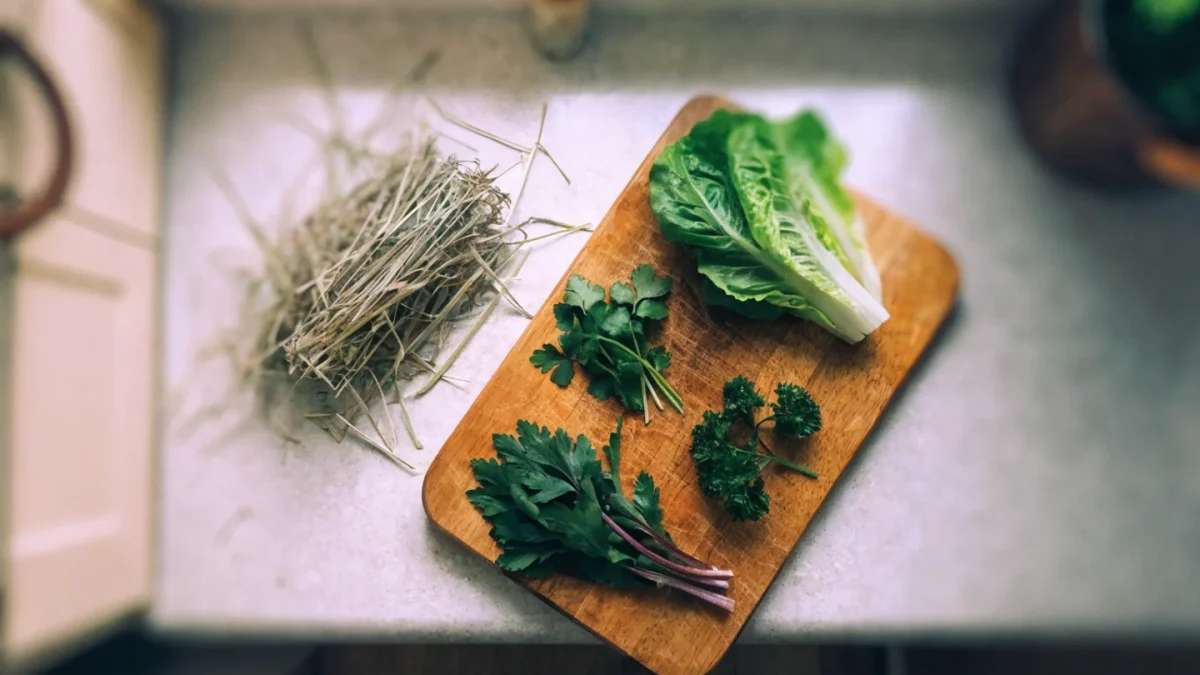
A rabbit's diet should center on unlimited grass hay — about 80% of total intake — supplemented with daily leafy greens and a small measured portion of pellets. Fruit is a treat, not a food group. And a surprising number of common foods, from iceberg lettuce to avocado, range from nutritionally useless to genuinely dangerous.
Getting this right matters more than almost any other aspect of rabbit keeping, because the digestive system is where most rabbit health problems start.
Hay: Not Negotiable
Timothy hay for adults. Orchard grass as a close second. Oat hay works too, and mixing types adds variety that keeps rabbits interested. For kits under six months and pregnant or nursing does, alfalfa hay — it's higher in calcium and protein, which growing rabbits need.
The hay should be available at all times. I don't mean a handful in a rack. I mean a genuinely unlimited supply, enough that there's always fresh hay available even after the rabbit has eaten, scattered, and slept on the rest. A rabbit should be eating a body-sized pile of hay daily.
Why this matters: rabbit teeth grow continuously — roughly 2-3 mm per week — and the side-to-side grinding motion of chewing hay is what keeps them worn down evenly. Without enough long-strand fiber, teeth develop sharp spurs that cut into the cheeks and tongue. I've seen rabbits stop eating entirely because of dental pain that started with not enough hay three months earlier.
Hay also drives the gut. The rabbit digestive system relies on constant fiber to maintain motility. Stop the fiber, and the gut slows. A slow gut ferments abnormally, produces gas, and you're on the path to GI stasis. That connection between diet and the full indoor rabbit care guide section on health is worth understanding thoroughly.
Greens: The Daily Fresh Component
One packed cup of mixed leafy greens per two pounds of body weight, daily. That's the baseline.
Safe staples I rotate through:
- Romaine lettuce (never iceberg)
- Cilantro
- Parsley — both flat-leaf and curly
- Dandelion greens (from pesticide-free sources only)
- Bok choy
- Carrot tops (the greens, not the root — more on that below)
- Basil
- Mint
Introduce new greens one at a time, watching for soft stool over 24-48 hours. Most rabbits handle variety well once their gut microbiome is established, but a rabbit that's been eating nothing but pellets its whole life needs a gradual transition. I usually start with one type of green for a week, then add a second, and build from there.
Higher-oxalate greens like spinach, Swiss chard, and beet greens should be limited to once or twice a week, rotated, not given daily. Because rabbits absorb calcium in proportion to dietary intake regardless of need, oxalates that bind with calcium can contribute to the formation of calcium oxalate stones and bladder sludge over time — a connection noted in veterinary proceedings on rabbit calcium metabolism and urolithiasis.
Herbs are underrated. My Mini Rex goes absolutely sideways for fresh dill. I'll put a sprig in her pen and she'll carry it around before eating it — some kind of ritual I've never seen another rabbit do.
Pellets: Smaller Portions Than You Think
For adult rabbits: roughly 1/4 cup of pellets per five pounds of body weight per day. That's it. Most people overfeed pellets dramatically because the bag serving suggestions are far too generous — the manufacturer wants you buying more pellets.
Choose plain timothy-based pellets. No dried fruit pieces, no seeds, no colored bits, no yogurt drops mixed in. Those "gourmet" blends exist because they look appealing to humans buying pet food. The rabbit doesn't need any of it, and the sugar content can cause serious digestive disruption.
Young rabbits under six months get unlimited alfalfa-based pellets to support growth. Between six and twelve months, transition gradually to timothy pellets and start reducing the quantity to the adult measurement. This matters for understanding species-specific nutrition principles — rabbits are one of the few small mammals where overfeeding the concentrated component causes more problems than underfeeding it.
Treats and Fruits: The Portion People Get Wrong
Fruit is candy for rabbits. A tablespoon per two pounds of body weight, a few times a week — not daily.
Safe fruits: apple (no seeds), banana, blueberries, strawberries, papaya, pear, raspberry. Small amounts. I use a single blueberry as a training reward, and that's plenty.
Carrots are a treat, not a staple. Yes, despite what cartoons taught you. Carrots are high in sugar for a rabbit and should be treated the same as fruit — small portions, occasionally. A one-inch piece is a treat. A whole carrot is a sugar bomb.
Foods That Are Actually Dangerous
Some of these will surprise people:
Iceberg lettuce contains lactucarium, which can cause diarrhea and gut upset. It's also nutritionally empty — essentially crunchy water. Avocado contains persin, which is toxic. Rhubarb — leaves especially — contains oxalic acid at dangerous concentrations. Onions, garlic, leeks, and chives damage red blood cells. Potatoes (including peels and eyes) contain solanine.
Chocolate, caffeine, and alcohol are obvious ones, but I mention them because I've had keepers tell me their rabbit "loved" a sip of beer. The rabbit may have lapped at it. That doesn't mean it's safe.
Dried corn, seeds, and nuts are choking hazards and cause dangerous intestinal blockages. Any commercial treat that's basically compressed sugar and starch — the colorful stick things you see hanging in pet store rabbit aisles — belongs in the trash.
Water
Unlimited fresh water, always. I prefer heavy ceramic crocks over water bottles — rabbits drink more from an open dish, and staying hydrated supports the gut motility that hay provides the fiber for. Water bottles can clog, and some rabbits never learn to use them efficiently.
Clean and refill daily. If your water is heavily chlorinated, letting it sit for 24 hours before offering it works. Filtered water is fine too.
FAQ
Can rabbits eat bread or crackers?
No. Starchy, processed carbohydrates disrupt the gut microbiome and can trigger GI stasis. The expo cracker incident I mentioned? That rabbit had diarrhea for two days afterward. Bread, crackers, pasta, cereal — none of it belongs in a rabbit's diet.
How do I switch my rabbit from a pellet-heavy diet to hay-based?
Gradually, over two to three weeks. Start by reducing pellets by about 25% and making sure fresh hay is always available and easily accessible. Most rabbits begin eating more hay within days once they're hungrier between pellet portions. If your rabbit refuses hay entirely after a week of reduced pellets, check the hay freshness — stale hay sitting in a bag for months doesn't appeal to anyone.
My rabbit won't eat hay. What do I do?
First, try different types — some rabbits prefer orchard grass over timothy, or vice versa. Fresh hay matters enormously. Buy from a local farm or small supplier if you can; hay that's been compressed and shipped across the country often arrives dusty and unappetizing. Try putting hay in different locations, stuffing it into toilet paper tubes, or mixing in a tiny amount of dried herb like chamomile for scent. I've only met a handful of rabbits that genuinely refused all hay long-term, and every one of them had an underlying dental problem that made chewing painful.