

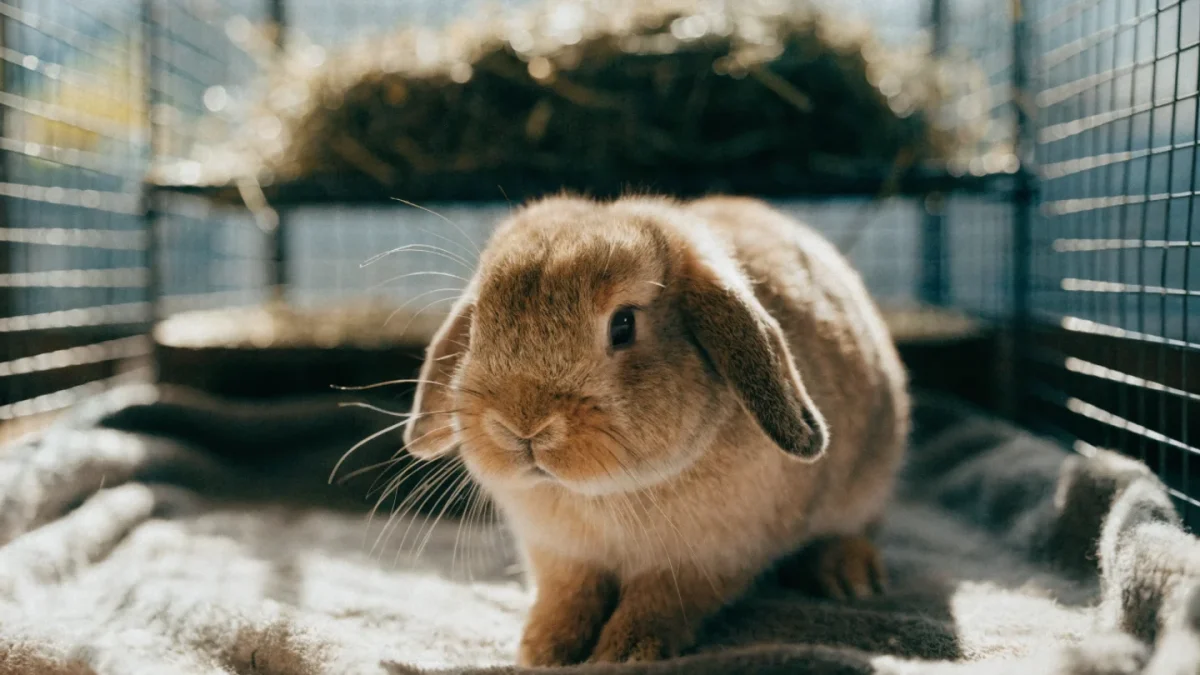
The first rabbit I ever kept was a Netherland Dwarf named Biscuit. I was nineteen, thought I'd done my research, and had a cage barely bigger than a shoebox. Biscuit spent most of his first week huddled in the corner, and I couldn't figure out why. Turns out, I'd made nearly every beginner mistake in the book — too small an enclosure, wrong hay, no hiding spot, and I was picking him up constantly because I thought that's how you bond with a rabbit.
Indoor rabbits need spacious housing (at least 12 square feet of living area), unlimited timothy hay as the base of their diet, a litter box with safe paper-based bedding, and regular veterinary care from an exotics vet. Most of the health problems I see in rabbits trace directly back to one of those four things being wrong.
Biscuit lived to be eleven. But those first few months were rough for both of us, and I'd like to save you the learning curve I went through.
Housing That Actually Works
Forget the cages sold at pet stores. Almost all of them are too small for any rabbit breed, including dwarfs. A rabbit needs room to take three full hops in a line, stand on hind legs without hitting a ceiling, and stretch out flat without touching the sides. For a medium-sized rabbit, that's roughly 12 square feet of floor space — minimum.
Exercise pens designed for dogs work well. They're modular, collapsible, and you can shape them around a room corner. Some keepers go fully free-roam, which is ideal if you've rabbit-proofed properly. I ran a half-and-half setup for years: a large pen as home base with the bedroom door open during supervised hours.
Flooring matters more than people realize. Wire-bottom cages cause sore hocks — painful ulcers on the feet. Rabbits don't have paw pads like cats or dogs. Use solid flooring with a washable fleece liner, a cotton rug, or interlocking foam tiles. Biscuit loved a particular cotton bath mat that I ended up buying in bulk.
If you're weighing different enclosure styles, the principles in the habitat setup fundamentals for exotic pets apply here — airflow, temperature stability, and appropriate substrate all matter.
Diet: Hay Is the Whole Foundation
Roughly 80% of a rabbit's diet should be grass hay. Timothy hay for adults, alfalfa for young rabbits under six months. This isn't a suggestion. A rabbit's digestive system is built around constant fiber intake, and without it, the gut slows down. When the gut slows down, you're looking at GI stasis — one of the most common killers of pet rabbits.
I keep hay available in multiple spots. A hay rack attached to the pen, a pile next to the litter box (rabbits eat and poop at the same time, which sounds gross but is actually a huge advantage for litter training), and a handful scattered for foraging.
Fresh greens come second. A daily portion of leafy greens — about one packed cup per two pounds of body weight. Romaine, cilantro, parsley, dandelion greens, and bok choy are all solid options. I rotate varieties weekly. Avoid iceberg lettuce (too watery, almost no nutritional value) and limit fruits to a tablespoon per day at most. Rabbits love banana. They'd eat an entire banana if you let them. Don't let them.
Pellets are the smallest portion — roughly 1/4 cup per five pounds of body weight for adults. Look for plain timothy-based pellets without dried fruit, seeds, or colored pieces mixed in. Those "gourmet" mixes with yogurt drops and corn are junk food marketed to owners, not to rabbits.
Litter Training
Rabbits are remarkably easy to litter train, especially after being spayed or neutered. Their instinct is to pick one or two spots and use them consistently.
Start with a large litter box in the corner your rabbit naturally gravitates toward. Line the bottom with paper-based litter — avoid cedar and pine shavings, which contain aromatic oils that irritate rabbit respiratory systems. Put hay at one end of the box or in a rack directly above it. The eat-and-poop cycle does most of the work for you.
When Biscuit first started free-roaming a larger area, he picked a corner behind my desk as his secondary bathroom. Instead of fighting it, I just put a second litter box there. Two days, problem solved. Work with the rabbit's instincts, not against them.
Accidents happen during adolescence, especially with unspayed or unneutered rabbits who are territorial marking. That's hormonal, not a training failure.
The Vet Question
Finding a vet who actually knows rabbits is harder than it should be. Rabbits are classified as exotic animals in veterinary medicine, and not every small animal vet has meaningful experience with them. I've heard horror stories from keepers whose regular vet prescribed antibiotics that are toxic to rabbits — amoxicillin being the classic one. And that's not anecdotal paranoia. The Merck Veterinary Manual explicitly lists oral amoxicillin as contraindicated in rabbits because it disrupts gut flora, allowing Clostridium species to overgrow and cause fatal enterotoxemia — sometimes within 48 hours.
Ask specifically: "How many rabbits do you see per month?" and "Are you comfortable with rabbit spay/neuter surgery?" Those two questions filter out most of the guesswork.
Annual checkups should include a dental exam (rabbit teeth grow continuously and can develop painful spurs), a weight check, and a general wellness assessment. Spaying or neutering is strongly recommended — for behavioral reasons and because unspayed female rabbits develop uterine cancer at alarming rates. A study published in the Journal of Exotic Pet Medicine found that uterine malignant neoplasia affected roughly 40% of rabbits over three years of age, with the odds climbing dramatically as they age — some veterinary sources cite rates approaching 60-80% in does over five to six years old.
Socialization and Handling
Rabbits are social but on their own terms. Most rabbits don't enjoy being picked up. Their instinct reads "lifted off ground" as "predator has grabbed me." I've met hundreds of rabbits, and I can count on one hand how many genuinely liked being carried.
Instead, interact at floor level. Sit on the ground, let the rabbit come to you. Offer a treat from your hand. Wait. Rabbits are curious animals, and if you're not chasing them, most will investigate you within fifteen minutes. Some will climb into your lap. Some will nudge your hand for head rubs and then sprint away mid-pet. That's just how they are.
Handling is still necessary for health checks and nail trims. Practice the football hold — rabbit tucked against your body, one hand supporting the hindquarters — in short sessions. Always support the spine. A rabbit who kicks hard enough while unsupported can fracture their own back. That's not an exaggeration.
Exercise and Enrichment
A minimum of three hours outside the pen daily. More is better. Rabbits are most active at dawn and dusk (they're crepuscular, not nocturnal), so morning and evening exercise sessions align with their natural rhythm.
They need things to do. Cardboard boxes with entry holes. Paper bags stuffed with hay. Untreated wooden blocks to chew. Rabbits are intelligent and get bored, and a bored rabbit chews whatever's available — including your baseboards, your furniture legs, and that charging cable you forgot to move.
My current rabbit, a Mini Rex named Pepper, has a cardboard castle I rebuild every few weeks. She destroys it systematically, starting with the doorway, then the walls, then the roof. It costs nothing and keeps her occupied for hours.
Temperature and Environment
Rabbits handle cold far better than heat. Anything above 80°F (27°C) is dangerous, and heatstroke is a genuine risk. Keep them in the coolest room of the house during summer. A ceramic tile in their pen gives them a cool surface to lie on.
Avoid placing enclosures near windows with direct sun, heating vents, or drafty doorways. Rabbits do well in typical indoor temperatures between 60-72°F (15-22°C).
If you're also considering guinea pig care, the temperature needs are similar, though guinea pigs are even less heat-tolerant.
Common Mistakes I Still See
Feeding too many pellets and not enough hay. Housing in a cage too small, so the rabbit can't exercise. Skipping the spay/neuter. Using pine or cedar bedding. Not rabbit-proofing electrical cords. Assuming the rabbit is "low maintenance" because it's small.
Rabbits live 8-12 years with proper care. That's a long commitment. They need daily attention, regular vet visits, and an owner who's willing to adapt their living space. They're not a starter pet — they're a real one.
But when the setup is right, there's nothing quite like a rabbit doing a full binky across your living room at 7 AM because they're just that happy to be alive.
FAQ
Can I keep a rabbit in a bedroom?
Yes, and many keepers do. Just be aware that rabbits are most active around dawn and dusk, so expect some noise — chewing, thumping, rearranging their pen — at 5 AM. Pepper lives in my home office, which works because I'm not trying to sleep there.
Do rabbits smell bad?
A healthy rabbit on a clean diet barely smells at all. The litter box is what smells if you don't maintain it. Spot-clean daily, full change every three to four days, and there's no odor issue. Unneutered males have stronger-smelling urine, which is one more reason to get the neuter done.
Is it okay to keep just one rabbit?
It can work if you provide significant daily interaction. Rabbits are social animals and bonded pairs are visibly happier — they groom each other, sleep together, and generally seem more relaxed. But bonding is a process, and not every rabbit wants a companion. I've had singles that were perfectly content with human company and pairs that took months to bond.
How much time per day does a rabbit need?
Budget at least an hour for direct interaction — sitting with them, offering foraging activities, supervising exercise — plus the time for feeding, litter cleaning, and hay refilling. The actual daily routine takes me about 30 minutes for maintenance, plus whatever time I spend just hanging out with Pepper while I work. She's usually flopped under my desk anyway.