

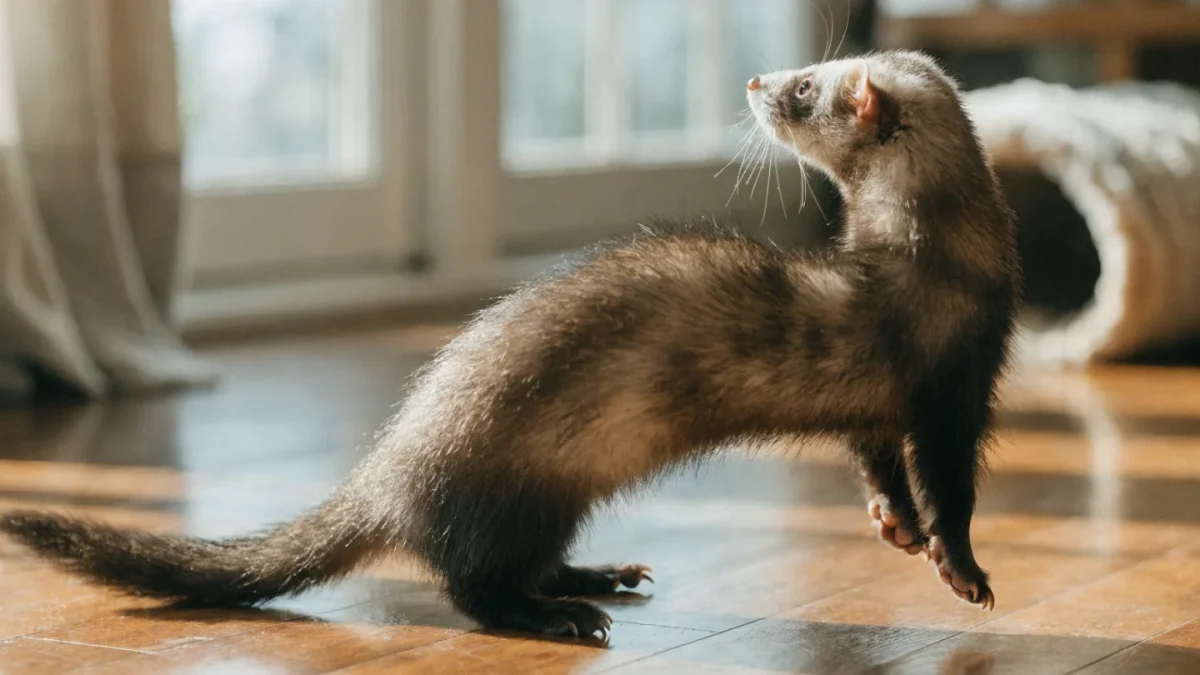
Three years ago I walked into a rescue intake and found a ferret living in a hamster cage. Literal hamster cage — maybe 40 cm across, wire floor, a water bottle meant for a gerbil. The ferret was overweight, had patchy fur from adrenal disease, and hadn't been out of that cage in months. That's the extreme end, obviously. But I've seen versions of it more often than I'd like because ferrets fall into a gap: too unusual for most dog-and-cat vets to know well, too common to get the specialized attention reptiles demand.
Ferrets need a spacious multi-level cage, a high-protein meat-based diet with at least 34% protein and 20% fat, three to four hours of supervised out-of-cage playtime daily, and regular vet care including distemper and rabies vaccinations. They sleep 14-18 hours a day, are intensely social, and live 6-10 years.
That's the summary. The reality is more complicated and more rewarding.
Why Ferrets Aren't Quite Like Any Other Pet
Ferrets (Mustela putorius furo) are obligate carnivores with a metabolism that burns hot and fast. Their digestive tract is short — food passes through in about three to four hours — which means they eat frequently and process nutrients quickly. This shapes everything about their care, from what goes in the food bowl to how their cage smells.
They're also crepuscular, most active at dawn and dusk, though captive ferrets adapt to their owner's schedule surprisingly well. I've had ferrets that synced perfectly with my morning routine: awake when I was making coffee, passed out cold by 10 AM, then back up for evening chaos.
People sometimes compare them to cats. That's only half right. They have cat-like independence but dog-like social attachment. A ferret that's been properly socialized will come when you call it, play fetch (badly), and follow you room to room. Unlike a cat, a ferret left alone for long stretches without interaction will develop behavioral problems — biting, cage-bar chewing, lethargy.
Housing That Actually Works
The single biggest mistake I see with ferret housing is cages that are too small. Minimum dimensions for one ferret: 90 cm long, 60 cm wide, 90 cm tall (roughly 36" x 24" x 36"). Multi-level designs with ramps and platforms give ferrets the vertical space they use constantly. Wire spacing should be narrow enough that a determined ferret can't squeeze through — 2.5 cm (1 inch) or less.
Wire floors destroy ferret feet. Full stop. If your cage has wire shelves, cover them with linoleum tiles, fleece pads, or solid shelf covers. Bumblefoot — a bacterial infection of the foot pad — is painful and entirely preventable.
Bedding matters more than most guides suggest. Ferrets burrow. They need something to dig into and sleep under. Old t-shirts work. Fleece blankets work. Cedar and pine shavings don't — the aromatic oils irritate respiratory tracts. I use fleece sleep sacks hung from cage levels and toss them in the wash every few days.
Litter training is possible but don't expect perfection. Ferrets back into corners to do their business, so placing litter pans in the cage corners they've already chosen gets you maybe 80% accuracy. That remaining 20% is just ferret life. Use paper-based or recycled newspaper litter — clumping cat litter is dangerous if ingested.
For a more detailed breakdown of habitat setup fundamentals, including heating and ventilation considerations, check the dedicated guide.
Ferret Diet: The Non-Negotiable Basics
I can't overstate this: ferrets are strict carnivores. Their bodies cannot process plant-based protein efficiently. A ferret eating dog food, fruit-heavy treats, or grain-packed kibble is heading toward insulinoma, obesity, and a shortened life.
What to look for in a ferret's primary food:
- Animal protein first — chicken, turkey, lamb, or egg as the first ingredient, ideally the first two
- Minimum 34% crude protein, 20% crude fat on the guaranteed analysis
- Low fiber — under 3%. Ferret digestive tracts aren't built to handle fiber the way herbivores are
- No corn, no peas, no wheat as primary ingredients
Some keepers feed raw diets — whole prey or frankenprey (muscle meat, organs, bone in appropriate ratios). Done correctly, raw feeding can be excellent. Done incorrectly, it causes nutritional deficiencies faster than kibble will. If you're new to ferrets, start with a quality kibble and research raw feeding thoroughly before switching.
Fresh water always available. Not a bottle — a heavy ceramic bowl. Bottles restrict intake and can damage teeth over time. I switched all my ferrets to bowls years ago after noticing they drank significantly more water.
Daily Life and Playtime
Ferrets locked in a cage 24 hours a day become destructive, depressed animals. Minimum three hours out of cage daily. Four is better. This isn't passive time either — they want to interact, explore, and cause low-grade havoc.
Ferret-proofing before playtime is mandatory. They squeeze under doors, behind appliances, inside reclining chair mechanisms (which has killed ferrets — not a scare tactic, a documented hazard). They chew rubber, foam, and soft plastic, which causes intestinal blockages. Every surface they can reach needs to be checked.
Play itself looks chaotic and delightful. The "war dance" — an arched back, sideways hopping, mouth open — is pure excitement, not aggression. They'll wrestle each other, steal your socks, and stash anything they can carry in a hidden corner. Tunnels, dig boxes filled with rice or dried pasta, and crinkle toys keep them engaged. Rotate toys weekly or they lose interest.
I once had a ferret named Bandit who figured out how to open a zippered pencil case, remove every pen individually, and carry them under the couch. Took me a week to figure out where my pens were going.
Health: What Goes Wrong and When to Worry
Ferrets are prone to several serious conditions, and finding a vet who actually knows ferret medicine is the first challenge. Not every small-animal vet is comfortable with them. Call ahead, ask specifically about ferret experience, and don't settle for a vet who "can probably figure it out."
Adrenal disease is common in ferrets over three years old, especially those spayed or neutered early. Symptoms: hair loss (usually starting at the tail), swollen vulva in females, aggression or enlarged prostate in males. Treatment options exist, from surgical removal of the affected adrenal gland to hormone implants, but early detection makes everything easier.
Insulinoma — tumors on the pancreas that cause dangerously low blood sugar — is the other big one. A ferret that staggers, drools, paws at its mouth, or seems glassy-eyed after waking up needs veterinary attention immediately. This isn't a wait-and-see situation.
Intestinal blockages from swallowing rubber, foam, or fabric are emergencies. Ferrets chew things they shouldn't, and their narrow GI tract means small objects can't pass. Symptoms: loss of appetite, lethargy, thin or absent stool, grinding teeth.
Annual vet checkups should include a physical exam, blood glucose test (for insulinoma screening), and discussion about adrenal disease signs. Distemper vaccination is critical — canine distemper is nearly 100% fatal in ferrets. Rabies vaccination is also standard.
Temperature and Environment
Ferrets handle cold better than heat. Their comfort range sits between 15-21°C (59-70°F). Above 27°C (80°F), they're at risk for heatstroke. Above 32°C (90°F), it becomes life-threatening fast. They don't sweat, and they pant poorly compared to dogs.
If your home runs warm in summer, air conditioning isn't optional for ferret owners. Frozen water bottles and ceramic tiles in the cage can supplement cooling but won't replace climate control in extreme heat.
Keep cages away from direct sunlight, heating vents, and drafty windows. Ferrets regulate body temperature partly through their environment, and rapid temperature swings stress them.
Grooming and Odor Management
Ferrets have a musky smell. It's sebaceous — from the oils in their skin — and it's never going away completely. Overbathing strips those oils and actually makes the smell worse because the skin overproduces in response. Once a month is the maximum bathing frequency, and honestly, once every two or three months works better.
What actually controls ferret odor: clean bedding, washed every three to five days. Clean litter pans, scooped daily. A good diet — high-quality, animal-protein-based food produces less smelly waste than cheap grain-heavy kibble.
Nail trimming every two weeks. Ear cleaning monthly — ferrets produce dark brown waxy ear buildup that's normal but needs removing. Use a vet-approved ear cleaner on a cotton ball, not cotton swabs in the ear canal.
Socialization and Bonding
Ferrets bond deeply with their owners, but trust takes time. New ferrets — especially rescues — may nip, hide, or seem indifferent for weeks. Patience, consistent gentle handling, and positive reinforcement (tiny meat treats) build the relationship.
Young ferrets nip. A lot. It's how they play with each other, and they need to learn that human skin is different from ferret skin. Scruffing (gently gripping the loose skin at the back of the neck) combined with a firm "no" and redirecting to a toy is the most effective approach I've found. Never flick a ferret's nose or use physical punishment — it makes biting worse.
If you have other pets, introductions should be slow and supervised. Ferrets and cats can coexist peacefully — I've seen it work many times. Ferrets and dogs depend entirely on the dog's prey drive. Ferrets and indoor rabbits require extreme caution, since ferrets are natural predators of rabbit-sized prey. Ferrets and birds or rodents should never interact unsupervised. Period.
The Cost Reality
Budget minimums before bringing a ferret home:
- Cage: varies widely by region, but expect to spend meaningfully on a quality multi-level setup
- Initial vet visit: exam, distemper shot, rabies shot, possible blood work
- Monthly food: plan for high-protein kibble or raw diet costs
- Litter and bedding: ongoing, roughly equivalent to cat litter costs
- Emergency fund: ferret surgeries — adrenal, insulinoma, blockage removal — run into the hundreds easily
Ferrets live 6-10 years. The annual cost adds up. This is a real financial commitment, not an impulse purchase, and I've seen too many ferrets surrendered to rescues when owners realized the vet bills alone exceeded what they'd budgeted.
Quick-Reference Care Parameters
| Parameter | Recommendation |
|---|---|
| Cage size (minimum) | 90 × 60 × 90 cm (36" × 24" × 36") |
| Temperature range | 15-21°C (59-70°F) |
| Diet protein minimum | 34% crude protein |
| Diet fat minimum | 20% crude fat |
| Out-of-cage time | 3-4 hours daily |
| Sleep | 14-18 hours/day |
| Lifespan | 6-10 years |
| Bathing frequency | Once every 1-3 months max |
| Litter pan cleaning | Daily |
| Bedding washing | Every 3-5 days |
| Vet checkups | Annual minimum |
FAQ
Do ferrets get along with other ferrets?
Most do, and they're honestly happier in pairs or small groups. I'd say 90% of introductions between ferrets go smoothly after a brief adjustment period of wrestling and establishing dominance. The exceptions are usually older, unsocialized ferrets who've been solitary their entire lives. Even then, slow introductions through cage swapping often work.
Can I let my ferret free-roam the house?
Some people do, but it requires obsessive ferret-proofing and a house that cooperates. Most keepers use a dedicated ferret-proofed room or section of the home for out-of-cage time and rely on the cage for unsupervised hours. Free-roaming ferrets find escape routes you didn't know existed.
What vaccinations do ferrets need?
Canine distemper and rabies are the two standard vaccinations. Distemper is given as a series in kits, then boosted annually. Rabies is given once after 12 weeks of age with annual boosters. Some ferrets have allergic reactions to vaccines, so your vet should observe the ferret for at least 30 minutes post-injection.
Are ferrets legal everywhere?
No. Some jurisdictions ban ferret ownership entirely, others require permits. Always check local regulations before acquiring a ferret.
How do I know if my ferret is sick?
Lethargy beyond normal sleep, loss of appetite lasting more than a day, weight loss, hair thinning (especially on the tail), grinding teeth, pawing at the mouth, diarrhea lasting more than 24 hours, or any difficulty breathing. Ferrets decline quickly when they're ill — a "wait and see" approach is riskier with ferrets than with larger animals.