

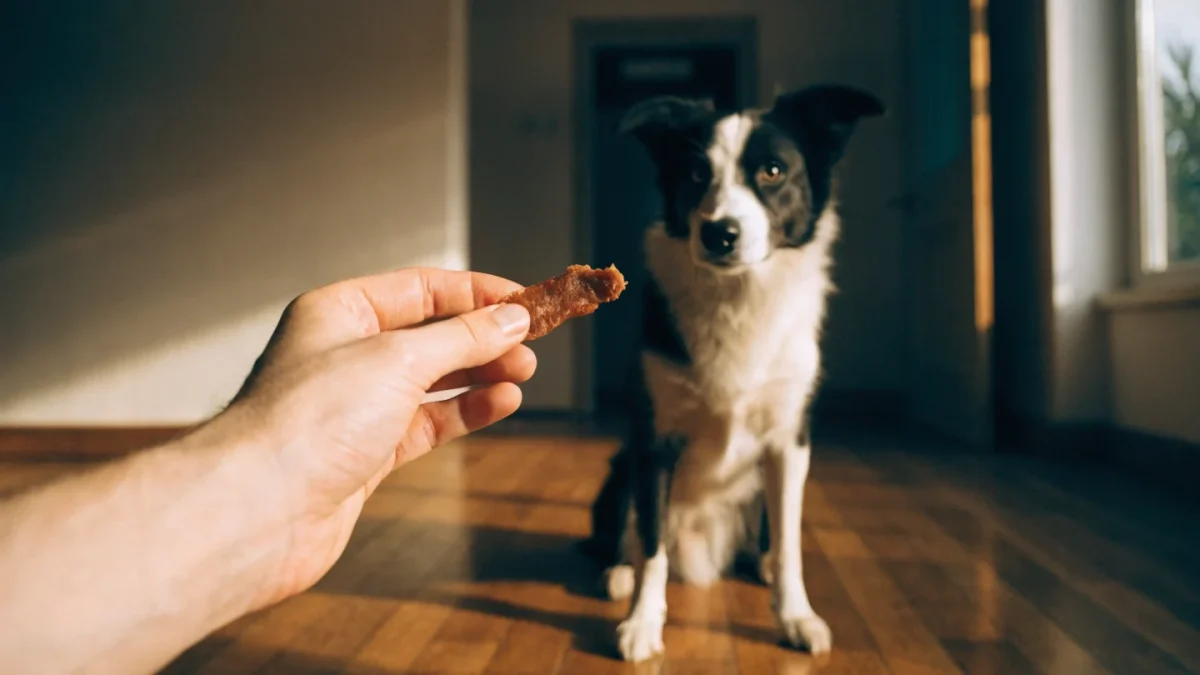
My own dog — a 9-year-old Beagle mix named Fig — has worked out that my coat pockets are worth investigating. He's not wrong. I do keep treats there. Small ones, specific ones, but treats nonetheless.
I tell clients this partly to admit my own imperfection on the subject, and partly to make the point that treats are not inherently a nutritional failure. The goal isn't to eliminate them. It's to think about them more clearly than most of us do.
Treats serve real purposes: training reinforcement, dental health maintenance, enrichment, strengthening the human-animal bond. The problems arise when treats become unmonitored calorie delivery devices, or when the treat selection is based entirely on what the pet goes most crazy for rather than what it actually does for them.
Why Treats Get Away from People
The math is hidden. A bag of kibble has a feeding guide on the back — imperfect, but it gives owners a frame. A bag of treats usually doesn't. You open it, the dog is delighted, the treats are small, and you think "it's fine, these are tiny."
But treats vary wildly in calorie density. Some small commercial treats have 15-20 calories each. Give six in a training session and then hand out a few more during the evening because the dog was cute about it, and you've added 120-150 calories to a medium dog's day without realizing it. That's roughly 15-20% of a typical adult medium dog's daily calorie needs. Add that up across months and you get gradual weight gain that owners often attribute to aging metabolism rather than treats.
The 10% rule — keeping treats to 10% or less of daily calorie intake — exists for this reason. It's not a precise cutoff with a hard physiological basis, but it's a useful practical heuristic. If you're spending that percentage on treats, you're spending it. There's a budget.
What to Look for in a Treat
The front of the bag is marketing. The ingredient list is what matters. Here's what I actually look at:
Named protein source as the first ingredient. "Chicken" or "beef" before anything else. Not "chicken flavor" — that can mean almost nothing nutritionally. Not "poultry" without specification. A named protein as the primary ingredient is the starting point.
Short ingredient list. This isn't a rule — complex formulas can be fine — but for treats, simplicity usually means fewer hidden undesirables. Freeze-dried single-ingredient treats (just chicken liver, just sweet potato) are about as simple as it gets.
No propylene glycol. Used in semi-moist treats to maintain moisture. Worth knowing: it's actually banned outright in cat food because it can damage feline red blood cells, while it's still permitted in dog food at limited levels. Legal for dogs doesn't mean it's what I'd pick when there are better options on the shelf.
Appropriate calorie density. Check the "kcal per treat" if it's listed. For training treats especially, lower calorie per piece lets you reward more frequently without overloading the calorie budget.
No added sugar or salt. These are in more commercial treats than people realize. Sugar is added for palatability; salt is added partly for preservation and partly because it makes food taste more appealing. Neither is necessary.
Treat Types and What They're Actually For
Not all treats serve the same purpose. Understanding the category helps make better choices.
Training Treats
These need to be small, quickly consumed, and motivating. The nutritional profile of individual training treats matters less than their total volume across a training session. If you're working through 20 treats in a 10-minute session, low calorie per piece matters more than organic certification.
Many experienced trainers and vets use small pieces of plain cooked protein — chicken, turkey, salmon — as training treats. They're typically more motivating than commercial treats, especially for highly food-motivated dogs, and calorie density is manageable if pieces are kept small.
Dental Treats
I have a more complicated relationship with dental treats than the packaging usually suggests. Some dental chews do have good evidence for reducing plaque and tartar — particularly those that have earned recognition from veterinary dental organizations for efficacy. Others are primarily palatable chews that don't have meaningful dental effect.
The critical thing: dental health claims are not uniformly regulated in pet products. A product calling itself a "dental treat" or "breath freshener" may have no evidence behind that claim whatsoever. I look for products with third-party efficacy certification from recognized veterinary dental bodies.
And dental treats are not a substitute for tooth brushing. I'd love for them to be. They're not.
Enrichment Treats and Long-Lasting Chews
Things like stuffed food toys, puzzle feeders, and long-duration chews serve an enrichment function. They slow eating, provide mental engagement, and channel chewing behavior constructively. I'm genuinely fond of this category because it turns treat time into work time — and dogs and cats in indoor environments typically need more cognitive stimulation than they get.
For these, calorie density matters since they're consumed over a longer period, and durability matters for safety. Very hard chews can fracture teeth — a problem I see more often than it should occur. A general guideline that circulates widely among veterinary dentists: if you press a thumbnail into the chew and it doesn't leave a dent, it's too hard and I wouldn't hand it to a dog.
Functional Treats
This category — treats that claim to deliver a health benefit beyond basic nutrition — needs skepticism. Joint health treats, calming treats, probiotic treats: the evidence base varies considerably.
Some probiotic treats contain viable bacterial cultures in amounts that can have beneficial effects on gut health. Omega-3 enriched treats can be a useful way to supplement for skin and coat. Dental treats with verified efficacy fall here too.
"Calming" treats are a mixed bag, and I try not to lump them all together. L-theanine actually has some real dog-specific trial evidence behind it — a placebo-controlled study showed reduced anxiety scores, and it's held up reasonably well in storm-phobia research too. Melatonin has moderate evidence, mostly for noise phobias. Valerian, chamomile, and most of the herbal blends? Much thinner, often nothing beyond "it works in humans" logic applied to a different species. Products also vary enormously in dosing regardless of the ingredient. I treat these with the same skepticism I apply to all supplements: show me the data from controlled trials in the species I'm treating, not just mechanistic plausibility.
The Food-as-Love Problem
This is the hardest conversation I have, and I have it often.
Food is a primary way humans express love and care. Giving a pet food — especially a food they're clearly enthusiastic about — feels like connection. And it is, in a real sense. The problem is when that expression of connection becomes the primary one, and when the volume of it starts to harm the animal's health.
I've seen dogs whose owners knew intellectually that the dog was overweight but continued over-treating because cutting back felt like rejection. I've seen cats obese to the point of not being able to groom themselves, with owners who couldn't imagine withholding the treats that made the cat happy.
The reframe that helps most people: quality of treat moment over quantity of treats. A high-value treat given with full attention and a bit of a game or trick — the dog earns it, makes eye contact, feels that interaction — is more enriching for both of you than five automatic treats handed over while watching television.
Fig, my Beagle, would enthusiastically disagree with this philosophy. But he's also 9 and at a healthy weight, so the philosophy is winning.
Building a Sensible Treat Strategy
Some practical structure that I've found actually works for clients:
Daily calorie budget. Calculate your pet's approximate daily calorie needs, take 10% of that, and that's your treat budget. Write it down or keep it in mind as a number. A 30-pound dog eating 750 calories per day has a 75-calorie treat budget.
Divide into treat types. Maybe 40% of that budget goes to training treats across the day, 30% to a dental chew in the evening, 30% is held in reserve for reinforcement moments. This isn't rigid, but having rough categories prevents any one category from absorbing the whole budget.
Pre-measure. Put the day's treats in a small container in the morning. When the container is empty, treats are done for the day. This prevents the invisible accumulation.
Training treats vs reward treats. Not all treats need to be earned, but having some daily treats be contingent on a behavior (sit, wait, leave it) adds cognitive engagement to the process and gives the pet a sense of agency.
Treat audit twice a year. When I do wellness exams, I always ask owners to walk me through every treat the pet typically gets in a day, including chews, supplements in treat form, and flavored medications. The total usually surprises people.
For Cats: A Different Set of Challenges
Cats are trickier. Most commercial cat treats are reasonably low in calories per piece, but cats with unlimited access to them can develop treat dependency — refusing their regular food in favor of treats or demanding treats at night, which is disruptive and nutritionally problematic.
The bigger issue with cats is high-carbohydrate soft treats designed to be intensely palatable. Cats are obligate carnivores with no metabolic need for carbohydrates, and treats loaded with starches and sugars — marketed with a cat in obvious ecstasy on the front — are not doing them any nutritional favors.
I'm not saying no soft treats for cats. I'm saying read the ingredient list, look for protein-first formulations, and keep the volume modest.
A Note on Human Foods as Treats
I'm not against appropriate human food as occasional treats for pets — small pieces of plain cooked chicken, blueberries, cooked sweet potato, a bit of plain pumpkin. These can be healthy and cost-effective, and they're often more motivating than commercial treats.
What I push back on: the impromptu table-scrap habit, especially for dogs who've learned to beg. Not because all human food is harmful, but because table-scrap feeding is an invisible calorie source that's almost impossible to track, often includes seasoned or fatty foods that aren't appropriate in dog portions, and reinforces begging behavior that most owners eventually find annoying.
Intentional human-food treats: fine. A small piece of plain cooked salmon because you're making dinner and the dog is behaving beautifully: fine. Finishing your plate into the dog bowl because it's easier: not what I'd recommend.
Treats for Senior Pets
Older pets often have reduced calorie needs but the same treat expectations. If a dog has been getting three dental chews a day at 80 calories each for five years, and now at age 9 they need 200 fewer calories daily, those three chews are eating into a much tighter budget.
This is a good time to transition to lower-calorie versions of favorite treats, to reduce portion size of chews by breaking them, and to consider whether some treat occasions can become praise or play occasions instead. Senior pets often do respond well to non-food reinforcement once they're past the highest food-motivation years.
Dental health matters even more in senior pets, so I wouldn't drop dental treats — but I'd be thoughtful about which ones and how large a portion.
For a practical framework on how the 10% rule works with your specific pet, see how many treats your pet should get daily — the numbers work out differently than most people expect. And for detailed criteria on evaluating specific dog treats, what to look for in healthy dog treats goes into the ingredient and formulation specifics.
The goal is treats that serve a purpose, fit the calorie budget, and support the relationship — without quietly working against the pet's health over months and years. That's a manageable goal. Beagles everywhere may protest, but it's achievable.