

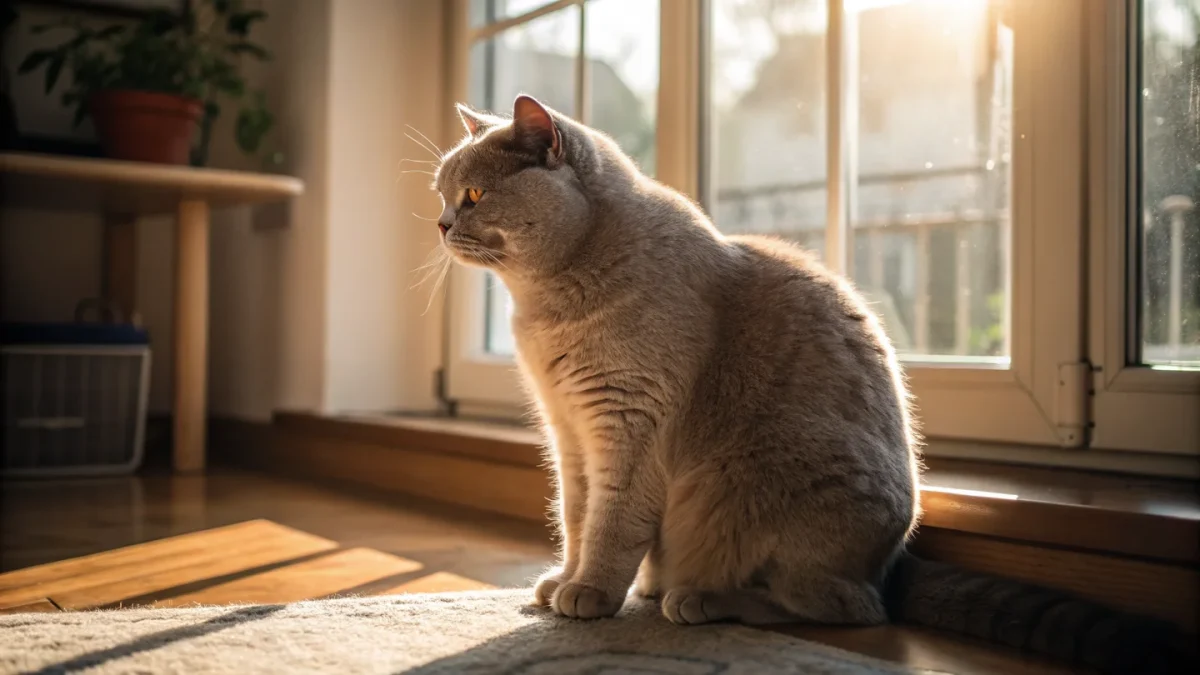
Cat vocalization exists on a wide spectrum. At one end, the Siamese conducts extended vocal commentary on the day's events. At the other, a Russian Blue may go weeks without a sound you'd consciously register. The difference isn't just volume — it's the relationship between the cat and communication itself.
Quiet breeds aren't unengaged or cold. They simply communicate differently — through presence, positioning, and gesture rather than sound. Many people find this style of communication deeply satisfying: a cat that sits near you, makes eye contact, and conveys everything through posture rather than meowing at 5 a.m.
For the full selection framework, the cat breed selection guide covers all the variables.
1. British Shorthair
Reliably quiet. British Shorthairs meow infrequently and softly when they do. They communicate their needs — proximity to the food bowl, readiness for attention — through positioning rather than vocalization. In a quiet household, they are genuinely unobtrusive background companions who add presence without noise.
2. Russian Blue
Among the quietest breeds. Russian Blues communicate rarely and softly, and seem to prefer observation over commentary. Their communication style tends to be: sit near the thing they want, look at it, look at you, and wait. There's dignity to it. The Russian Blue breed profile covers the breed's documented origins in the Archangel Isles, the distinctive blue-grey double coat, and what the characteristically reserved temperament means in daily life.
3. Norwegian Forest Cat
Calm and quiet. Norwegian Forest Cats vocalize occasionally, but it's rarely demanding or persistent. They're content to share space in silence.
4. Persian
The quietest breed in terms of frequency of vocalization. Persians are as close to silent as domestic cats get — they may meow briefly at feeding time or when seeking something specific, but persistent vocalization is strongly atypical. The Persian breed profile covers what the full ownership picture looks like, including the daily grooming commitment that comes with the quiet temperament.
5. Ragdoll
Quiet enough for apartment living. Ragdolls do communicate vocally but in a soft, gentle way. The voice is characteristically quiet and not demanding in the Siamese sense.
6. Scottish Fold
Calm and quiet. The Scottish Fold communicates infrequently, and when they do vocalize it's typically soft and brief. The personality is settled and undemanding in terms of sound.
7. Exotic Shorthair
Persian-quiet. The Exotic Shorthair inherits the Persian's quiet communication style without the daily grooming obligation.
Breeds to Avoid If Noise Is a Concern
Siamese: Famously the loudest domestic cat breed. The voice is persistent, penetrating, and opinionated.
Oriental Shorthair: Similar in vocalization intensity to Siamese — the breeds share heritage and share the vocal trait.
Bengal: Not traditional meowing, but the chirps, yowls, and distinctive sounds can be significant. A Bengal who wants something makes its case clearly.
Devon Rex: Moderate vocalization, but more than the quiet breeds above.
Burmese: Social and moderately vocal — not quiet-breed territory.
A Note on Individual Variation
Breed tendencies are averages, not guarantees. A particularly vocal British Shorthair exists; a remarkably quiet Siamese is possible (and produces bewildered owners who read about the breed before getting one). Early socialization, health, and individual personality all contribute. If quiet is truly a priority, spending time with the specific cat before adopting is the most reliable assessment.