

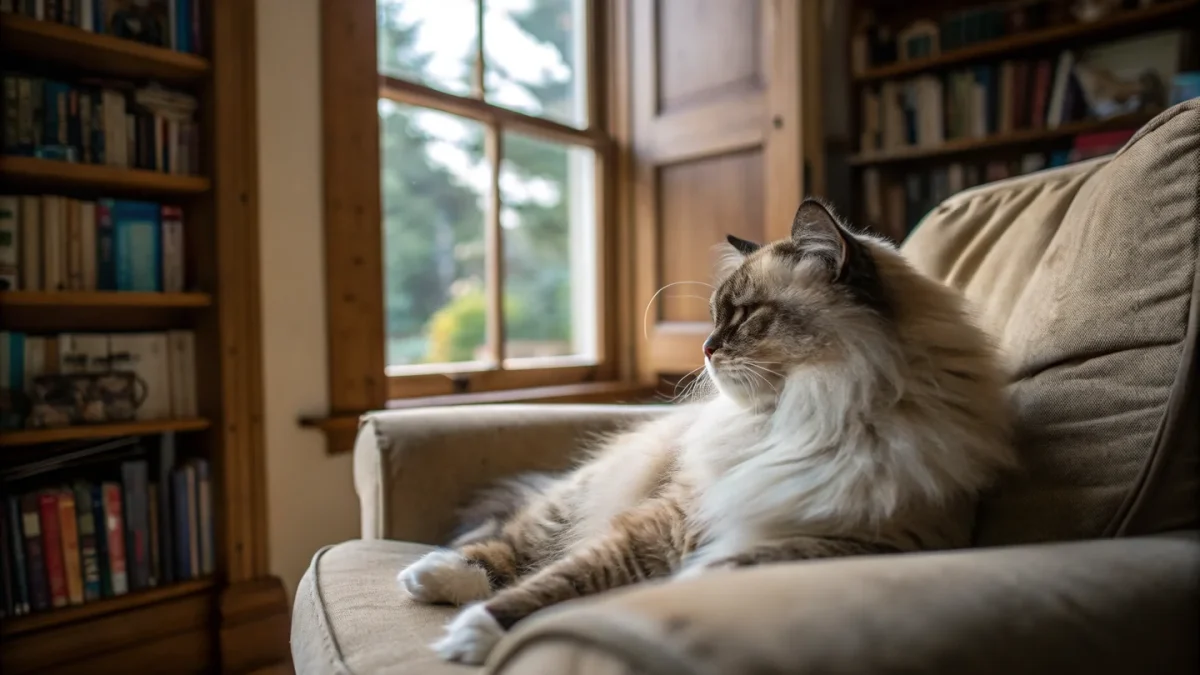
There's a detail from the Ragamuffin's origin story that most breed histories gloss over: the breed didn't emerge from careful planning. It emerged from a fight.
In the 1990s, a group of breeders who had been working with Ragdoll cats grew frustrated with restrictions imposed by the original breeding program — specifically, limits on coat colors and a strict requirement that all Ragdolls trace their lineage through cats registered with a single foundation breeder. The dissenters broke away. They began outcrossing to Persian, Himalayan, and domestic longhair cats to widen the gene pool and color range, eventually registering their cats under a new name: Ragamuffin. The split was acrimonious enough that the name "Ragdoll" itself was trademarked and unavailable.
What emerged from that dispute is a cat of extraordinary gentleness with a coat that invites comparisons to bunny fur.
What Is a Ragamuffin?
The Ragamuffin is a large, heavily boned longhaired cat, distinct from the Ragdoll — the breed at the root of the Ragamuffin's history — despite their shared ancestry. Both breeds share a foundation in the cats developed in the 1960s by California breeder Ann Baker, but the Ragamuffin has been shaped by subsequent outcrossing that the Ragdoll program did not undertake.
The American Cat Fanciers Association (ACFA) accepted the Ragamuffin for registration in 1994. The Cat Fanciers' Association (CFA) followed considerably later, granting championship status in 2011.
The most visible difference from the Ragdoll is coat variety: while the Ragdoll comes only in colorpoint patterns, Ragamuffins come in virtually every color and pattern imaginable — solids, tabbies, torties, bicolors, and yes, colorpoints too. The eye color also varies with coat color, whereas Ragdolls are exclusively blue-eyed.
Physical Characteristics
Ragamuffins are large cats. Males typically reach full size around four years of age — a longer maturation period than most breeds — and can weigh up to 20 pounds at maturity, with females usually topping out closer to 15. The body is rectangular and broad-chested, with a soft, rounded belly that many owners describe as irresistible to the touch.
The coat is medium-long, with a texture that sets Ragamuffins apart even from other longhaired breeds: it resists matting more readily than Persian or Himalayan fur, and has a quality often described as "rabbit-like" — plush, dense, and springy. It doesn't lie flat; it stands slightly away from the body, giving the cat a permanently fluffy silhouette.
The walnut-shaped eyes are large and expressive, giving Ragamuffins a perpetually soft, almost melting expression. The head has a rounded shape with a shorter muzzle than a Persian but still distinctly blunted compared to an Oriental-type cat.
Ragamuffin Temperament
If there's one word for the Ragamuffin, it's "yielding." These cats go limp when picked up, tolerate handling with unusual patience, and actively seek out physical closeness with their people.
With people: Ragamuffins are famously non-territorial about human contact. They greet visitors, follow family members through the house, and frequently install themselves in laps with a deliberateness that suggests they've made a decision. The breed is notably tolerant of being held, carried, and repositioned — a quality that makes them popular with families with young children.
Energy level: Moderate to low, especially once past kittenhood. Ragamuffins play enthusiastically when invited but are equally happy to spend an afternoon doing nothing in particular. They're not demanding about entertainment in the way that Abyssinians or Bengals are.
Vocalization: Quiet to moderate. Ragamuffins have soft voices and don't typically yowl or become persistently vocal to get what they want — they're more likely to simply sit near you and wait.
With other pets: Generally excellent. The Ragamuffin's even temperament makes introductions to other cats and dogs more straightforward than with high-strung or territorial breeds. They rarely start conflicts and don't escalate minor tensions.
What Most People Get Wrong About Ragamuffins
The most common misconception is that "limp" means "low-energy." Ragamuffin kittens are quite active — playful, curious, and capable of mischief. The famous docility develops more fully as they mature. Getting a Ragamuffin kitten expecting a mellow lap cat from day one means a few years of surprised adjustment.
Second: the "floppy" behavior (going limp when held) is a breed trait that requires proper handling from the start. It doesn't mean the cat has no muscle tone or structural health; it means the cat has been selected, over generations, for a relaxed stress response to human contact. But "floppy" doesn't mean the cat wants to be held indefinitely — read the cat's cues.
Third: the plush coat is easier to maintain than it looks. The non-matting texture means weekly grooming is usually sufficient, which surprises owners who expect Persian-level coat maintenance.
Grooming
The Ragamuffin's coat is genuinely easier to manage than most longhaired breeds. It resists tangles and mats quite well, though regular brushing remains important for controlling shedding and keeping the coat healthy.
A thorough brush once or twice a week is the standard recommendation — more during seasonal shedding periods. Pay attention to the areas behind the ears, under the "armpits," and at the base of the tail, where mats are most likely to form if grooming is neglected.
Bathing is occasional rather than routine. Because the coat has some natural water resistance and doesn't mat readily, many Ragamuffin owners bathe only a few times per year, typically before a show or when the cat gets into something.
Dental hygiene, nail trimming, and ear cleaning follow standard cat care protocols. The broad chest and large body size mean the litter box needs to be generously sized.
Health Considerations
The Ragamuffin is generally a healthy breed, but some considerations are relevant for prospective owners.
Hypertrophic cardiomyopathy (HCM): As with many cat breeds, HCM is a concern. Responsible breeders screen their breeding cats regularly via cardiac ultrasound. Asking about screening history when acquiring a kitten is appropriate.
Polycystic kidney disease (PKD): Persians — one of the breeds used in Ragamuffin outcrossing — have a known hereditary form of PKD caused by a dominant gene mutation, and it's common in that breed (studies from different countries put Persian prevalence anywhere from roughly 36% to 50%). Nobody's published a Ragamuffin-specific prevalence number, but the Persian ancestry is exactly why Ragamuffin is on the standard list of breeds recommended for PKD1 testing. Testing for this mutation is available and should be part of responsible Ragamuffin breeding.
Weight management: The breed's relaxed disposition and tendency toward low activity in adulthood means obesity is a genuine risk. Diet management becomes increasingly important as Ragamuffins age.
Is a Ragamuffin Right for You?
The right owner for a Ragamuffin is someone who wants a genuinely affectionate companion — not a cat that tolerates people, but one that actively chooses to be near them. Ragamuffins suit quieter households, families with gentle children, households with other calm pets, and people who appreciate a beautiful coat without full-time grooming demands.
They're not the right fit for someone who wants an athletic, independent cat that entertains itself. They need interaction and human presence. A Ragamuffin left alone for extended periods doesn't thrive the way a more self-contained breed might.
If you want a large, silky, affectionate cat that genuinely seems delighted to be in your company — and you can commit to weekly grooming and regular cardiac health monitoring — the Ragamuffin is hard to match.
Frequently Asked Questions
How big do Ragamuffin cats get?
Ragamuffins are large cats. They mature slowly, with males often not reaching full size until around four years old — at which point they can weigh up to 20 pounds. Females are typically smaller, usually topping out around 15 pounds. Despite their size, they carry their weight in a soft, rounded way that reads as plush rather than imposing.
Are Ragamuffins truly different from Ragdolls?
Yes, though they share ancestry. The key differences: Ragamuffins come in all coat colors and patterns (Ragdolls are colorpoint only), eye color varies with coat in Ragamuffins (Ragdolls are always blue-eyed), and the Ragamuffin's breeding history includes outcrossing to Persian and Himalayan that the Ragdoll program did not. Temperamentally, both breeds are docile and affectionate, but Ragamuffins are often described as slightly more adaptable.
Do Ragamuffin cats shed a lot?
Yes — the coat is substantial and sheds year-round, with heavier periods in spring and fall. Regular brushing dramatically reduces the amount of fur deposited around the house, and the non-matting texture makes weekly maintenance manageable.
Can Ragamuffin cats be left alone?
For normal work-day durations, yes — Ragamuffins handle reasonable alone time without crisis. However, they are social animals that prefer company, and extended isolation (multiple days, for instance) is hard on them. A second cat as a companion helps if the owner's schedule involves frequent travel.