

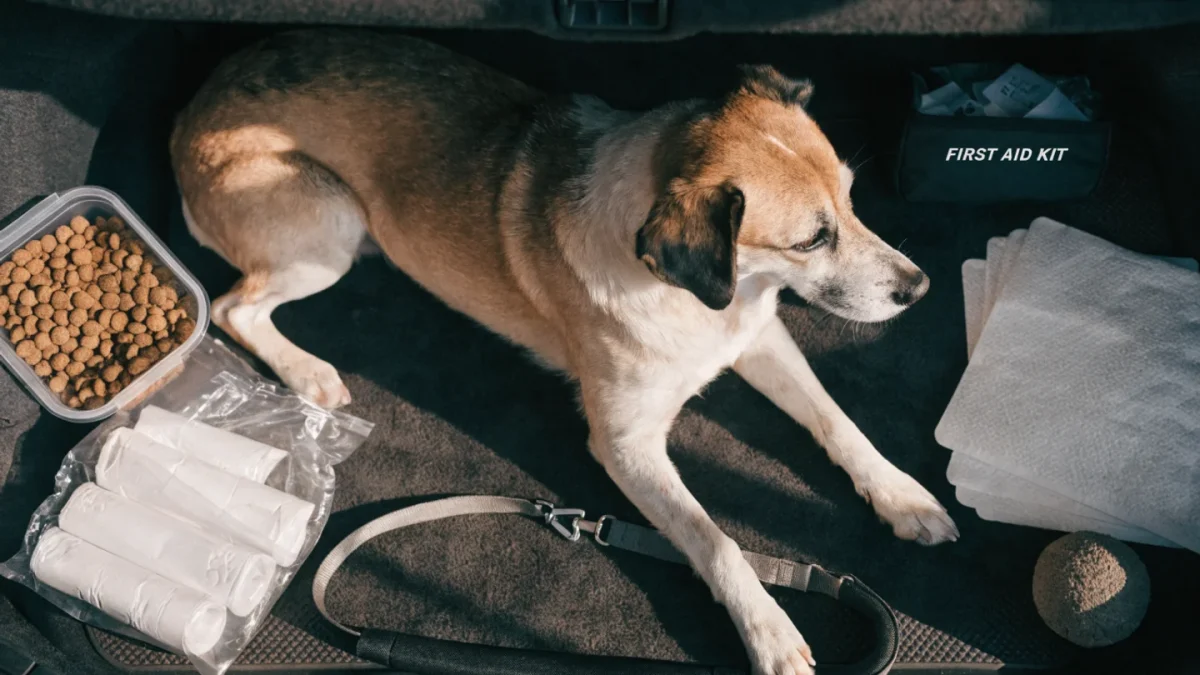
I've done enough road trips with Benny (and a few with the cats) that my packing list has evolved from "panicked overpacking of everything" to something that actually fits in a medium duffle bag without requiring a second trip to the car.
Here's what's actually worth bringing—organized by category because that's how I think when I'm loading the car at 6am.
Safety Gear
Crash-tested harness or secured crate. The most important thing on this entire list. See car safety for pets for the full breakdown, but do not skip this. An unrestrained pet in a moving vehicle is a safety risk for everyone in the car.
Two leashes. One in your daily reach, one backup. Leashes get left at rest stops. Leashes break. I learned this the hard way in a parking lot in Nebraska and spent twenty stressful minutes with Benny in a heel-stay while a stranger rummaged through my trunk for his backup leash.
Harness/collar with current ID tag. Check that the contact number on the tag is your current cell phone number before the trip. Also confirm your microchip registration is current. At a minimum carry a recent photo of your pet on your phone in case of separation.
Portable first aid kit. You don't need a specialized pet first aid kit—a basic human one works. Add: tweezers for ticks, antiseptic wipes, self-adhesive bandage wrap, and the number for ASPCA Poison Control. For dogs, also pack saline eye wash (useful for trail dust or plant debris).
Food and Water
More food than you think. Three extra days' worth beyond the trip length. Rural pet supply stores have limited options; small towns may not have your pet's specific food. Don't bet on being able to buy it en route.
Portioned meals. Measure out portions in advance, especially for multiple-pet households where everyone eats different things. Zip-locked daily portions eliminate the "how much did I give them?" question when you're tired at a motel.
A large water jug. Somewhere between one and two gallons for dogs on a full-day drive, depending on weather and activity level. Don't rely on finding water at every stop. Rest areas sometimes have it; sometimes they don't.
A collapsible or silicone water bowl. These take up almost no space and mean you can offer water at any stop without fuss. I have a small one that clips to Benny's leash bag.
A few extra treats. High-value training treats are useful for rewarding good car behavior, calming anxious moments, and bribing compliance when you really need it.
A large zip-lock bag of dry food in an accessible spot—not buried in the trunk—for the first meal of the trip when you haven't unpacked yet.
Comfort and Sleep
Their regular bed or blanket from home. Familiar scent matters, especially for cats. For dogs it's helpful but less critical. Still, don't throw in a brand-new blanket from Target and expect them to find it comforting.
A worn t-shirt of yours. For anxious travelers of any species. Works on a primal level that no amount of logic can override.
Favorite toy. One. Not a bag of toys—one familiar one. Something they already love.
Crate or carrier. Even if they don't spend much time in it in the car, having it set up at the motel or campsite gives them a familiar space in an unfamiliar room.
Bathroom Supplies
Waste bags. A lot of them. Triple what you think you need. You will absolutely run out if you don't overpack this item.
Poop bag dispenser that clips to the leash. This sounds minor but having it there automatically—not in a bag, not in the trunk—means you're never the person at the rest stop without bags.
Pee pads. For the car (in case of accidents under the seat), for the carrier (same reason), and for motel rooms with anxious or older pets who might have an accident overnight.
Travel litter box for cats. A simple folding one or a disposable cardboard tray works. For a one-night trip, your cat will probably hold it. For anything longer, you need an option.
Small bag of litter. Enough for the trip; more if you're staying multiple nights.
Health and Medications
All medications with extra. At least three days extra. More if possible. Calculate this before you pack.
Vet records and vaccination proof. Many campgrounds, dog-friendly beaches, and off-leash parks require proof of rabies vaccination. Some pet-friendly hotels ask. Keep a physical copy in the car and a photo on your phone.
Emergency vet contacts. Your regular vet's emergency line, plus a note to yourself that VetFinder and most maps apps now show emergency vet clinics. Know roughly where the vets are along your route for long stretches without towns.
Flea and tick preventive (current). If your pet isn't on monthly prevention, now is the time to start before a road trip where they'll be in grass and woods constantly.
Cleaning and Mess Management
Microfiber towels (2-3). Muddy paws, wet dog after a stream crossing, accidental spills. Microfiber dries faster than regular towels and compresses smaller. This is the item I use most after water.
Enzyme cleaner spray. For accidents in the car or hotel room. Regular cleaners don't fully remove pet odor; enzyme cleaners do. A small travel bottle is enough.
Hand wipes. For you. After poop bag duty, trail stops, and the inevitable dog-nose-on-your-face-moments.
The "Should You Bring It?" Filter
Before packing anything else, apply the test: Will I actually use this, or does it just make me feel better to have it?
A pet first aid kit for the road: yes, real risk, real utility. Your pet's seasonal decorative bandana: leave it. The elaborate travel toy set: one toy. The giant elevated food bowl: their regular bowl or a collapsible one.
The car fills up fast on road trips. Keep the pet kit lean and put it somewhere accessible—not at the bottom of the trunk under the camping gear.
For the full road trip framework including stopping schedules, hotel tips, and cat-specific logistics, the road trips with pets guide covers everything.
FAQ: Road Trip Packing for Pets
How much water should I bring for my dog on a road trip?
A general rule is about one ounce per pound of body weight per day. A 50-pound dog needs roughly 50 ounces daily—more in hot weather or with significant exercise. Bring more than you calculate, because you'll stop at places without water.
Do I really need a separate pet first aid kit?
A dedicated kit is helpful, but a basic human first aid kit with tweezers, antiseptic, bandaging, and saline eye wash covers most trail and travel scenarios. What matters is having something rather than relying on a pharmacy being nearby.
Should I bring my cat's litter box on a road trip?
A travel-sized one or a disposable cardboard tray, yes—for trips longer than one day. Cats can hold it for shorter periods, but long days in the car plus a night in a motel means they need an option.
Is it okay to feed my dog at rest stops?
Offer small amounts at rest stops, not full meals. Eating while moving can cause motion sickness and vomiting. Full meals work better at morning and evening stops, not during active driving hours.