

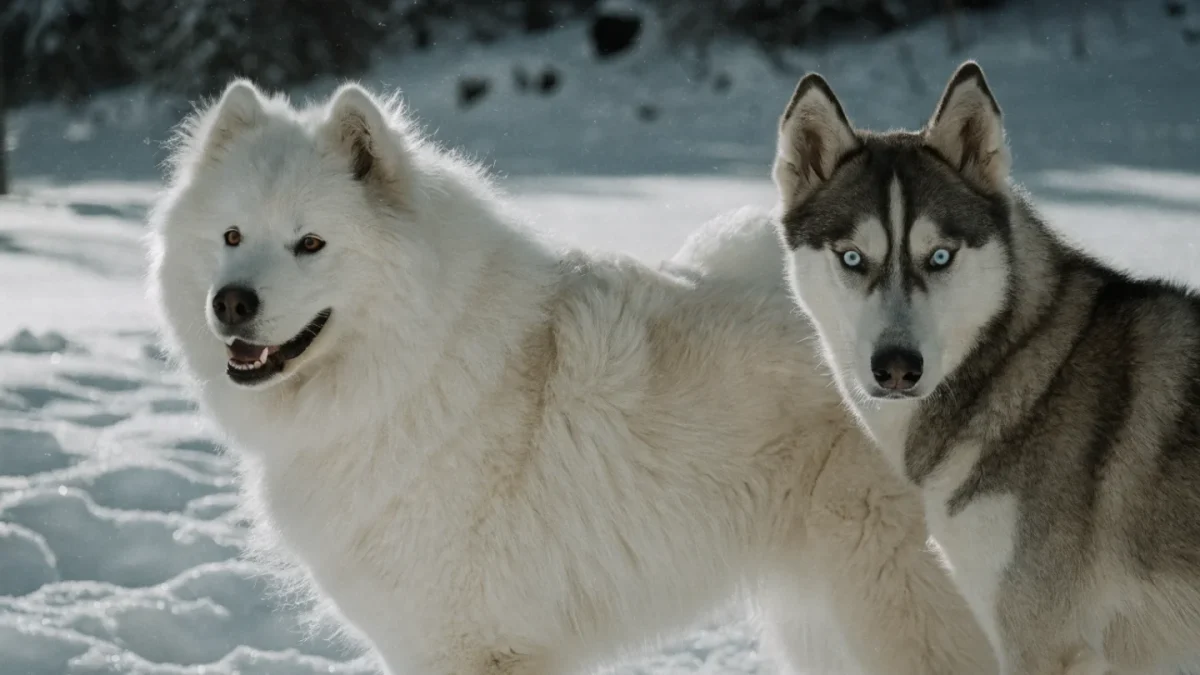
The Samoyede people of Siberia developed the Samoyed as a herding, hunting, and sled-pulling dog that also served as a bed warmer — Samoyeds literally slept with their human families for mutual warmth in temperatures that dropped below minus 50 degrees Celsius. The Chukchi people, also of Siberia but farther northeast, developed the Siberian Husky primarily as a long-distance sled dog. Both breeds emerged from the same frozen landscape, but for partially different purposes. The Samoyed was a multi-role family partner. The Husky was a specialist built to run.
Both are stunning arctic breeds that attract attention wherever they go. Both also require owners who understand what "northern breed" means in practice. For the full comparison framework, see the breed comparisons guide.
Size and Build
| Trait | Samoyed | Siberian Husky |
|---|---|---|
| Height (male) | 53–60 cm | 53–60 cm |
| Height (female) | 48–53 cm | 51–56 cm |
| Weight (male) | 20–30 kg | 20–27 kg |
| Weight (female) | 16–20 kg | 16–23 kg |
| Build | Sturdy, slightly heavier | Lean, built for speed |
| Coat color | White, cream, biscuit | All colors including black, gray, red, white |
Similar height range, but the Samoyed carries more bulk and a significantly heavier coat. The Samoyed's "Sammy smile" — the upturned corners of the mouth — is a functional feature that prevents drooling, which would form dangerous icicles in extreme cold. The Husky is leaner through the body and built for covering ground efficiently.
Temperament
The Samoyed is the more people-oriented of the two. Samoyeds are affectionate, eager to engage with their family, and generally more biddable than Huskies. They still have northern-breed independence, but they genuinely want to be with their people and are more responsive to direction. The breed can be vocal — Samoyeds bark, howl, and produce a range of conversational noises.
Siberian Huskies are more independent, more mischievous, and more committed to making their own decisions. The Husky's pack orientation extends to other dogs (they typically do well in multi-dog households) but doesn't translate to reliable obedience with humans. Huskies are friendly with everyone, rarely aggressive, and spectacularly uninterested in guarding anything.
The key temperament difference: a Samoyed that escapes the yard may circle back toward home. A Husky that escapes the yard may run for kilometers without looking back.
Grooming
Both breeds have heavy double coats. But the grooming gap between them is significant.
The Samoyed coat is longer, denser, and stands off the body more dramatically. It requires brushing three to four times per week at minimum, with daily sessions during the twice-yearly coat blow. The volume of fur a Samoyed produces during a blowout is almost hard to believe — people have spun Samoyed undercoat into yarn. Professional grooming appointments are helpful but not strictly necessary if you're committed to home brushing.
The Husky coat is dense but shorter and tighter to the body. It needs brushing two to three times per week, with daily attention during blowouts. Still a heavy shedder, but the individual grooming sessions are shorter.
Neither breed should be shaved. The double coat insulates against both cold and heat.
Exercise
Both breeds need 60 to 90+ minutes of vigorous daily exercise. The Husky typically demands more raw mileage — they want to run, and they want to run far. The Samoyed is satisfied with a mix of activities including walks, play, and moderate running, combined with social interaction.
Both breeds need secure fencing. Huskies are more notorious escape artists, but Samoyeds are capable diggers and climbers too. Neither breed has reliable off-leash recall in unfenced areas.
Both overheat in warm climates. If you live somewhere that's hot for more than a few months of the year, you'll need to manage exercise timing carefully with either breed.
Health
| Health Factor | Samoyed | Siberian Husky |
|---|---|---|
| Top concern | Hip dysplasia, hereditary glomerulopathy | Autoimmune disorders, eye issues |
| Lifespan | 12–14 years | 12–14 years |
| Eye issues | PRA, cataracts | Cataracts, corneal dystrophy, PRA |
| Heart | Pulmonic stenosis | Less common |
| Kidney | Hereditary nephritis (X-linked, males) | Not breed-specific |
Both are relatively healthy breeds with similar lifespans. The Samoyed carries a breed-specific hereditary glomerulopathy (kidney disease) that's X-linked — males are more severely affected. DNA testing identifies carriers. Huskies face more autoimmune conditions, including uveodermatologic syndrome, and are prone to several eye conditions.
Which Fits Your Life?
Choose the Samoyed if you want a more affectionate, people-focused arctic breed and can handle the intensive grooming commitment. The Samoyed is the better choice for families who want interaction and emotional connection from their dog. Expect to own multiple lint rollers.
Choose the Siberian Husky if you prioritize athletic endurance, want a more independent-minded dog, and are prepared for the escape artistry and selective hearing that define the breed. The Husky is better for runners, mushers, and people who respect a dog that will never be fully obedient.
For the Husky compared against its bigger cousin, see the Siberian Husky vs Alaskan Malamute comparison. For a complete profile of the Siberian Husky covering its Chukchi origins, working characteristics, and health considerations, the Siberian Husky complete breed guide provides the full reference. For an encyclopedic look at the Samoyed's role as a Samoyede people's family dog, its intensive grooming requirements, and its hereditary kidney disease risk, the Samoyed complete breed guide covers the breed in full.